Tulum Snorkeling: Reef, Cenotes And Turtle Options
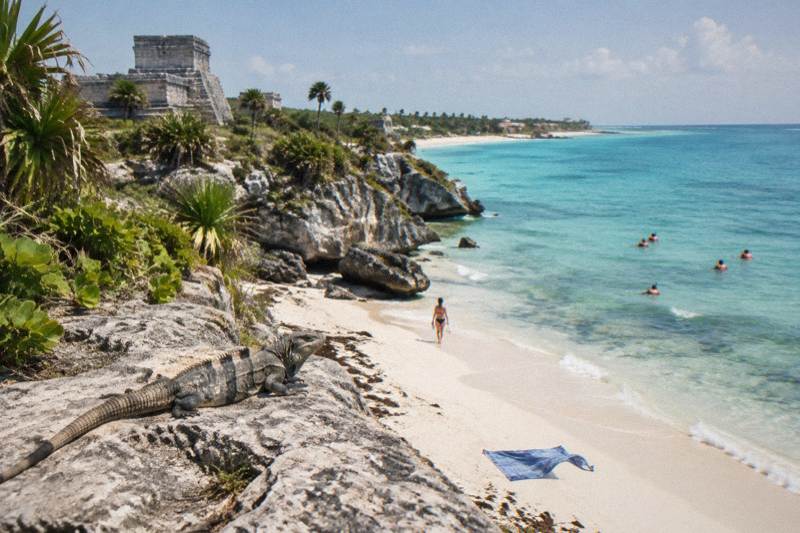
Tulum has cenotes, a clifftop archaeological zone and easy highway access to the whole Riviera Maya, but the regulated turtle swimming circuits are not in Tulum. They sit in Akumal Bay, a short drive north on Highway 307.
Short answer
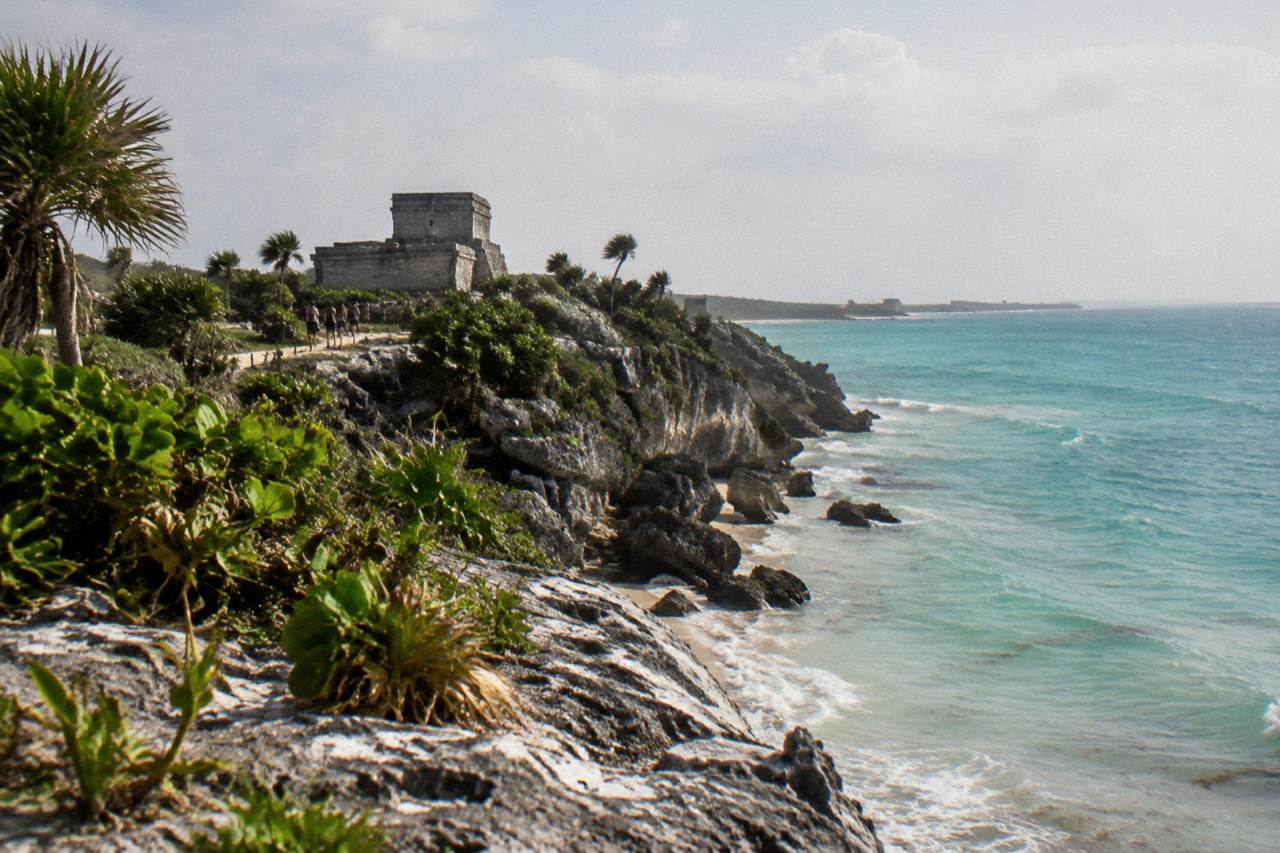
Tulum snorkeling splits into three parts: freshwater cenotes such as Gran Cenote at 500 MXN cash and Dos Ojos at about 350 to 400 MXN, reported; the Tulum ruins and Parque del Jaguar; and the sea turtle circuits, which are in Akumal Bay, not Tulum. Combined Tulum, cenote and turtle day trips run from $109 per person plus a US$40 per person fee line.
Tulum sits on a coastline where the freshwater and the sea do completely different jobs. Inland, the karst limestone opens into cenotes, flooded sinkholes with caverns, stalactites and cool, still water. Off the beach, the Mesoamerican Reef runs along the shore. And a drive north on the coastal road brings you to Akumal Bay, which holds the region's regulated sea turtle swimming circuits, the buoyed zones where guided turtle tours legally operate under the federal protection programme for the Bahia de Akumal refuge.
That last point is the one that surprises the most people. Tulum markets itself hard, and plenty of visitors assume the famous swim with turtles happens there. It does not. The turtle circuits are in Akumal, a separate town in a separate bay, and the homepage comparison exists partly because the two get conflated. This guide lays out what Tulum itself offers a snorkeler, what it costs, and how the Tulum to Akumal turtle morning actually works.
Where Can You Snorkel Around Tulum?
Tulum snorkeling happens in three settings: freshwater cenotes a short drive inland, the inshore patch reef off Tulum's beach stretch where conditions allow, and, most reliably for guided wildlife swims, Akumal Bay a drive north along the coast road. Each setting has different water, different rules and a different price structure, so most travelers combine two of them in one day rather than choosing.
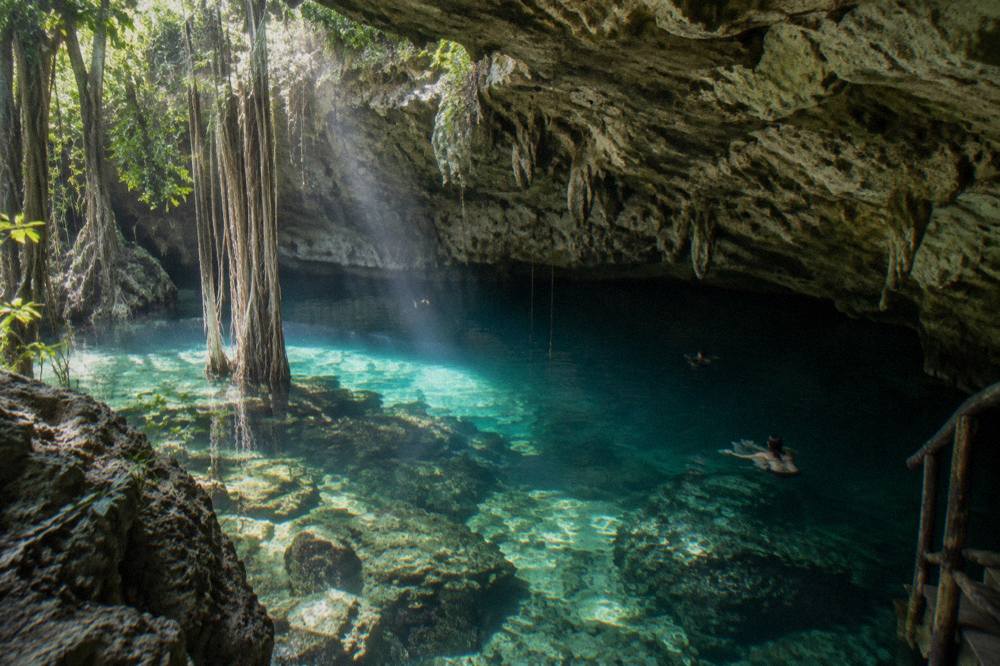
The cenotes are the signature Tulum experience. Gran Cenote and Dos Ojos are the two best known, both cavern sites with visibility that comes from filtered groundwater rather than ocean conditions. They are a fixed, bookable, weather-resistant product in a way sea snorkeling never is. The trade-off is temperature and light: cenote water is cool and the caverns are dark in places. What they have is rock formations, shafts of daylight and water so clear it reads as air.
The open sea off Tulum is a different proposition. Snorkeling off the Tulum beach strip is possible in calm conditions, but the reef there is dived far more than it is snorkeled, sargassum and wind reshape visibility from day to day, and no regulated turtle circuit sits along that stretch of coast. No listing among the tours compared here sells a Tulum-town turtle swim, because the turtle circuits are legally tied to Akumal Bay's buoys. When a Tulum itinerary promises turtles, what it is really promising is a drive.
That drive is short. Akumal sits about 37 km south of Playa del Carmen, per the federal decree, and Tulum sits a similar order of distance south of Akumal along Highway 307. This is why the combined day trips exist at all: it is entirely practical to tour the Tulum archaeological zone in the morning, cool off in a cenote at midday, and be on an Akumal beach for a turtle circuit later the same day.
Which Tulum Cenotes Are Best For Snorkeling?
Gran Cenote and Dos Ojos are the two headline Tulum cenotes for snorkeling. Gran Cenote charges 500 MXN per person, cash only, and opens around 8:00 with entry to about 17:00; Dos Ojos runs about 350 to 400 MXN per person, reported, over similar hours. Both are cavern sites rather than open pools, so they suit confident snorkelers more than nervous first-timers.
Gran Cenote is the classic first stop. The fee, 500 MXN in cash, is one of the most consistently reported prices in the region, so take pesos rather than planning on a card. Hours are reported as 8:00 to about 17:00, with last entry earlier than closing at some sources, so arriving before mid-afternoon is the safe play. The site has a large open basin connecting to cavern passages, platforms for entry, and facilities typical of a well-developed cenote.
Dos Ojos, a few minutes further north, is named for its two connected circular openings. Reported entry is about 350 to 400 MXN for the basic package, with one source noting a life jacket included at around 370 MXN. It is a deeper caving system, popular with divers, and the snorkeling loops around the two light-flooded openings and their connecting cavern. Hours are reported as 8:00 to 17:00 with last entry well before closing at one operator, so again, morning wins.
| Cenote | Reported entry | Reported hours | Character |
|---|---|---|---|
| Gran Cenote | 500 MXN cash per person | 8:00 to about 17:00 | Big open basin plus caverns, platforms |
| Dos Ojos | About 350 to 400 MXN per person | 8:00 to 17:00 | Two circular openings, cavern system, diver traffic |
| Yal-Ku Lagoon (Akumal side trip) | About US$20 or 300 MXN, Xcaret-operated side | 9:00 to 17:00 | Brackish lagoon, reef fish, vests mandatory on the Xcaret side |
A word on what a cenote is not: it is not a wildlife swim. Fish are sparse, turtles essentially absent, and the pleasure is geological. Travelers who want animals in the water need the sea, which in this region means Akumal Bay or a reef trip. The practical move most itineraries take is to pair one cenote with the Akumal turtle swim, which is exactly the shape of the big combined day trips. The Riviera Maya Tulum, cenote and Akumal turtle trip bundles the Mariposa cenote ticket, transport, a guide and the Akumal snorkel from $109 per person, with the listing noting admission fees and taxes of US$40 per person payable separately.
For snorkelers weighing the lagoon alternative, the comparison in Yal-Ku Lagoon or Akumal Bay covers the trade-offs: Yal-Ku is a saltwater lagoon with reef fish and color, about US$20 or 300 MXN on the Xcaret-operated side, reported, with vests mandatory there and chemical-free sunscreen required, while Akumal Bay is the turtle habitat. Some travelers do both in a day since they sit minutes apart by road.
Can You Snorkel With Turtles In Tulum Itself?
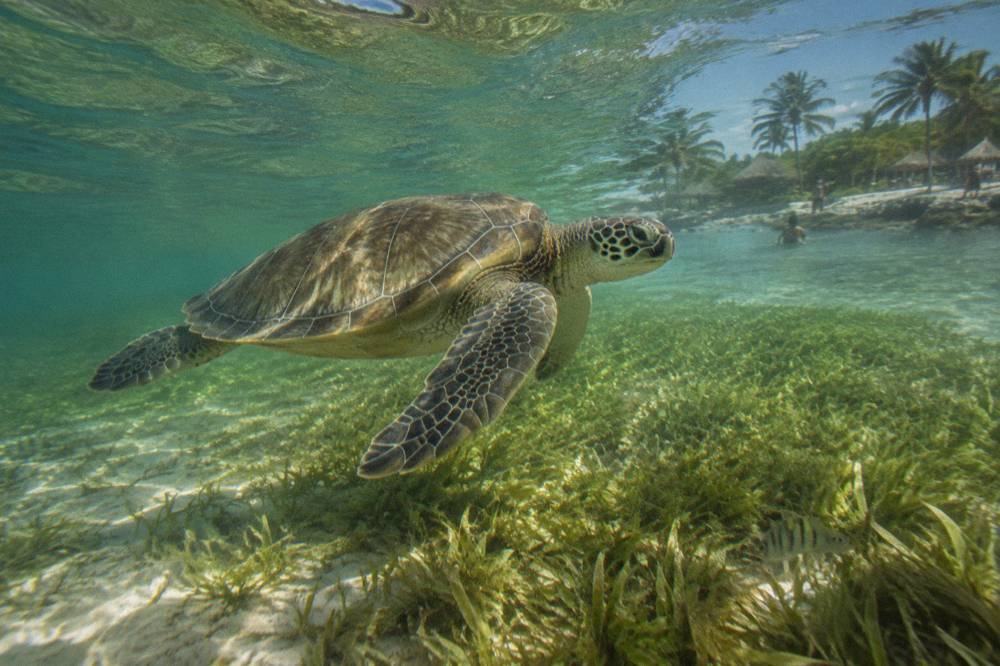
No regulated turtle swimming circuit operates in Tulum. The federal Programa de Proteccion confines turtle observation swimming to two buoyed circuits inside Akumal Bay, in the Bahia de Akumal marine refuge about 37 km south of Playa del Carmen. Turtles feed in the Akumal seagrass beds year-round, operators report, but every legal guided turtle swim on this coast launches from Akumal, not Tulum.
This is worth stating plainly because listing copy is often loose with geography. The refuge decree and its protection programme, published in the DOF in 2017, name the Bahia de Akumal as the area and mark Circuit 1 and Circuit 2 with buoys. Tourist swimming with turtles is allowed only inside those circuits, as guided ecotourism routes under a SEMARNAT authorization, with hours of 9:00 to 17:00 and group caps of six people plus the guide. None of that infrastructure exists in Tulum's waters.
What Tulum does have is nesting beaches. The Xcacel-Xcacelito subpolygon of the refuge runs a nesting season from 1 May to 30 November, and on the Akumal beaches next door the 2026 season closed in September with 922 nests recorded, 747 green and 175 loggerhead, a medium-high season below the historic 1,350 figure. Those are nests on sand, not animals in the water, and nesting beaches are protected, not swum. A traveler who wants to be in the water near a feeding green turtle books an Akumal circuit.
The good news is that the distance barely matters logistically. The combined day trips treat Tulum and Akumal as one route. The Riviera Maya trip from $109 per person tours the Tulum archaeological zone, swims Mariposa cenote, then runs north to Akumal for the turtle snorkel, with round-trip transport from most Riviera Maya hotels and a meal listed. The Cancun version of the same shape runs 10 hours from $109 per person with hotel pickup from Cancun and Puerto Morelos, and a US$40 per person fee line for Tulum entry, Parque del Jaguar, cenote park and government charges, as the listing states it. If you're based in Tulum itself and want a simpler day, the guide to Akumal turtle tours with Tulum pickups lays out the booking options, add-on fees, and how to time the turtle morning.
For travelers starting from Cancun rather than the Riviera Maya, the Akumal from Cancun guide covers the longer transfer, roughly 1 hour 15 minutes to 1 hour 30 minutes from the airport, reported. The small-group Cancun turtle and cave cenote adventure from $80 per person runs five hours and carries a US$20 per person government marine tax and a US$15 per person operation fee, both payable separately per the listing, which is the kind of fee stack worth reading before booking any of these days.
Why Do So Many Tulum Visitors Drive To Akumal Bay?
Akumal Bay is where the turtles, the legal framework and the tour infrastructure all sit. The bay's seagrass beds hold resident green turtles that operators describe as feeding year-round, and the buoyed circuits give that activity a managed home with certified guides, vests and daily caps of 256 people on Circuit 1 and 300 on Circuit 2. Tulum has none of that, so the drive is the product.
The daily caps matter more than people expect. Circuit 1 takes 36 groups of up to six plus a guide, 55 minutes each; Circuit 2 takes 42 groups, 65 minutes each. That is a finite morning and afternoon of slots, and in high season, late December to early April by one reported season calendar, they fill. Booking lead times on the turtle listings average 12 to 45 days in advance on platform data, with one operator noting 2 to 3 weeks for peak dates. A Tulum traveler who decides the evening before may find the combined trips sold out even when cenote tickets are not.
The bay also behaves differently from a cenote. It is open sea, subject to wind, sargassum and current, and monitors disagree day to day: on 21 October 2026 one monitor rated Akumal's sargassum level Light while another rated Akumal Bay Clean at 91 out of 100, and on 17 October a satellite report could not see the beaches at all under cloud. Sargassum is a daily status, never a monthly norm, so check the monitors near your date rather than trusting a season claim.
For the swim itself, the most reviewed turtle listing here is the swim with sea turtles run by Akumal Ecological Guides, 4.6 from 454 reviews, from $45 per person for 1 hour 15 minutes, with gear, insurance, beach entrance and lockers listed as included. It runs from Akumal itself, so it suits a Tulum traveler with a rental car or colectivo patience, and the swim with turtles in Akumal guide covers what that morning looks like in detail.
Getting between the two towns is cheap when it is not private. Colectivos run 40 to 50 MXN from the Playa del Carmen or Tulum stretch, reported, dropping at the highway and the pedestrian bridge into Akumal. Parking near the beach runs about 100 MXN for the day, with Plaza Ukana inside the arch at 40 MXN an hour, reported. A private transfer from Cancun airport is a different animal at US$105 one way for a van up to 8 passengers, per an operator page.
What Do Tulum And Turtle Day Trips Cost All In?
The combined Tulum, cenote and Akumal turtle day trips run from $80 to $109 per person before their separate fee lines, which add US$15 to US$40 per person depending on the listing. Akumal-only turtle tours run from $32 to $83 per person, and private turtle lines run from $43 to $260 as each listing states its basis. Independent cenote entry is 500 MXN at Gran Cenote and about 350 to 400 MXN at Dos Ojos.
Reading these prices accurately means reading the fee lines with them. A from price of $109 that carries a US$40 per person admission and taxes line means extra cash handed over at the gate beyond the headline number. The fee is not hidden, it is printed on the listing, but comparing only the from prices across trips is how travelers get surprised on the day. The table below stacks the main lines exactly as the listings state them.
| Tour line | From price | Duration | Separate fee line stated by the listing |
|---|---|---|---|
| Riviera Maya: Tulum, Cenote and Akumal Turtle Swim | $109 per person | 8 to 10 hours | US$40 per person (admission and taxes) |
| Cancun: Tulum and Akumal Cenote and Turtle Swim | $109 per person | 10 hours | US$40 per person (Tulum, Parque del Jaguar, cenote park, government) |
| Cancun: Akumal Reef Turtle and 2 Cenotes | $101 per person | 8 hours | US$25 per person eco taxes and fees |
| Small-Group Akumal Turtle Snorkel and Cave Cenote | $80 per person | 5 hours | US$20 marine tax plus US$15 operation fee, per person |
| Akumal Beach VIP turtle swim with GoPro photos | $34 per person | 1.5 hours | None stated; lockers excluded |
| Half Day Akumal Beach Swim and Snorkel | $83 per person | 4 hours | US$15 per person government fee |
Notice the pattern: the longer the day and the more attractions stacked, the bigger the separate fee line, because Tulum entry, Parque del Jaguar at 100 MXN for foreign visitors, and government charges sit outside the tour price. The Parque del Jaguar figure is official, effective under a 2026 decree, with free entry for Mexican nationals. The Tulum archaeological zone itself is reported at 265 MXN for foreign adults, 80 MXN for Mexican nationals, free for Mexicans on Sundays, hours 8:00 to 17:00 with last entry at 15:30.
Against that, the short Akumal-only lines are strikingly cheap because they strip out transport and entry stacks. The Akumal Beach VIP swim with turtles and GoPro photos runs from $34 per person for 1.5 hours, 4.6 from 410 reviews, with wristband admission to the natural park listed as included. The small-group photos line from We Love Akumal is from $33 per person, 4.9 from 216 reviews, though its listing flags extras: a private beach access bracelet priced separately, and digital lockers at 100 MXN card-only.
For travelers who want the budget anatomy line by line, how much Akumal snorkeling costs breaks the whole stack down, including the fact that Akumal Beach is a public federal beach with free access while the US$7 foreign visitor Tsuuk park entry is the convenient route with facilities, restrooms, showers, changing rooms, lockers and lifeguards. Those are two different things and both are true in scope.
What Rules Apply On A Tulum To Akumal Turtle Morning?
Inside the Akumal turtle circuits the federal protection programme makes a certified, authorized guide, snorkel and mask, short fins and a life jacket that prevents total immersion compulsory, with groups of up to 6 plus the guide and hours of 9:00 to 17:00. Outside the circuits, the Centro Ecologico Akumal's own guidance says an independent snorkeler needs neither a guide nor a vest, though a vest is advisable.
Both of those statements are scoped and both come from their own documents: the DOF programme for the buoyed circuits, and the CEA guidelines and FAQ, updated 9 February 2021, for the bay at large. Neither one overrides the other, and any article that tells you flatly that a guide is required in Akumal, or flatly that none is, is collapsing two different zones into one sentence. If you book any tour on this page, you are inside the circuits and the full federal gear and guide rules apply to you automatically.
The behavioral code matters as much as the paperwork. The CEA guidance says stay inside the bay, stay horizontal, never stand on the reef, never touch or chase turtles, never dive down, keep at least 3 m from a turtle and watch any one turtle no more than 2 minutes. The programme prohibits touching, feeding, chasing, harassing or removing wildlife, standing on coral and anchoring in the bay, and keeps the refuge free of swimming and boats at night because turtles court and mate April to November.
Sunscreen has its own rule: only biodegradable sunscreen is allowed in the Bahia de Akumal subpolygon, and the practical reading is to lead with a rash guard and treat any lotion as needing a label check. Do not assume a product labeled reef safe qualifies; the regulation's word is biodegradable, not reef safe. Yal-Ku Lagoon, if it is on your route, requires chemical-free sunscreen on its own authority, reported.
One scheduling wrinkle to confirm at booking: one source reports two annual Semarnat rest periods for the turtle circuits, including September. It is reported, single-source, and no current suspension should be assumed from it, but asking the operator when you book costs nothing. The Akumal turtle snorkeling rules guide carries the full rule set if this is your reference page for the morning.
When Is The Best Time To Plan Tulum Snorkeling?
Cenotes run year-round and are weather-proof; the sea side of the trip is best booked for the calmer, quieter stretch operators describe, with early morning start times preferred in any month. Hurricane season runs 1 June to 30 November, high season is late December to early April and low season late June to September, reported. Booking 12 to 45 days ahead matches the averages on the big day trips.
The morning preference is the strongest and most consistent signal in the sources. Operators describe the 07:00 to 10:00 window as the calmest water and the fewest day-trippers, and the circuit hours open at 9:00, so the first slots of the day are the ones worth fighting for. A Tulum traveler with a car who reaches Akumal for a 9:00 circuit and does a cenote at midday has the day in the right order, heat-wise and crowd-wise.
Seasonally, the sea-temperature datasets put October near 29 C, and one season calendar calls October a quiet shoulder month with a short late spike around Day of the Dead. The same calendar's high season, late December to early April, is when the circuit caps bite hardest, which is what drives those 12 to 45 day average booking lead times. Hurricane season is the official 1 June to 30 November window; as of early October 2026 eight named Atlantic storms had been recorded with none a hurricane threatening Quintana Roo, and no named storm had hit the state. That is a status, not a forecast, and sargassum works the same way: daily monitors only, check near your date.
How Do You Build The Best Tulum Snorkeling Day?
The strongest single-day shape is a combined Tulum, cenote and Akumal turtle trip from $109 per person plus its US$40 fee line, which covers transport, guide, the Mariposa cenote ticket and the turtle swim in one booking. Independent travelers can replicate it with a rental car, 500 MXN at Gran Cenote or 350 to 400 MXN at Dos Ojos, and a from $32 per person Akumal turtle tour booked separately.
The booked day wins on friction. The Riviera Maya trip from Ekinox Tours, 4.6 from 332 reviews, lists round-trip transport from most Riviera Maya hotels, a guide, the Mariposa cenote entrance, the guided snorkel, a life jacket, lockers and a meal, from $109 per person over 8 to 10 hours, with the US$40 per person admission and taxes line payable separately. The Cancun twin, 4.5 from 377 reviews, adds the Tulum archaeological site tour over 10 hours from the same from price. If caves matter more than ruins, the small-group cave cenote adventure from Blue Caribe, 4.8 from 233 reviews, runs five hours from $80 per person with its US$20 and US$15 fee lines.
The independent day wins on cost and pace. Drive or colectivo to Akumal for a morning circuit, take the VIP GoPro line at from $34 per person if photos are the point, then spend the afternoon in a cenote where the water does not care about wind. What the independent version loses is the timed entry into a capped circuit on a busy day, and that is a real loss in high season. The trade is money against certainty.
| Day shape | Rough cost per person | What it includes | Main trade-off |
|---|---|---|---|
| Booked Tulum, cenote, turtle trip | $109 plus US$40 fees | Transport, guide, Mariposa cenote, meal, turtle swim | Fixed schedule, group pace |
| Small-group turtle and cave cenote | $80 plus US$35 fees | Snacks, transport, gear, two snorkel sites | Five hours, no ruins |
| Independent: Akumal tour plus Gran Cenote | From $32 tour plus 500 MXN | You choose times and pace | You own the transfers and the timing risk |
| Independent: Akumal tour plus Dos Ojos | From $32 tour plus 350 to 400 MXN | Same, with a deeper cavern site | Same |
Whatever the shape, book the turtle end of it before the cenote end. Cenotes sell at the gate; the circuits sell out under their caps. Travelers coming from further down the coast can start with the Akumal and cenote tour overview or the Gran Cenote and Akumal day itinerary for the pairing this section describes.
For readers whose real question is whether the turtle swim justifies the drive at all, is snorkeling in Akumal worth it takes that question head on, and the guide index keeps a live comparison of 22 turtle listings for exactly this decision.
Common Questions About Tulum Snorkeling
Can You Snorkel With Turtles In Tulum?
No. The regulated turtle swimming circuits sit in Akumal Bay inside the Bahia de Akumal marine refuge, not off Tulum. Tulum travelers reach them by a drive north, usually on a combined Tulum, cenote and Akumal day trip.
Where Can You Snorkel Around Tulum?
Three settings: freshwater cenotes such as Gran Cenote and Dos Ojos inland, the inshore water off the Tulum beach strip in calm conditions, and the guided turtle circuits and reef at Akumal Bay to the north. Most itineraries pair a cenote with the Akumal turtle swim.
How Much Does Tulum Snorkeling Cost?
Cenote entry is 500 MXN cash at Gran Cenote and about 350 to 400 MXN at Dos Ojos, reported. Combined day trips run from $80 to $109 per person plus separate fee lines of US$15 to US$40 depending on the listing. Akumal-only turtle tours start from $32 per person.
Do You Need A Guide To Snorkel With Turtles Near Tulum?
Inside the Akumal buoyed circuits, yes: the federal protection programme requires a certified, authorized guide, a life jacket that prevents total immersion, snorkel and mask and short fins, with groups of up to 6 plus the guide. Outside the circuits, CEA guidance says an independent snorkeler needs neither a guide nor a vest, though a vest is advisable.
Is Gran Cenote Or Dos Ojos Better For Snorkeling?
Gran Cenote is the easier first cavern swim, with a large open basin and platforms, at 500 MXN cash. Dos Ojos is the deeper, more dramatic two-opening system at about 350 to 400 MXN, reported, and skews toward confident snorkelers and divers. Both open around 8:00.
When Should You Book A Tulum And Akumal Turtle Day Trip?
Average booking lead times on the big day trips run 12 to 45 days, with one operator citing 2 to 3 weeks for peak dates in the late December to early April high season. The turtle circuits are capped daily, so in high season book the turtle end before anything else.