What To Bring For Akumal Snorkeling: Reef-Safe Sunscreen And Gear
The packing list for Akumal is short but specific: the federal protection programme for the bay restricts sunscreen, requires a vest and short fins in the turtle circuits, and the park's lockers take a cash deposit. Here is what to pack, what to skip, and what the tour already includes.
Short answer
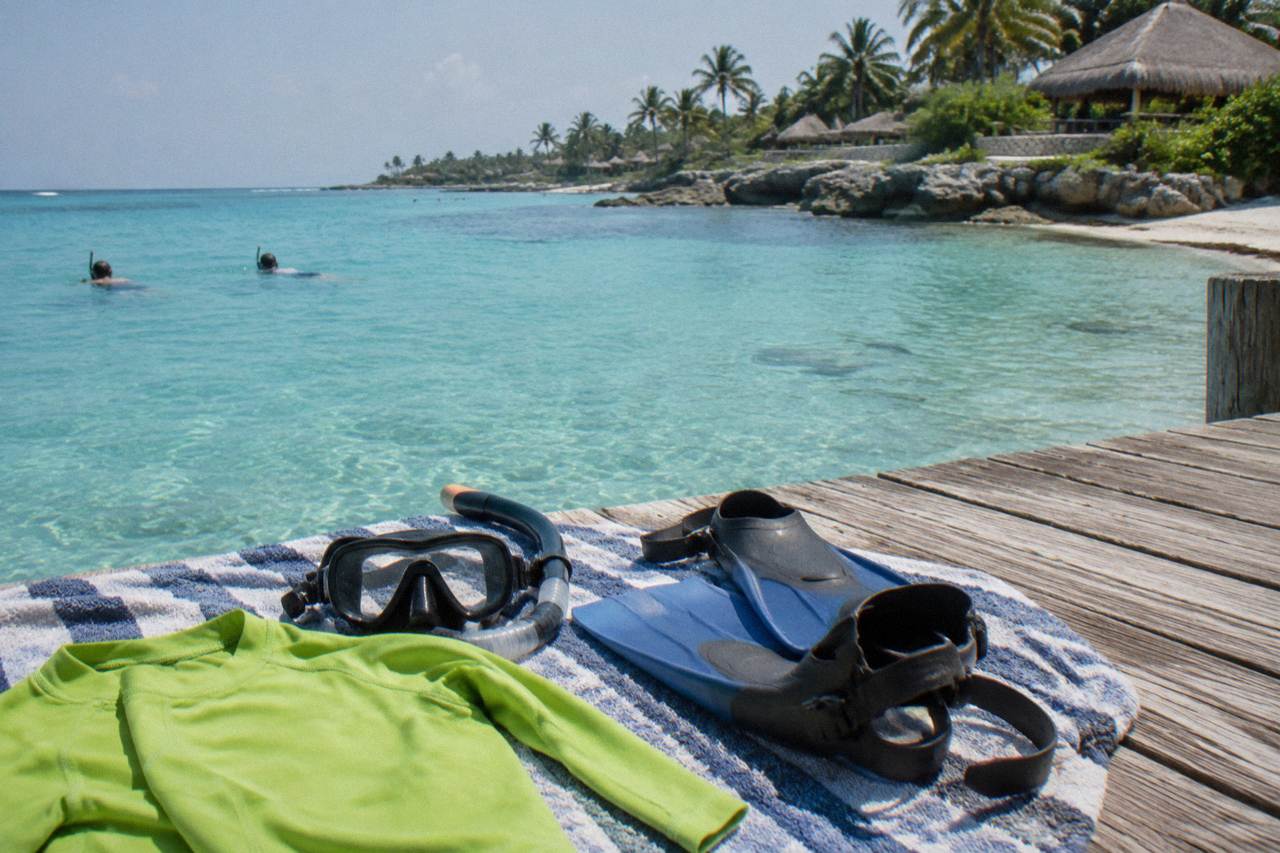
Bring a rash guard instead of relying on sunscreen: only biodegradable sunscreen is allowed in the Bahia de Akumal subpolygon. Tours supply snorkel gear and, on most lines, a vest; confirm fins with the operator. Carry cash: MXN 100 refundable locker deposit, about MXN 100 a day parking, and US$5 to US$10 for guide tips.
Packing for Akumal is not a generic beach-list problem. The bay is a federally protected marine refuge with its own rules, and what you put in the bag changes what you can do in the water and how the day flows once you are standing at the park entrance. The single most consequential item is sunscreen: the federal protection programme for the Bahia de Akumal allows only biodegradable sunscreen inside its waters, and a sun-shirt is the option the Centro Ecologico Akumal itself recommends first. Get that one right and most of the rest of the list is simple logistics.
The good news is that the heavy gear does not belong in your suitcase at all. Every turtle tour in the guide index lists snorkel equipment as included, and most add a vest. What you are really packing for is skin protection, cash in two currencies, and the small comforts that make a morning on a hot beach with limited shade tolerable. This guide walks through each decision in turn, with the prices and rules as they stand, and points to where each choice interacts with the tour you book. For the broader picture on costs, see the companion piece on what an Akumal snorkeling day costs.
Is Reef-Safe Sunscreen Allowed In Akumal Bay?
Only biodegradable sunscreen is permitted inside the Bahia de Akumal subpolygon under the federal protection programme, and a "reef-safe" label on the bottle does not automatically qualify it. The Centro Ecologico Akumal advises a sun-shirt or biodegradable sunscreen, and the sun-shirt is the safer choice because it removes the question entirely.
The rule comes from the Programa de Proteccion published in the official federal gazette in 2017, which allows only biodegradable sunscreen, bronceador biodegradable, in the Bahia de Akumal subpolygon and lists the use of non-biodegradable products among its prohibitions. You can read the measure in the protection programme itself on the DOF site. This is why the phrase "reef safe sunscreen Mexico" leads so many searches astray: "reef-safe" is a marketing term with no legal definition here, while "biodegradable" is the word the regulation actually uses. Check the label for that word specifically, and treat any brand named online as "approved" with suspicion, because no sunscreen brand has been named as approved for Akumal by any official source.
A long-sleeve rash guard solves the problem the way the Centro Ecologico Akumal prefers: its published snorkeling guidelines advise a sun-shirt or biodegradable sunscreen, and the shirt works the moment you put it on, needs no reapplication after an hour in the water, and covers the shoulders and back that burn worst while you float face-down watching turtles. The CEA snorkeling guidelines are short and worth two minutes before the trip.
For the parts of you a shirt cannot cover, face, hands, the backs of calves, use a biodegradable sunscreen applied before you reach the beach so it has time to bind to skin rather than wash straight off. If your day also includes Yal-Ku Lagoon, pack accordingly: the Xcaret-operated side of Yal-Ku requires chemical-free sunscreen, reported on its own admission page, and life vests are mandatory there. The comparison piece on Yal-Ku Lagoon or Akumal Bay covers how the two sites differ.
What Snorkel Gear Do You Need For The Turtle Circuits?
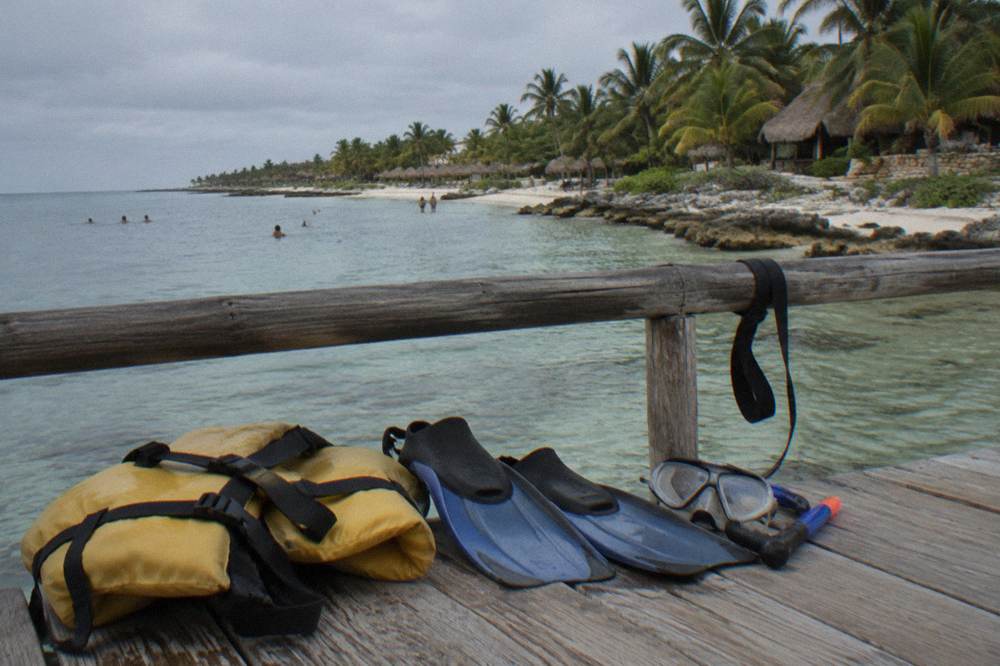
Inside the two buoyed turtle circuits, mask, snorkel tube, short fins and a life jacket that prevents total immersion are mandatory for every tourist and guide under the federal programme. In practice the tours supply most of it, so check your listing before packing swimwear alone: the Akumal Mayan Trips VIP line includes mask and snorkel, and the Tsuuk Park entry tours include equipment and a life jacket. Since the gear side is largely handled by the tours, the bigger question is which spot suits you, and the Puerto Morelos versus Akumal snorkel day comparison weighs prices, crowds, rules and travel time to help you choose.
The gear list is not a stylistic preference. The same DOF document that governs sunscreen sets out the equipment requirement for tourist activity in the circuits, and its stated rationale is contact reduction: vests keep snorkelers at the surface and short fins limit damage to the seagrass beds where the green turtles feed. A certified and authorized guide accompanies every group, one guide per group of up to six people, and the guide carries the authorization for the circuit entry. The details are in the federal protection programme text, and the plain-language version is in the guide to Akumal turtle snorkeling rules.
What each tour supplies varies at the edges, and the listing states it per line. The VIP GoPro line from Akumal Mayan Trips, from $34 per person, lists mask, snorkel, safety life jackets and the park wristband, with lockers excluded. The Tsuuk Park entry tours from Amigo Tours LATAM, from $45 per person, list snorkeling equipment, a life jacket, the park entrance fee and use of the facilities including lockers. The small-group line from We Love Akumal, from $33 per person, lists viewfinder, vest and snorkel tube, with GoPro photo album included. The key contrast is at the fee line: some lines fold the park entry into the ticket, others leave extras such as the private beach bracelet at $9 USD or the digital locker at MXN 100, card payment only, as separate items.
If you prefer a bare-bones entry with the biggest review pool behind it, the Swim with sea turtles line from Akumal Ecological Guides, from $45 per person and 4.6 from 454 reviews, the most reviewed listing in this comparison, includes equipment, fees, insurance, beach entrance, bathrooms, showers and lockers, with photography excluded. Bring nothing for the water; bring something for the photos if photos matter to you, because that line sells them separately.
Should You Bring Your Own Mask Or Use The Tour Equipment?
Tour-supplied masks and snorkels are included on every listing here and are perfectly serviceable for a one-hour float over seagrass, so most visitors should skip packing their own. Bring your own mask only if you have a hard-to-fit face, a prescription lens need, or a strong preference, because a personal mask that fits beats a rental that fogs.
The case for your own mask is fit, not hygiene. A mask that seals means you spend the circuit looking at turtles rather than clearing water every thirty seconds, and people with narrow faces, facial hair or strong prescriptions know within minutes whether a generic mask will work. Everyone else is fine with what the operator hands out: the listing for each line states the equipment explicitly, and "use of snorkeling equipment" covers mask, snorkel and vest across the group lines. Fins are a different matter again: the circuits require short fins specifically, so if you own long freediving fins, leave them at home, because the point of the rule is seagrass protection.
One thing worth packing even if you take every piece of operator gear is a small defog solution or baby shampoo, a few drops rubbed on the glass before the swim stops most fogging, and a couple of hair ties for anyone with long hair under a mask strap. Neither costs much, and both remove the two most common small annoyances of the morning.
The question of photos deserves its own thought, because tour treatment varies by line rather than following a rule. Some listings include a GoPro photo session in the ticket: the private line from Akumal Mayan VIP Tours, from $50, lists a GoPro Photo Session as an inclusion, and the small-group We Love Akumal line lists a GoPro photo album. Others name photography as an exclusion: the Akumal Ecological Guides line lists Photography among its exclusions, meaning you buy the operator's photos afterward or bring your own camera. No rule here prohibits personal cameras; just do not expect a discount for declining the operator's.
How Much Cash Should You Carry For The Day?
Plan on Mexican pesos and some US dollars: a MXN 100 refundable deposit per locker, about MXN 100 a day for beach parking or MXN 40 an hour at Plaza Ukana, 40 to 50 MXN for the colectivo if you arrive that way, and roughly US$5 to US$10 per person as a tip for good guide service.
Cash questions in Akumal come down to three separate things, and mixing them up is how people get caught short. The first is the park entry. Tsuuk Akumal Natural Park charges US$7 per person for foreign visitors and MXN 130 for Mexican nationals, wristband included, covering restrooms, showers, changing rooms, lockers, umbrellas and chairs subject to availability, and lifeguards; children under 5, INAPAM seniors and visitors with disabilities enter free, and Quintana Roo residents enter free without services. Those figures are on the official park services page. Note that most tour tickets already include the entry, so check your listing before budgeting for it twice. A wristband price in MXN specifically for tour bookers is not something any listing states consistently, so treat the park's own US$7 / MXN 130 figures as the reference.
The second is small cash on the beach. The locker deposit is MXN 100, refundable when you return the key. Parking at the main day-use lots runs about MXN 100 per day, reported, and Plaza Ukana inside the arch area charges MXN 40 an hour, reported. The colectivo from Playa del Carmen or the Tulum area runs 40 to 50 MXN per person, reported, dropping you at the highway pedestrian bridge. Card payment is accepted at the digital lockers used by some operators, MXN 100, card only, but nowhere else on that list, so notes and coins matter.
The third is tips. Common guidance in the region's operator ecosystem runs US$5 to US$10 per person for good service, reported as standard practice in local guides, and several listings name gratuities among their exclusions, which is the listing's way of saying the tip is not in your ticket. Tipping is optional everywhere; carrying the means to do it is not optional if you want the option.
| Cash item | Amount | Basis |
|---|---|---|
| Park entry, foreign visitors | US$7 per person | Official park page |
| Park entry, Mexican nationals | MXN 130 per person | Official park page |
| Locker deposit | MXN 100, refundable | Official park page |
| Beach parking, main lots | about MXN 100 per day, reported | Local parking guide |
| Plaza Ukana parking | MXN 40 per hour, reported | Local parking guide |
| Colectivo fare | 40 to 50 MXN, reported | Local transport guide |
| Guide tip | US$5 to US$10 per person, reported | Regional practice |
What Else Belongs In The Beach Bag?
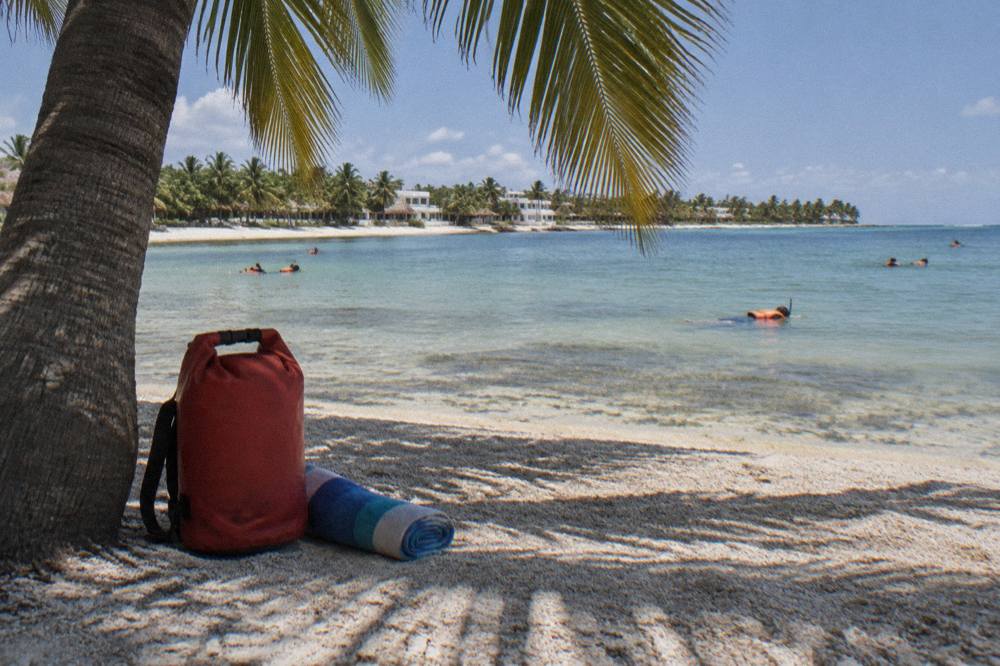
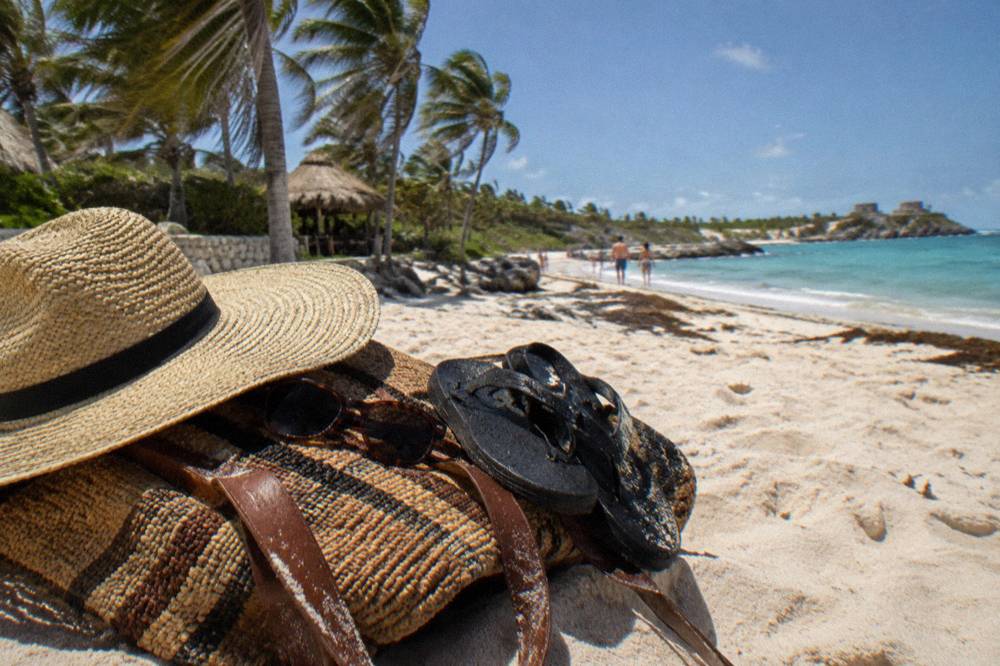
Two towels, a dry bag for keys and phones, water, a hat and sunglasses for the wait, reef walkable sandals or water shoes, a light change of clothes, and any personal medication: the tour covers the water gear, but nothing on the beach covers shade, food or hydration, so those are yours to bring.
Shade is the underrated item. The park ticket covers umbrellas and chairs subject to availability, which means they run out on busy mornings, and the turtle circuit itself is capped at 55 to 65 minutes per group under the programme, with check-in and briefing either side. A wide-brim hat, sunglasses and a shirt you can throw over a swimsuit cover the gap. Water matters just as much: some tours include bottled water and snacks, the half-day NS Vacations line lists snacks, bottled water and free beach time, while the short Akumal-based lines generally do not list food or drink, so pack as if you will buy nothing until after the swim. A dry bag or at least a zip-top bag keeps keys, cards and cash usable after the water; lockers exist but cost the deposit and are at the park end, not the beach end.
Footwear is a small decision with a real payoff. The beach entry involves hot sand and the bay floor near shore is sand and rock, so sandals that can get wet, or lightweight water shoes, beat flip-flops that float away. If your day combines the turtle swim with a cenote stop, the big cenotes have their own entry fees, Gran Cenote 500 MXN cash, reported, and Dos Ojos about 350 to 400 MXN, reported; the combo-day article on an Akumal and cenote tour covers that packing extension.
For families, the list stretches slightly. Children under 5 enter the park free, and the circuit rules apply to everyone in the water regardless of age: vest, mask, snorkel, short fins, guide, group of six. A swim noodle or pool toy does not substitute for a vest, and the federal text is explicit that a waist float cannot replace the life jacket. If a child is not a confident swimmer, the article on non-swimmers and the Akumal turtle swim addresses whether the activity fits at all. If you're weighing whether a turtle swim or a reef trip suits your crew better, the Puerto Morelos versus Akumal snorkel comparison walks through the differences in rules, crowds, and travel time.
| Item | Bring or skip | Why |
|---|---|---|
| Rash guard | Bring, first choice | CEA's preferred sun protection; no reapplication needed |
| Biodegradable sunscreen | Bring, labeled biodegradable | The only sunscreen type allowed in the subpolygon |
| Mask and snorkel | Skip unless fit issues | Every listing includes them |
| Long fins | Leave at home | Circuits require short fins; long fins damage seagrass |
| Towels, one per person | Bring | Not supplied by any listing |
| Water and snacks | Bring | Only some lines list them |
| Dry bag | Bring | Keys and cash survive the swim |
| Water shoes or wet-sandals | Bring | Hot sand and rocky near-shore floor |
What Should You Leave Behind For The Turtle Morning?
Leave behind non-biodegradable sunscreen, any touching or feeding intentions, drones and fishing gear, and the expectation of a guarantee: turtles are resident feeders in the bay, described by operators as a year-round norm, but the rules prohibit chasing, touching and harassing wildlife, and no straightforward listing promises a sighting.
The prohibited list is short and worth knowing cold. The federal programme prohibits touching, feeding, chasing, harassing or removing wildlife, standing on or touching coral, and anchoring in the bay, and within the subpolygon only biodegradable sunscreen is allowed. The Centro Ecologico Akumal's code of conduct adds the behavioral layer for snorkelers: stay inside the bay, stay horizontal on the surface, never dive down, keep at least 3 m from a turtle, watch any one turtle no more than 2 minutes, and know the beach flags. The lifeguards watch from 8:00 to 17:00 along the bay, and the flag system follows Proteccion Civil guidelines.
One timing fact belongs in the packing conversation because it decides your alarm: operators consistently describe early morning, before 9:00 or 10:00, as the calmer, clearer window before day-trippers arrive, reported across operator pages. That argues for packing the bag the night before, and for the longer lines it argues even harder. The half-day line from NS Vacations Tours, from $83 per person plus a government fee of US$15 per person payable separately as the listing states it, includes transport from Playa del Carmen, snacks, bottled water, gear and two hours of free beach time, which covers food and hydration for you and leaves the bag lighter for everyone except the towel carrier.
If the day is a full combination, the small-group cave cenote and turtle adventure from Blue Caribe, from $80 per person plus the government marine tax of US$20 per person and an operation fee of US$15 per person payable separately as the listing states them, includes transport, snacks and water, which trims the bag to personal items only. Read the fee lines carefully on combo days: separate payable fees are quoted per listing and should not be added to the headline price by anyone but you.
Does The Packing List Change With The Season?
Materially, no: the sun protection, cash and gear rules hold all year because they come from a standing federal programme, not a seasonal policy. What shifts is the weather layer, so in hurricane season, 1 June to 30 November, add a light rain shell and a flexible plan, and in high season, late December to early April, add patience and earlier booking.
The sunscreen, gear and circuit rules are constants: they are written into the 2017 protection programme and were unchanged in any official source found for this article. Sargassum is the genuine daily variable, and it is a daily status rather than a monthly norm: one monitor rated Akumal Light and another rated the bay Clean at 91/100 on 21 October 2026, while a satellite report on 17 October was clouded out. Check a monitor on the morning, not the month, and read the seaweed article on whether Akumal has a sargassum problem for how it affects the snorkel. A sea-temperature dataset puts October water near 29 C, warm enough that a thin rash guard is plenty.
Booking lead time is the one seasonal packing-adjacent fact worth flagging: reported booking averages on the big tour platforms run from about 12 to 45 days ahead, with one operator noting 2 to 3 weeks for the December to April peak. The Tsuuk Park entry line from Amigo Tours LATAM, from $45 per person, 4.8 from 41 reviews, includes the entrance fee, equipment, facilities and a certified guide, which keeps the bag itself to the short list above. This is the list the guide index was built around: the rules are strict, the gear is supplied, and the packing problem is mostly a sunscreen decision and a pocketful of pesos.
| Season window | Packing addition | Why |
|---|---|---|
| High season, late December to early April | Book weeks ahead; bring extra patience | Reported booking averages 12 to 45 days out |
| Hurricane season, 1 June to 30 November | Light rain shell; flexible plan | Official NOAA season window |
| Early morning slots | Bag packed the night before | Operators report calmer water in the 9:00 to 10:00 window |
| Any month | Rash guard, always | The standing sunscreen rule never pauses |
The short version, then: pack for skin, cash and shade, let the tour carry the water gear, and check your listing's inclusions line before you pack a single mask. Whether you arrive on the Riviera Maya Tulum and cenote day trip or walk in from a rented condo, the bag looks the same, and the turtles do not care which tour logo is on the vest.
Common Questions About Packing For Akumal Snorkeling
Is Reef-Safe Sunscreen Allowed In Akumal?
Only if the label says biodegradable. The federal protection programme allows biodegradable sunscreen alone in the Bahia de Akumal subpolygon; "reef-safe" is a marketing term with no legal standing here, and no brand has been officially named as approved. A rash guard is the option the Centro Ecologico Akumal recommends first.
Do I Need To Bring My Own Snorkel Gear?
No. Every turtle tour listed here includes snorkel gear and most list a life jacket; fins are not on the inclusion lists, so ask the operator before you pack. Bring your own mask only for fit or prescription reasons, and leave long fins at home.
How Much Cash Do I Need In Akumal?
Budget for a MXN 100 refundable locker deposit, about MXN 100 for a day's parking or 40 to 50 MXN for the colectivo, reported, and roughly US$5 to US$10 per person for a guide tip. Park entry is US$7 for foreign visitors or MXN 130 for Mexican nationals if your tour ticket does not already include it.
What Sunscreen Rules Apply At Yal-Ku Lagoon?
The Xcaret-operated side of Yal-Ku requires chemical-free sunscreen and makes life vests mandatory, reported on its admission page, and entry is about US$20 or 300 MXN on that side. It is a stricter, separate rule set from the bay's biodegradable requirement, so pack for both if your day includes both.
Do The Tours Include Towels And Food?
Generally no. Most short Akumal lines list gear, fees and facilities but no towels and no food; a few combo lines list bottled water and snacks. Check your listing's inclusions and exclusions lines and pack towels, water and snacks accordingly.