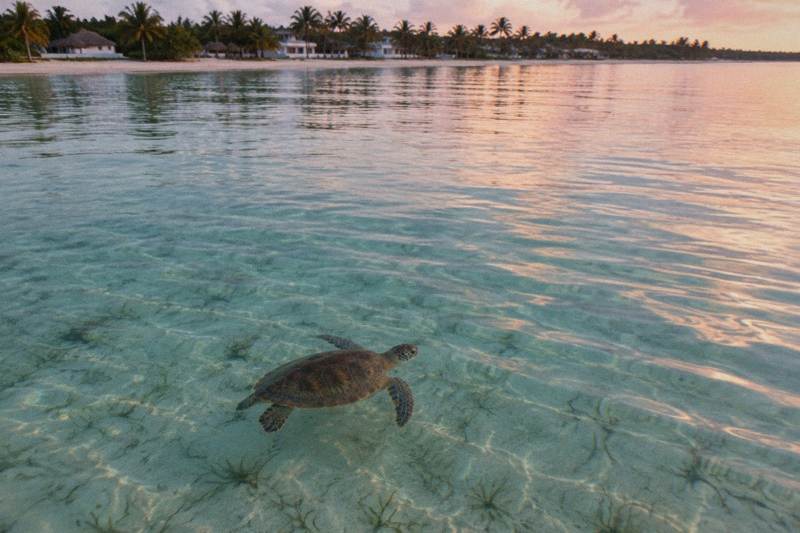
Akumal Turtle Rules: Guides, Life Vests And No Touching
Touching turtles is prohibited in the Akumal refuge under its federal protection programme, and the rules go further: certified guides, life vests and short fins apply inside the buoyed turtle circuits, with the CEA code adding three meters of distance and a two-minute watch limit.
Short answer
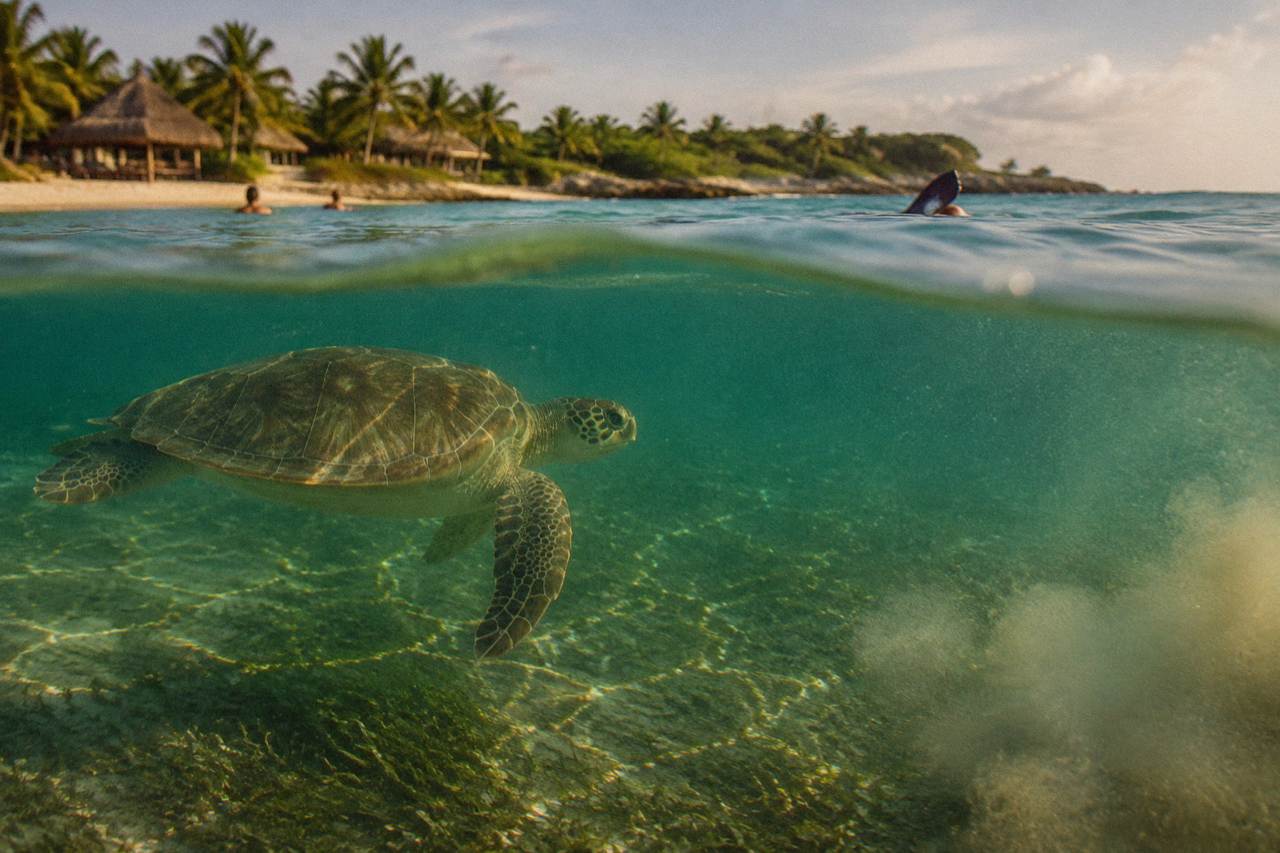
No, you cannot touch sea turtles in the Akumal refuge. Its federal protection programme prohibits touching, feeding, chasing or harassing wildlife, and inside the buoyed circuits it requires a certified guide, a life vest, short fins and groups of up to six; the CEA code adds 3 meters of distance and a 2-minute limit. Independent snorkelers outside the circuits face lighter requirements.
Touching a sea turtle in Mexico is a federal offense, not a suggestion. The protection programme that governs Akumal Bay lists touching, feeding, chasing, harassing and removing wildlife among its explicit prohibitions, alongside standing on coral and anchoring in the bay. That single fact shapes everything about how a turtle morning works in Akumal: the tours that run inside the buoyed circuits, the vests and short fins every swimmer wears, the three meters of space you keep, and the two minutes you may watch any one turtle before moving on.
This guide lays out the full rule set as it actually applies on the water. The distinction that trips most visitors up is scope: inside the two marked turtle circuits, federal rules make a certified guide, a life vest, short fins and small groups compulsory for tourist activity. Outside those circuits, the Centro Ecologico Akumal publishes a separate code of conduct under which an independent snorkeler needs neither a guide nor a vest. Both are true at once, and a visitor who merges them into one blanket rule, in either direction, gets the bay wrong. Rules aside, how the turtles themselves respond to snorkelers is its own question, and what friendly actually means in Akumal Bay covers it in plain terms.
The practical outcome is simple. A guided tour, such as the park-entry lines from Amigo Tours LATAM or the small-group GoPro experiences run by We Love Akumal, is how most travelers legally and comfortably swim over the seagrass where turtles feed. The full swim with turtles in Akumal picture, including the private options from Marine Life Akumal MX and Nado con tortugas, is covered in that guide. This page is the rulebook.
Can You Touch Sea Turtles In Mexico?
No. Touching a sea turtle is prohibited everywhere in Mexico, and in Akumal Bay the ban sits inside a detailed federal protection programme that adds distance limits, time limits and gear requirements on top of it. The prohibitions cover touching, feeding, chasing, harassing and removing wildlife, standing on or touching coral, and anchoring boats in the bay. No fine amounts are published in the documents reviewed here, so treat the rule as absolute rather than weighing a penalty.
The legal backbone is the Programa de Proteccion for the Bahia de Akumal refuge, a marine protected area of roughly 1,653 hectares about 37 km south of Playa del Carmen, established to protect green, loggerhead and hawksbill turtles along with staghorn and elkhorn coral and the bay's mangroves. The refuge agreement and the programme that implements it are published in the official federal gazette, and the protection programme itself is the source for the circuit rules summarized throughout this guide.
Why the rules are this strict comes down to what the bay is. Operators describe resident green turtles feeding on the seagrass beds year round, which is reported, not a promise, and it is exactly that grazing routine the refuge exists to protect. A turtle that is repeatedly approached, touched or blocked burns energy it needs, abandons feeding grounds, and in the worst cases stops returning. The 2026 nesting season closed in September with 922 nests across the Akumal beaches, 747 from green turtles and 175 from loggerheads, a medium-high season below the historic figure of 1,350. Every one of those adults is a reason the three-meter rule exists. Plenty of visitors assume a formal facility stands behind these protections, and the explanation of whether Akumal has a turtle sanctuary sorts out what the refuge actually is and what it is not.
Visitors sometimes ask whether a quick touch for a photo counts. It counts. The prohibition is on the act, not on the outcome, and guides on the official circuits are tasked with keeping their groups compliant. If you want photos of the encounter, the tour type matters more than the turtle's mood: the VIP GoPro line from Akumal Mayan Trips and the small-group experience from We Love Akumal both include photos taken by the guide, which means nobody in the water is swimming at a turtle with a camera in hand. And for anyone curious how the turtles themselves feel about sharing their bay, the explainer on whether sea turtles are friendly covers what their calm behavior actually signals and why a little distance keeps it that way.
| Prohibited in the Bahia de Akumal refuge | Where the rule comes from |
|---|---|
| Touching, feeding, chasing, harassing or removing wildlife | Federal protection programme, prohibitions list |
| Standing on or touching coral | Federal protection programme, prohibitions list |
| Anchoring boats in the bay | Federal protection programme |
| Non-biodegradable sunscreen in the Bahia de Akumal subpolygon | Federal protection programme |
| Swimming, recreation and boats at night | Refuge kept clear at night, turtles court and mate April to November |
Do You Need A Guide To Snorkel In Akumal Bay?
It depends entirely on where in the bay you are. Inside the two buoyed turtle circuits, the federal programme makes a certified, previously authorized guide compulsory for tourist activity, with one guide per group. Outside the circuits, the Centro Ecologico Akumal's own guidelines state that an independent snorkeler needs neither a guide nor a vest, though it advises wearing one. Neither statement overrides the other: the scope is the rule.
The two regimes come from two different documents, so keep them apart. The federal programme, published in 2017, regulates the marked turtle observation circuits, Circuit 1 and Circuit 2, where guided turtle swims legally operate. The Centro Ecologico Akumal, the local ecological center, publishes a code of conduct and an FAQ, updated in February 2021, addressed to snorkelers in the bay generally. Its FAQ is the source for the point that an independent snorkeler outside the circuits is not required to have a guide or a vest.
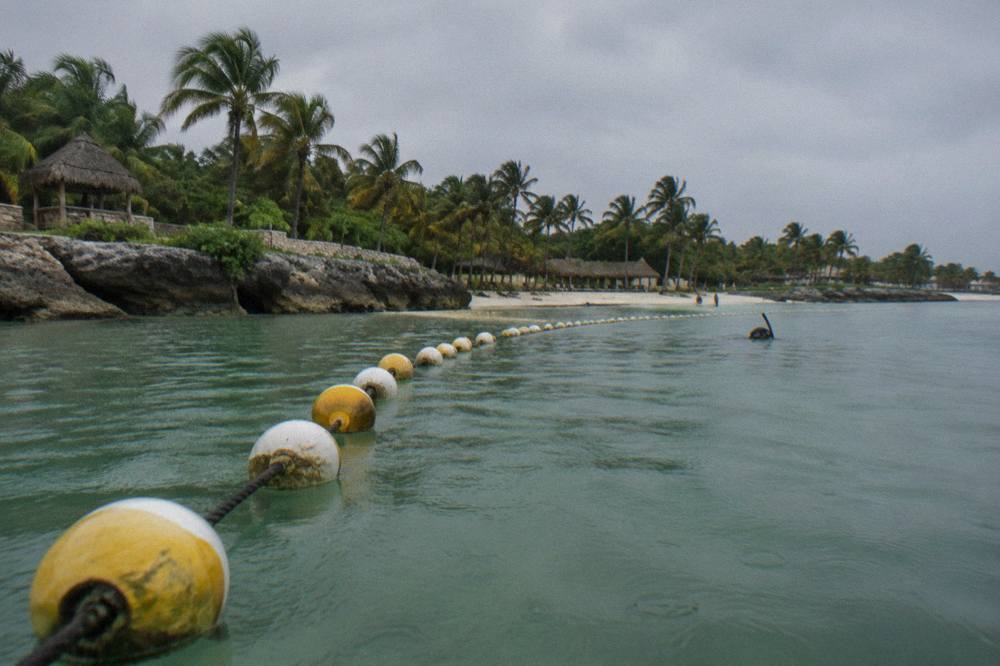
What does this mean for a visitor who arrives without a booking? Akumal Beach is a public federal beach with free access to walk in and swim, and the deeper seagrass zone where turtle swims run is the regulated part. The convenient access route runs through Tsuuk Akumal Natural Park, whose entry covers facilities rather than a tour, and the park itself does not run turtle tours or rent vests. To swim in the circuits you join a tour with a certified guide. That is why nearly every listing in this lineup, from the Amigo Tours LATAM park-entry lines to the most reviewed tour listed here, the Akumal Ecological Guides turtle swim with 454 reviews, is built around a licensed local guide.
The tour-versus-independent choice is really a choice about which set of rules you are signing up for. A guided tour puts the compliance burden on the operator: the guide, the vest, the group cap and the circuit time limit are all handled, and the park-entry lines from Amigo Tours LATAM state that the entrance fee to Tsuuk Akumal Natural Park is included in the price. Going independent is free and legal outside the circuits, but you carry the code of conduct yourself, and you are not in the turtle observation zone.
| Question | Inside the buoyed circuits | Outside the circuits, general bay |
|---|---|---|
| Certified guide | Compulsory for tourist activity, one per group | Not required per CEA's FAQ |
| Life vest | Compulsory, must prevent total immersion | Advisable, not required per CEA |
| Fins | Short fins compulsory | Not specified by CEA |
| Group size | Maximum 6 people plus the guide | No federal cap stated |
| Turtle proximity | CEA code: 3 m minimum, 2 minutes max per turtle | Same conduct code applies |
One wrinkle worth knowing before you book: a single source reports that Semarnat applies two annual rest periods to the turtle circuits, including September. It is reported, not confirmed on an official page, and it does not mean tours are suspended now. Confirm current dates with the operator when booking.
What Gear Does The Akumal Turtle Circuit Require?
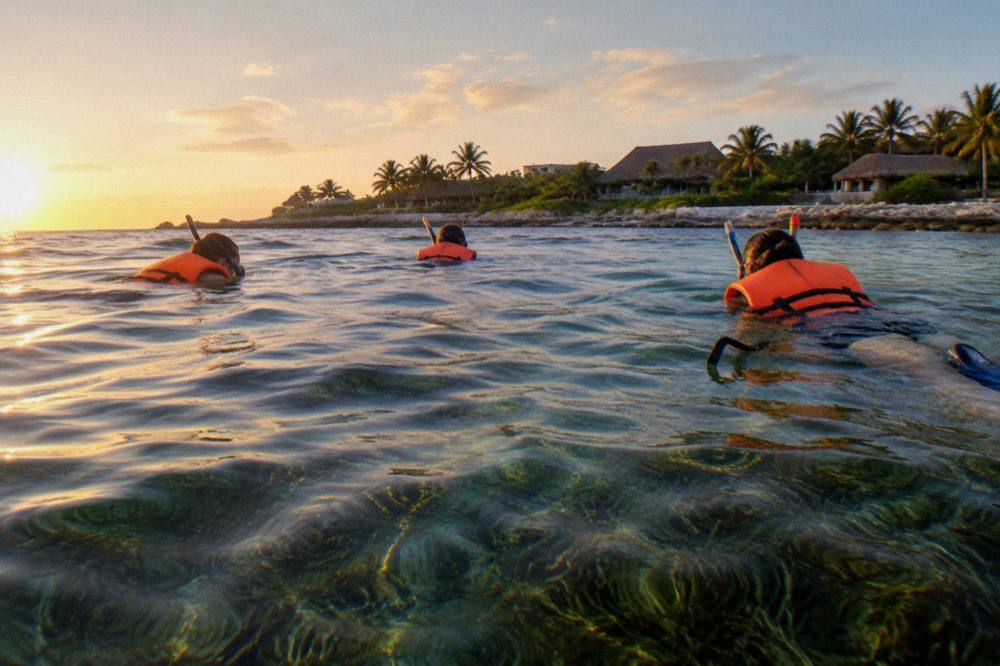
Inside the circuits, four items are mandatory for every tourist and every guide under the federal programme: a snorkel tube, a mask, short fins and a life jacket that prevents total immersion, whether or not a listing supplies them. A waist float does not satisfy the vest requirement. The rationale in the programme text is that vests and short fins reduce contact with reef and seagrass, which is why the gear list and the habitat rules are the same document.
The short-fin point surprises people. Long free-diving fins stir sediment and damage seagrass when a swimmer's kick drops low, so the programme specifies short fins for everyone in the circuits. Listings supply mask, snorkel and usually a vest; ask the operator about short fins. The Akumal Mayan Trips VIP line lists mask and snorkel, safety life jackets and access to the official protected circuit among its inclusions. The small-group We Love Akumal experience lists a viewfinder, vest and snorkel tube. The private lines, such as the GoPro session from Akumal Mayan VIP Tours, list lifejacket, new snorkel and mask. The pattern is consistent because the rule is federal.
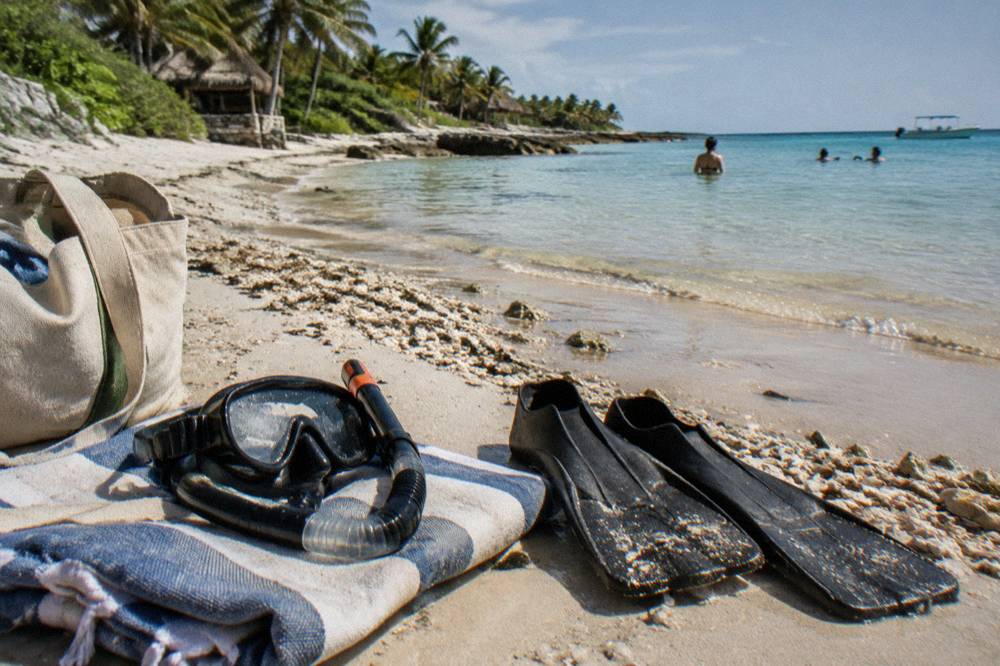
Sunscreen is the other gear-adjacent rule. In the Bahia de Akumal subpolygon only biodegradable sunscreen is allowed, and non-biodegradable use is listed among the prohibitions. The CEA guidance frames it as a sun-shirt or biodegradable sunscreen, and the practical advice is to lead with a rash guard: it needs no label-checking and it works all morning. Do not assume a product labeled "reef-safe" is automatically compliant; the rule says biodegradable, so read the label. Yal-Ku Lagoon, a separate snorkel spot north of the bay, is reported to require chemical-free sunscreen, another reason a sun shirt is the simplest answer.

The circuit caps explain why morning tours are worth booking ahead. Circuit 1 takes 256 people per day across 36 groups, with a maximum of 55 minutes per group. Circuit 2 takes 300 people per day across 42 groups, with a maximum of 65 minutes. Hours run 9:00 to 17:00, and groups stay ten meters apart on circuits 16 meters wide. Those are hard numbers from the protection programme, and they are the reason a same-day walk-up in high season can find the day full. The general Akumal snorkeling guide covers timing strategy in more depth.
| Required in the circuits | Details from the protection programme |
|---|---|
| Snorkel tube and mask | Mandatory for tourists and guides |
| Short fins | Mandatory; long fins excluded to protect seagrass |
| Life jacket preventing total immersion | Mandatory; a waist float is not an acceptable substitute |
| Certified guide | One per group, preferably from the local population |
| Biodegradable sunscreen | Only type allowed in the Bahia de Akumal subpolygon |
How Close Can You Get To Turtles In Akumal?
The Centro Ecologico Akumal's code of conduct sets a minimum distance of 3 meters from any turtle and a maximum of 2 minutes watching any one turtle. Beyond that, the conduct rules are behavioral: stay inside the bay, stay horizontal at the surface, never stand on the reef, never dive down, and never touch or chase a turtle. The code applies to guided and independent snorkelers alike, and guides on the circuits enforce it in real time.
Three meters is shorter than most people estimate and longer than most photos suggest. A turtle grazing seagrass moves slowly and will often continue feeding with snorkelers at that distance, which is precisely why the distance works: the turtle controls the encounter. The two-minute limit exists because a turtle that tolerates one group for a few minutes can be exhausted by a chain of groups each staying longer. Moving on is part of the rule set, not an optional courtesy.
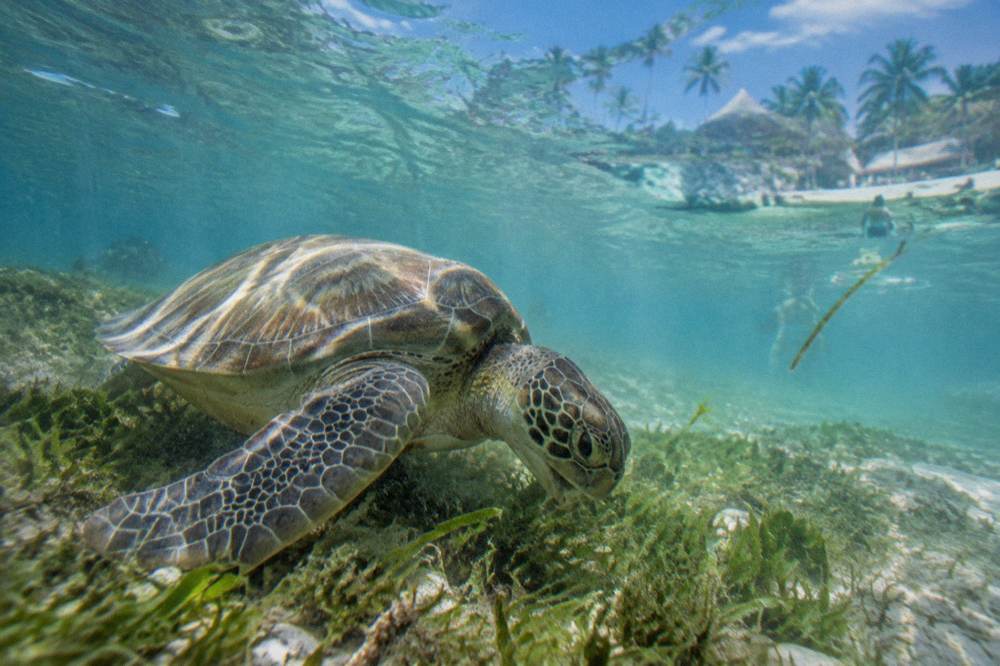
Staying horizontal matters more than it sounds. A vertical snorkeler's fins drop, and dropped fins hit seagrass and coral. The CEA guidance is explicit: never stand on the reef and never dive down or swim underwater in the bay. The same logic drives the vest requirement inside the circuits, since a vest that prevents total immersion keeps every swimmer at the surface where contact with the bottom is unlikely.
Guides make compliance easy, which is a quiet argument for the guided format. On the Akumal Ecological Guides swim, the most reviewed option at 4.6 from 454 reviews, from $45 per person, a guide leads the group and the price includes gear, fees and insurance.
If you are snorkeling independently outside the circuits, the same conduct code is yours to follow alone, and the beach flag system is worth knowing too. Akumal posts flags derived from civil-protection guidance, lifeguards are on duty at multiple points along the bay, and the bay has marked boat navigation channels that snorkelers should cross with care. The is Akumal safe guide covers the wider safety picture, including the beach flags in detail.
Why Are The Akumal Turtle Rules So Strict?
Because Akumal Bay is a legally designated refuge, not just a nice beach with turtles. The federal agreement names it an area de refugio protecting three turtle species and their habitat across roughly 1,653 hectares, and the protection programme turns that designation into operational rules: marked circuits, caps, gear, guides and conduct. The strictness is the designation working as intended, and the nesting numbers are the evidence it is needed. If you were picturing a rescue facility with tanks and staff, the explanation of whether Akumal actually has a turtle sanctuary covers what the refuge designation does and does not include.
The 2026 season tells the story in figures. May opened with 53 nests recorded. The season closed in September at 922 nests, of which 747 were green turtle and 175 loggerhead, a medium-high season below the historic 1,350. Within that total, Bahia Akumal itself held 345 green nests and 55 loggerhead nests, and neighboring Playa Tortuga held 261 green and 78 loggerhead. Nesting season on the Xcacel-Xcacelito subpolygon runs 1 May to 30 November. These are beach counts, not a promise of what a snorkeler sees, but they explain why the bay's feeding adults are protected the way they are.
The night closure is part of the same logic. The refuge is kept free of swimming, recreation and boats at night because turtles court and mate in the bay from April to November. Daytime circuits with capped groups and guides are the compromise that lets visitors swim with turtles at all, in a bay where the turtles' own lifecycle has first claim.
Habitat protection rounds it out. The refuge protects not just turtles but staghorn and elkhorn coral and mangroves, which is why standing on coral and anchoring are prohibited outright and why short fins are mandatory. The seagrass beds are the food source that makes the turtles resident, reported by operators as year-round grazing by green turtles, and damaged seagrass removes the reason the turtles are there at all. Every gear rule traces back to a habitat rule.
| Rule | The reason behind it |
|---|---|
| 6 people plus guide per group | Keeps encounter pressure on each turtle low |
| 3 m minimum distance | Lets turtles continue feeding without fleeing |
| 2 minute watch limit | Prevents cumulative harassment across groups |
| Short fins and surface vest | Reduces contact with seagrass and coral |
| Night closure, April to November | Turtles court and mate in the bay at night |
What Happens If You Break The Rules In Akumal Bay?
No official document publishes a fine amount for Akumal Bay; the prohibitions themselves are written into federal law. What is verifiable is the enforcement structure: circuit activity runs under a SEMARNAT authorization, certified guides are responsible for their groups, lifeguards and paramedics are on duty, and the prohibitions are written into federal law. The safe assumption is that consequences exist and are not published for convenience.
The answer about penalties is a non-answer, and that is deliberate. Plenty of travel content invents fine figures for turtle touching in Mexico.
Practically, the federal rules for the turtle circuits are easy to follow because the tours are built around them. The small-group snorkel and photos experience from We Love Akumal, 4.9 from 216 reviews from $33 per person, is a good example: the listing includes access to the protected natural area, a vest and a snorkel tube, and a GoPro photo album, so the compliance items are simply part of the product. Guests do not need to memorize the programme, they need to follow their guide.
One fee confusion deserves a clear note here because it is where visitors most often feel a rule has been sprung on them. Three different payments exist: the Tsuuk Akumal Natural Park entry, US$7 per person for foreign visitors and MXN 130 for Mexican nationals, which covers facilities and a wristband; the tour price itself, from $32 per person for the cheapest group line in the lineup here; and extra fee lines inside some listings, such as the US$15 per person government fee stated on the NS Vacations half-day trip or the US$25 conservation fee on the Ekinox Tours reef line, each quoted as the listing states it. A tour that includes park entry is not hiding a fee, and a listing with a separate fee line is not overcharging. Read the inclusions.
| Payment | Amount as stated | What it covers |
|---|---|---|
| Tsuuk park entry, foreign visitors | US$7 per person | Facilities, wristband, lifeguards |
| Tsuuk park entry, Mexican nationals | MXN 130 per person | Same services |
| From $32 to $46 per person | From $32 to $45 per person | Guide, gear and, on most lines, park entry |
| Separate fee line, NS Vacations half day | US$15 per person payable separately | Government fee per the listing |
| Separate fee line, Ekinox Tours reef tour | US$25 per person payable separately | Conservation fee per the listing |
Free-entry categories exist too: children under 5, INAPAM seniors, people with disabilities and Quintana Roo residents without services enter the park free, per the park's official services page. None of that affects the turtle circuit rules, which apply to everyone in the water regardless of how they entered the beach.
Do The Rules Change For Tulum And The Riviera Maya?
The circuit-specific rules, the guide, the vest, the caps, the 55 and 65 minute limits, apply to Akumal Bay's two buoyed circuits. Elsewhere in the Riviera Maya the framework is the national wildlife law that prohibits touching and harassing sea turtles anywhere in Mexico, plus whatever local rules a site imposes. Yal-Ku Lagoon mandates vests on its operated side; cenotes and ruins have their own fee structures entirely. The no-touching rule is the one constant. If you're weighing other spots besides Akumal Bay, the guide to Mexico's best places to swim with sea turtles compares the rules, tour costs and timing at each site.
Tulum visitors often combine stops, and the combo tours show how the rule set shifts by site. The Ekinox Tours day trips from Playa del Carmen and Cancun, which pair Akumal turtle swims with Tulum ruins and a cenote, run the Akumal segment under the circuit rules and then move to sites governed by other authorities. Tulum's archaeological zone admission is reported at 265 MXN for foreign adults, entry to Parque del Jaguar is 100 MXN for foreign visitors and free for Mexican nationals under an official decree, and Gran Cenote charges 500 MXN cash, all reported figures to confirm on site.
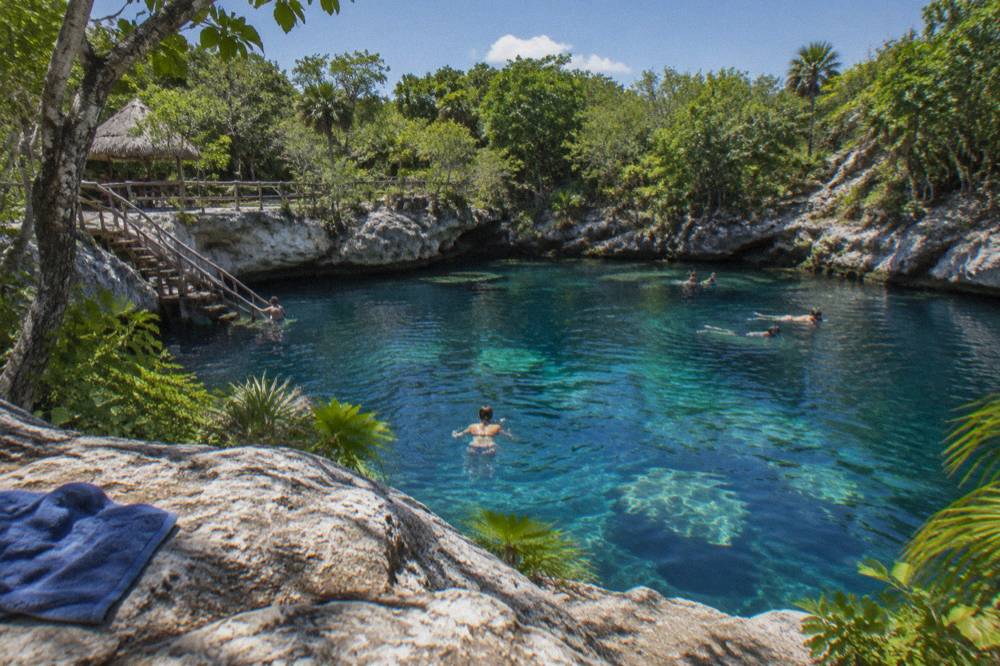
Yal-Ku Lagoon is the comparison most worth making because it is the other famous Akumal-area snorkel. On the Xcaret-operated side, entry is about US$20 or 300 MXN, hours run 9:00 to 17:00, life vests are mandatory and chemical-free sunscreen is required, both reported from the operator's page. Fish are the draw there rather than turtles, and the vest rule is stricter than Akumal's outside-circuit reality. The full comparison lives in the Yal-Ku Lagoon or Akumal Bay guide.
For a Riviera Maya itinerary that keeps everything compliant, the structure is straightforward. Book a guided tour for the Akumal turtle swim, follow the site rules at each subsequent stop, and let the operator's logistics handle transport. The three-cenote jungle day from Soul Experiences Mexico, 5.0 from 35 reviews from $249 per person, states a maximum of 13 travelers, includes lunch, transport from Playa del Carmen and all fees and taxes, and shows the all-inclusive end of the spectrum. At the other end, the budget planning is covered in the what to bring for Akumal snorkeling guide, where the sun-shirt-versus-sunscreen decision gets a full treatment. If you're still weighing whether Akumal is the right choice, the comparison of Mexico's turtle swim destinations looks at the rules, the costs and the timing side by side.
How Do You Book A Legal Turtle Swim In Akumal?
Book any listing that states a certified guide, provided snorkel gear and access to the protected area or park entry, and the compliance side is done for you. Among the tours listed, that describes the park-entry lines from Amigo Tours LATAM from $45 per person, the VIP GoPro line from Akumal Mayan Trips from $34 per person, and the small-group and private lines in between. Check cancellation terms on the booking page, since policies vary per listing.
One clean example is the Tsuuk Park entry tour with turtles snorkeling from Amigo Tours LATAM, which runs 1.5 hours, is rated 4.8 from 41 reviews, costs from $45 per person, and lists the park entrance, facilities, gear, life jacket and a certified guide among its inclusions. For a reader who has just absorbed the rulebook, a listing like this is the answer to the question the rules raise: it is how you do the turtle swim legally, with every federal requirement carried by the operator rather than by you.
Booking lead time is worth a line. Reported averages from live listings range from 12 to 45 days in advance, with one operator noting two to three weeks for the December to April peak. That matches the circuit math: 256 plus 300 daily places sound like a lot until a high-season morning distributes them across every visitor from Cancun and Playa del Carmen. For more on timing, the guide to the best month to see turtles in Akumal and the time-of-day companion piece here break down the seasonal and daily windows. The short version: early morning slots are the calmest and most in demand.
A final note on what to bring, since the rules answer most of it for you. A rash guard solves the sunscreen rule, the tour supplies the gear the circuit requires, and cash covers parking, reported at about MXN 100 a day in the main lots, plus a tip if service earns one, with cash tips of $5 to $10 per person described as standard practice in local guides. What you should not bring is any expectation of touching, feeding or holding a turtle. The morning still delivers seagrass meadows and, usually, turtles grazing at their own pace.
Common Questions About Akumal Turtle Rules
Can You Touch Sea Turtles In Mexico?
No. Federal rules prohibit touching, feeding, chasing, harassing or removing sea turtles, and Akumal Bay's protection programme lists these among its explicit prohibitions along with standing on coral and anchoring in the bay.
Do You Need A Guide To Snorkel With Turtles In Akumal?
Inside the two buoyed turtle circuits, yes, a certified and authorized guide is compulsory for tourist activity. Outside the circuits, the Centro Ecologico Akumal states an independent snorkeler needs neither a guide nor a vest, though it advises wearing one.
Is A Life Jacket Required In Akumal Bay?
Inside the turtle circuits, yes, and it must be a vest that prevents total immersion; a waist float does not qualify. Outside the circuits a vest is advisable but not required for independent snorkelers per the CEA FAQ.
How Close Can You Swim To A Turtle In Akumal?
The CEA code of conduct sets a minimum of 3 meters from any turtle and a maximum of 2 minutes watching any one turtle. Stay horizontal, never dive down, and never stand on the reef.
Is Sunscreen Banned In Akumal Bay?
Only biodegradable sunscreen is allowed in the Bahia de Akumal subpolygon. A sun-shirt or rash guard is the simplest compliant choice, and a "reef-safe" label does not automatically mean a product meets the biodegradable rule, so check the label.
Are Turtle Tours In Akumal Ever Suspended?
One source reports two annual Semarnat rest periods for the turtle circuits, including September. This is reported, not confirmed on an official page, so confirm current dates with your operator when booking.