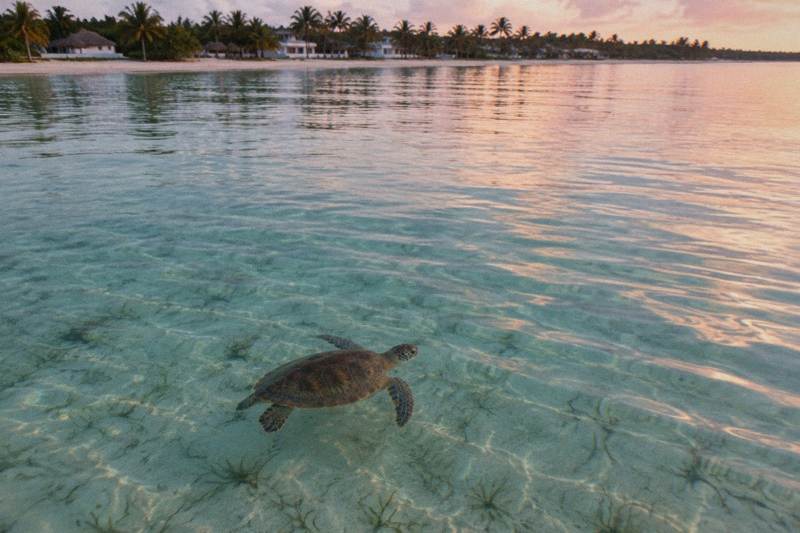
Can You Snorkel Off The Beach In Akumal?
Independent snorkeling in Akumal Bay versus the buoyed turtle circuits: what the federal protection programme requires, what CEA says about going without a guide, and what shore snorkeling actually costs.
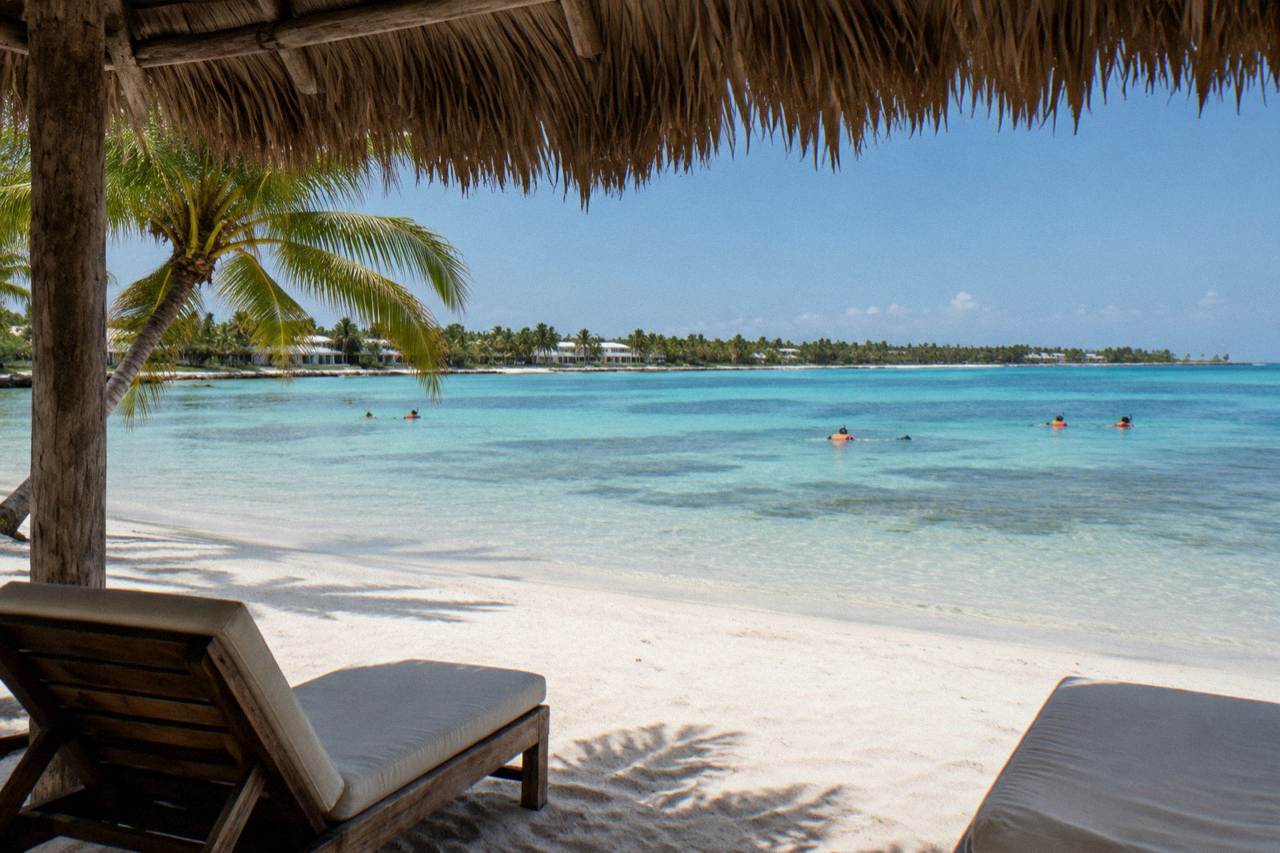
Yes, and the beach itself is the easiest part. Akumal Beach is a public federal beach with free access to walk the sand and swim, and an independent snorkeler outside the marked turtle circuits needs neither a guide nor a vest under the Centro Ecologico Akumal's own guidelines. Inside the two buoyed circuits the picture changes: the federal Programa de Proteccion makes a certified guide, short fins and a life jacket compulsory for tourist activity.
That split is the single most misunderstood fact about Akumal, and it is worth unpacking carefully because it decides how a day here goes. The rules come from two different authorities, they apply to two different zones of the same bay, and both are quoted directly from their own published pages.
The Short Answer For Independent Snorkelers
Yes. Akumal Beach is public federal land, free to walk and swim, and CEA's published snorkeling guidance states an independent snorkeler outside the buoyed circuits needs no guide and no vest, though a vest is advisable. The turtle seagrass beds sit inside Circuit 1 and Circuit 2, where the federal protection programme requires a certified guide, short fins and an immersion-preventing life jacket, with groups capped at six plus the guide.
Two documents govern one bay. The DOF decree of March 2016 established the Bahia de Akumal as a marine refuge area of roughly 1,653 hectares protecting green, loggerhead and hawksbill turtles, reef coral and mangroves. The protection programme published under that decree in 2017 regulates tourist swimming inside the two buoyed circuits: 9:00 to 17:00, a maximum of 6 people plus a certified guide per group, a maximum of 55 minutes per group on Circuit 1 and 65 minutes on Circuit 2, and mandatory snorkel, mask, short fins and a life jacket that prevents total immersion. A waist float does not count as a vest.
The Centro Ecologico Akumal, the local ecological center that has monitored this bay for decades, publishes a separate code of conduct for snorkelers generally: stay inside the bay, stay horizontal, never stand on the reef, keep at least 3 m from a turtle, spend no more than 2 minutes watching any one turtle, and wear a sun-shirt or biodegradable sunscreen. Its FAQ, updated 9 February 2021, is the source of the point independent snorkelers care about: outside the circuits, CEA says no guide or vest is required, with the vest still advisable. Both statements are true at once because they describe different water.
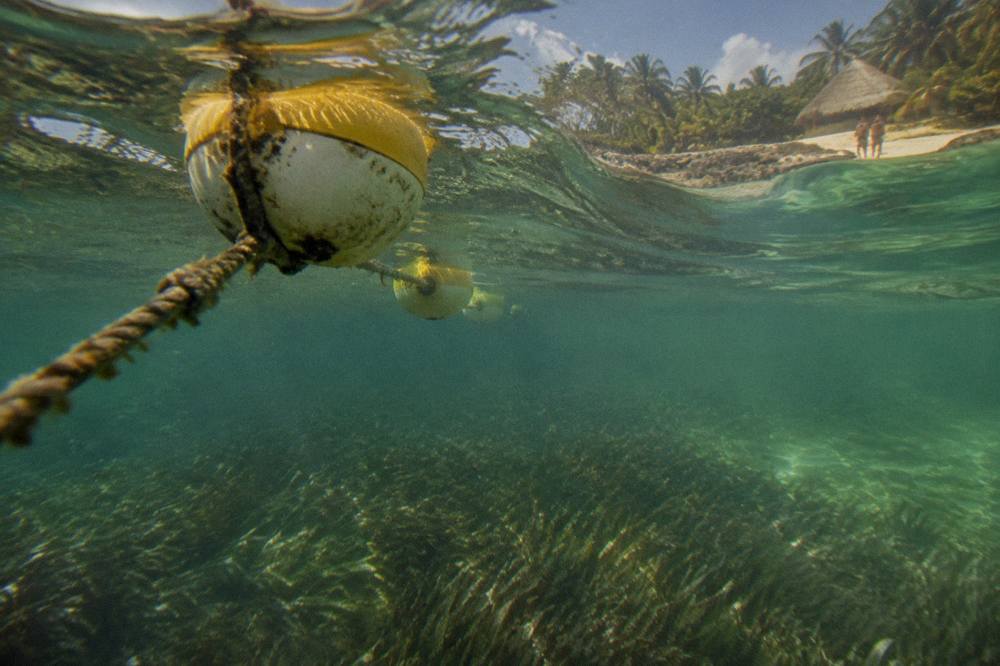
For most visitors the practical question is not whether shore snorkeling is allowed but what it gets you. The near-shore shallows are pleasant water, and guests report fish and occasional turtle sightings anywhere in the bay. But the seagrass beds where green turtles actually graze, the reason Akumal is famous, sit within the circuit boundaries, and accessing them as a tourist means the guided format: a wristband, a guide and a scheduled slot. Operators describe resident green turtles feeding on those beds year-round as the norm, though no source promises a sighting on any given morning.
The guided options here start low. The Akumal Beach VIP line from Akumal Mayan Trips runs from $34 per person for a 1.5-hour guided swim with GoPro photos included and park admission in the price, rated 4.6 from 410 reviews. The park-entry lines from Amigo Tours LATAM, including the featured Tsuuk Park Entry with Turtles Snorkeling Tour from $45 per person, bundle the entrance fee, gear, facilities and a certified guide. The small-group Akumal Snorkeling and Photos with Turtles line from We Love Akumal is a local-operator option with photos included, one of the cheapest at from $33 per person, rated 4.9 from 216 reviews, though park entry is not among its listed inclusions. If the question is simply how to get into the circuit water with everything handled, these three answer it.
Is A Guide Required Or Not?
Both answers exist because two authorities govern two zones. Inside the buoyed circuits, the federal Programa de Proteccion makes a certified, previously authorized guide compulsory for tourist activity, alongside short fins and a life jacket that prevents total immersion. Outside the circuits, CEA's own FAQ says an independent snorkeler needs neither guide nor vest, with a vest advisable.
The distinction matters legally and practically. The programme's rules for the circuits are specific: one certified guide per group, maximum six snorkelers, groups spaced 10 m apart, activity hours 9:00 to 17:00, and the gear set made mandatory precisely to reduce contact with reef and seagrass. Nothing in the federal text applies those requirements to a person swimming off the public beach outside the marked areas. Equally, nothing in CEA's guidance licenses a swimmer to drift into the circuits unguided: the caps there are enforced through the operator system, with 256 people per day on Circuit 1 and 300 on Circuit 2 entering via wristband and guide.
A plain-language way to hold it: the beach is free, the bay is open, and the turtle circuit is a managed attraction. Confusion usually comes from sources that quote one authority without the scope, or from the fact that the park entry most visitors use, Tsuuk Akumal Natural Park, sits right at the main beach access. That park is a facilities and entry service, not a tour operator: its own services page states it does not rent vests, run turtle tours or provide access to the designated turtle zone. Foreign visitors pay US$7 per person for entry, Mexican nationals MXN 130, and the wristband covers restrooms, showers, changing rooms, lockers, lifeguards, and umbrellas and chairs subject to availability.
One reported wrinkle is worth knowing before committing to a date. A Riviera Maya News report of 26 August 2026 describes two annual Semarnat rest periods for the turtle circuits, including September, during which turtle swimming pauses. Rest-period timing can shift; confirm the circuit status with the operator when booking rather than assuming.
If the guided route appeals, the mid-price bundle is hard to argue with. The Sea Turtle Snorkeling Tour with Park Entry Fee from Amigo Tours LATAM, from $45 per person for 1.5 hours, includes the Tsuuk Akumal park entrance fee, restrooms, showers, changing rooms and lockers, snorkel gear and a life jacket, and a certified guide, rated 4.4 from 29 reviews. The featured Tsuuk Park Entry with Turtles Snorkeling Tour is the same framework at 4.8 from 41 reviews, the strongest review score of the operator's Akumal group lines. For the most-reviewed guided swim here, the Swim with sea turtles line from Akumal Ecological Guides holds 454 reviews at 4.6, from $45 per person for 1 hour 15 minutes, with equipment, fees, insurance and beach facilities listed as included. Check availability on the live listing for the date in mind.
How Much Does Going Independent Cost?
Independent shore snorkeling can be effectively free: the beach is public federal land and swimming from it carries no charge. Realistic costs sit elsewhere, roughly MXN 100 for a day of parking at the main lots (reported), MXN 40 an hour at Plaza Ukana (reported), and US$7 per foreign adult if the Tsuuk park facilities route is chosen.
A self-guided morning breaks down like this, using reported and official figures only:
| Item | Typical cost | Basis |
|---|---|---|
| Beach access and swimming | Free | Public federal beach |
| Tsuuk Akumal park entry, foreign visitor | US$7 per person | Official park page |
| Tsuuk Akumal park entry, Mexican national | MXN 130 per person | Official park page |
| Quintana Roo residents | Free without services | Official park page |
| Children under 5, INAPAM seniors, visitors with disabilities | Free with services | Official park page |
| Main day-use parking | About MXN 100 per day | Reported |
| Plaza Ukana parking | MXN 40 per hour | Reported |
| Colectivo from Playa del Carmen or Tulum | 40 to 50 MXN | Reported |
Guided comparison line
| Guided comparison line | Price as listed | Duration | Rating and reviews |
|---|---|---|---|
| Akumal Snorkeling and Photos with Turtles (small group) | From $33 per person | 1 hour 10 minutes | 4.9 from 216 reviews |
| Akumal Beach VIP Snorkeling with GoPro photos | From $34 per person | 1.5 hours | 4.6 from 410 reviews |
| Tsuuk Park Entry with Turtles Snorkeling Tour | From $45 per person | 1.5 hours | 4.8 from 41 reviews |
| Swim with sea turtles (Akumal Ecological Guides) | From $45 per person | 1 hour 15 minutes | 4.6 from 454 reviews |
Note what the park ticket is and is not. It is a facilities and access ticket: it buys the convenient main entrance, the wristband, the showers and the lifeguards. It is not a turtle tour, and the park itself states it does not provide access to the designated turtle zone. Independent visitors who skip the park and use the southern public access points save the US$7 but trade away the facilities, a trade-off that matters more with gear, towels and families in tow.
The small-group We Love Akumal listing flags extra charges for private beach access (a separate beach wristband), digital lockers at MXN 100 card-only, and parking. The Half Day Akumal Beach Swim line from NS Vacations Tours, from $83 per person, lists a government fee of US$15 per person payable separately. Guided-tour etiquette also includes cash tips: sources covering the bay suggest $5 to $10 per person for good service as standard practice. None of these appear in a headline price, which is why the cheapest line and the complete line are not always the same thing.
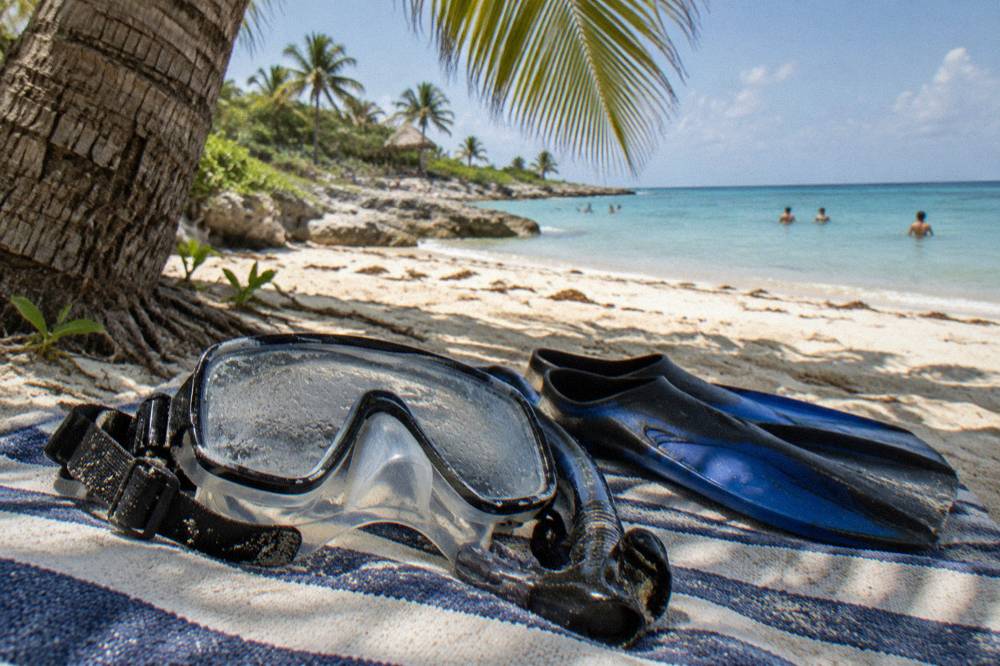
For a fuller treatment of line-item costs across every tour format, the Akumal snorkeling cost breakdown unpacks prices, fees and what each inclusion is worth.
What Can You Actually See From Shore?
Near-shore shallows hold fish, coral patches and the possibility of a turtle anywhere in the bay, and sightings are reported year-round, but the dense seagrass grazing beds that make Akumal famous sit inside the regulated circuits. Operators describe resident green turtles feeding in the bay as the norm, never as a guarantee, and conditions vary daily.
The biology explains the layout. Green turtles graze the seagrass meadows of Akumal Bay as resident feeders rather than seasonal visitors, which is why operators describe them as present in every month. Loggerhead and hawksbill turtles are also reported in the refuge, though the 2026 nesting season closed in September with 922 recorded nests, 747 green and 175 loggerhead, with no hawksbill count for these beaches. Those are nests on the beaches, not a count of what any snorkeler sees in the water, and no operator with integrity promises a sighting on a given day.
What shore snorkelers give up is position. The circuits were drawn around the feeding grounds; a swimmer in the near-shore shallows is in the right bay but not necessarily over the right grass. What guided swimmers give up is freedom: a fixed slot capped at 55 or 65 minutes per group depending on the circuit, a guide's pace, a group of up to six. Neither is a knock on the other, and plenty of visitors do both in one day, an early circuit slot and a lazy afternoon float off the public sand.
Water conditions favor early starts regardless of format. Local guides consistently point to the first hours after opening for calmer, clearer water and fewer people, before day-trippers arrive from Playa del Carmen and Cancun. A sea-temperature dataset puts October water near 29 C, comfortable for long swims. Sargassum is a daily variable rather than a seasonal certainty: in the third week of October 2026 the two monitoring services disagreed outright, one rating Akumal "Light" and the bay "Clean" on a 100-point scale, while a satellite report from 12 October 2026 placed Akumal beaches among the worst affected, and two days later could not observe them at all under cloud. Mats reaching the seagrass beds are what hurt visibility, so check the monitors on the morning, not the month.
What Rules Apply To Every Snorkeler?
Inside and outside the circuits alike, the protections are the same: no touching, feeding, chasing, harassing or removing wildlife, no standing on coral, no anchoring in the bay, and the refuge is closed to swimming, recreation and boats at night because turtles court and mate from April to November. CEA adds a 3 m distance from turtles, a 2-minute limit watching any one turtle, and horizontal body position.
The prohibitions list in the federal programme is short and absolute. Touching a turtle is prohibited everywhere in the refuge, not only in the circuits. Standing on coral is prohibited. Feeding wildlife is prohibited. The night closure exists because the bay is a mating ground; the turtles that graze here by day court here after dark, and the water is left to them. CEA's conduct guidance fills in the practical habits for snorkelers: float flat, never dive down or swim underwater at the animals, give each turtle its 3 meters and its 2 minutes, and stay inside the bay.
Sunscreen deserves its own sentence because it is a rule, not a suggestion, in the Bahia de Akumal subpolygon: only biodegradable sunscreen is allowed, and the better answer is a sun-shirt, which needs no label-reading at all. Do not assume a product marketed as "reef-safe" qualifies; the regulation says biodegradable, and the label has to say so. Nearby Yal-Ku Lagoon, a common second stop, goes further and requires chemical-free sunscreen on its Xcaret-operated side, where vests are also mandatory.
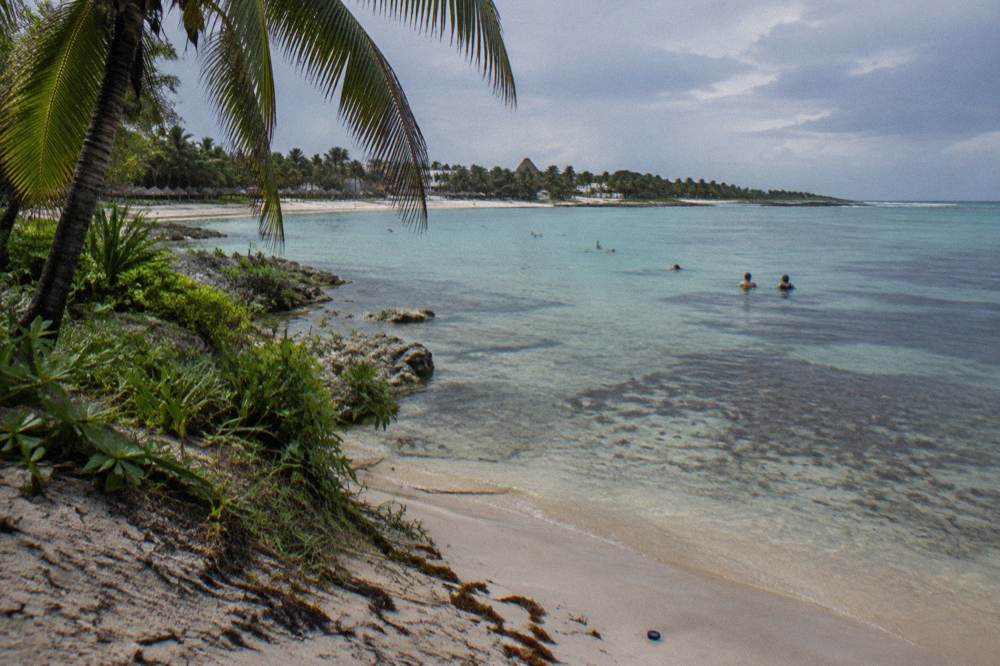
These rules are also why the guided formats look the way they do. The certified-guide requirement, the vest, the short fins and the small groups inside the circuits all trace back to the same protection programme, so a booking is not just a ticket but a compliance package. The deeper background sits in the Akumal turtle snorkeling rules guide, and packing choices are covered in what to bring for Akumal snorkeling.
When Is Booking A Tour The Better Call?
A tour earns its price when the goal is the seagrass circuits themselves, since access there runs through the guided system by law, or when gear, fees and timing are things a visitor would rather not assemble alone. Independent shore snorkeling wins for a free, flexible swim in the shallows with no schedule. Neither option buys a guaranteed turtle.
The comparison is a schedule versus a shoreline. The guided lines put a visitor on the circuit water with a certified guide, the required vest and short fins, and often photos: the private lines add a guide to yourself, from $61 on the Marine Life Akumal private line, rated 5.0 from 374 reviews, up to $260 for the Tours with Mike cenote-and-turtles private day with hotel pickup and all fees included. The cenote combo days from Ekinox Tours, from $101 to $109 per person with transport, lunch and a guide listed, bundle the whole Riviera Maya into one ticket for visitors based in Cancun or Playa del Carmen, while its $90 reef-and-turtle day lists transport but no meal.
The independent route wins on cost and calm. Walk on, swim out, float over the shallows, pay nothing but parking, and leave when the mood ends. What it cannot do is enter the circuits, and it carries no guide's eye for spotting, no vest if the swimmer tires, and no wristband for the showers. For weak swimmers that last point is not small; the question of whether a non-swimmer can snorkel here at all is answered, with the same scope caveats, in the article on whether a non-swimmer can snorkel in Akumal.
For the middle path, the most-reviewed guided swim in the bay is a reasonable default. Check availability on the live listing for the dates in mind, since the guide pages refresh tour details monthly.
Booking lead time is worth a sentence. Platform averages on these listings range from about 12 to 45 days in advance, and one operator notes 2 to 3 weeks for the late-December-to-early-April peak, which aligns with the reported high season for the area. In the quieter shoulder weeks, same-week bookings on the short Akumal-based lines are realistic; in peak weeks, the early-morning slots that offer the best water go first.
Common Questions About Snorkeling From The Beach In Akumal
Can You Snorkel Off The Beach In Akumal?
Yes. Akumal Beach is a public federal beach with free access to walk and swim, and CEA's guidance says an independent snorkeler outside the buoyed circuits needs no guide and no vest, though a vest is advisable. The turtle seagrass beds inside Circuit 1 and Circuit 2 are accessed through the guided system, where a certified guide, short fins and a life jacket are compulsory.
Is Akumal Beach Free To Enter?
The beach itself is free: it is public federal land with no charge to access the sand or the water. The US$7 per foreign adult, or MXN 130 for Mexican nationals, is the Tsuuk Akumal Natural Park entry, which buys the convenient main access plus restrooms, showers, changing rooms, lockers and lifeguards, and is not a tour.
Do You Need A Guide To See Turtles In Akumal?
Inside the buoyed turtle circuits, yes: the federal protection programme makes a certified, authorized guide compulsory for tourist activity, with a maximum of six snorkelers per group. Outside the circuits a guide is not required by CEA's guidance, but the dense seagrass grazing beds, where green turtles are described by operators as resident year-round, lie within the circuit boundaries.
What Gear Is Mandatory Inside The Turtle Circuits?
Snorkel tube, mask, short fins and a life jacket that prevents total immersion, for tourists and guides alike. A waist float may not replace the vest. Tour listings here include snorkel gear and a life jacket in the price; the park itself rents no vests and provides no tours.
Can You Touch Or Chase The Turtles?
No, anywhere in the refuge, under the federal protection programme. Touching, feeding, chasing, harassing or removing wildlife is prohibited, as is standing on coral and anchoring in the bay. CEA adds a 3 m minimum distance from a turtle, a 2-minute limit watching any one animal, and staying horizontal in the water. The refuge is closed to swimming and boats at night during the April-to-November mating season.
Where Do You Park For Shore Snorkeling?
Reported figures put the main day-use lots near the beach entrance at about MXN 100 per day, with Plaza Ukana inside the arch area at MXN 40 per hour. Colectivos from Playa del Carmen or Tulum run 40 to 50 MXN and drop at the highway pedestrian bridge, which avoids parking entirely.