Is There A Seaweed Problem In Akumal?
A look at sargassum in Akumal: what the three seaweed monitors said in October 2026, how it affects turtle snorkeling visibility, and how to pick a flexible-date tour.
Sargassum seaweed arrives on Caribbean beaches in patches that shift with wind and current, sometimes overnight. Akumal, a bay about 37 km south of Playa del Carmen whose seagrass beds attract resident green turtles, sits inside that pattern. The answer about a seaweed problem is that there is no single answer: three public sargassum trackers gave different pictures of Akumal in October 2026, one could not see the beaches at all through cloud, and the practical response is to check the monitors on the day rather than to write off a month or a season. This page walks through what each monitor reported, what sargassum actually does to a turtle snorkel, and which booking choices protect a trip when conditions move.
Why Seaweed Reports For Akumal Disagree
They measure different things on different days. On 17 October 2026 the satellite monitor of the Observatorio Ciudadano del Sargazo could not observe any of the ten Akumal beaches because of complete cloud cover. Its last clear image, from 12 October 2026, showed sargassum or brown tide at all ten beaches it could see. Yet on 21 October 2026 another monitor rated Akumal light and Akumal Bay itself clean, 91 out of 100.
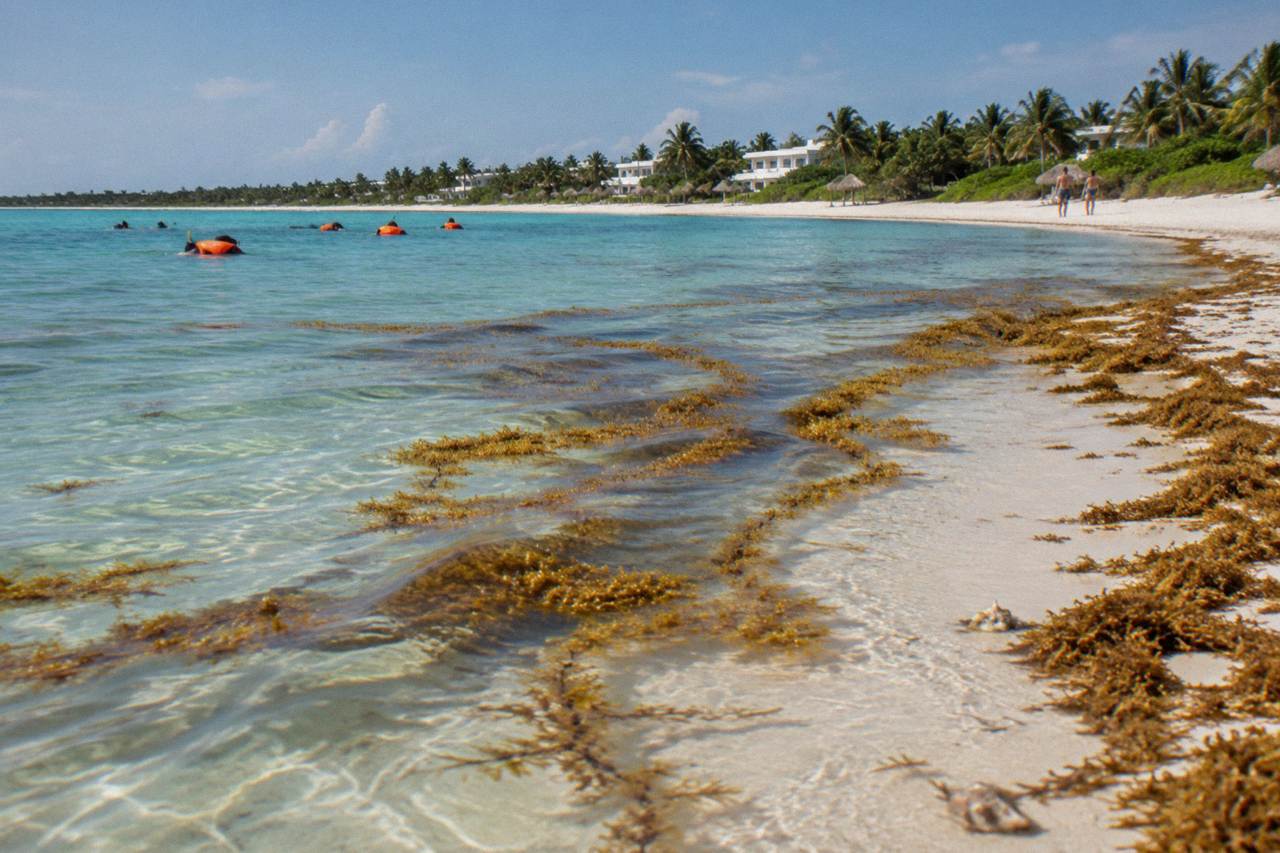
That contrast is not a scandal or a broken monitor. Satellite imagery needs a clear view of the water, and cloud defeats it. The citizen observatory's page for Akumal shows dated satellite reports, and on 17 October 2026 it simply recorded that all ten Akumal beaches were unobservable. Its previous usable image, from 12 October 2026, showed sargassum or brown tide at every beach in frame, worst at Bahia Media Luna, Playa Aventuras and Xcacel. You can read the dated reports yourself on the observatory's Akumal page.
The other monitor, a forecast service that rates beaches on a descriptive scale, called Akumal light on 21 October 2026, while a third seaweed map rated Akumal Bay clean at 91 out of 100 the same day. A beach can carry a light ribbon of sargassum at the shoreline and still hold clear water over the seagrass twenty strokes out, and it can also hold clean sand and murky water after a windy night stirred the bottom. Neither monitor lies; they measure different things on different days.
For a trip planner the conclusion is simple and slightly uncomfortable: seaweed in Akumal is a daily status, not a monthly norm. Any source that promises "no sargassum in month X" or "avoid month Y" is selling certainty that the ocean does not offer. Check the monitors on the day, and book in a way that lets you shift your water day if the reports turn bad, which is exactly the strategy the small-group turtle lines suit, since the leading small-group option, the Akumal turtle snorkel with photos run by We Love Akumal, is a short 1 hour 10 minute activity from $33 per person rather than a full-day commitment.
What Do The Seaweed Monitors Actually Say About Akumal Bay?
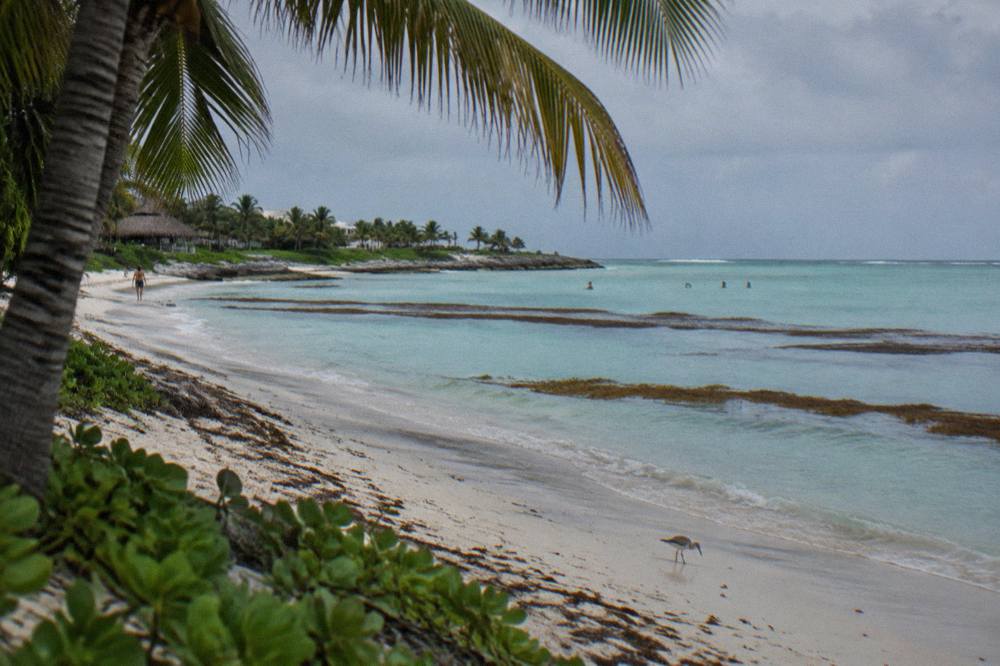
Three public trackers cover Akumal and they answer different questions. The satellite observatory shows dated images and reports, and it recorded unobservable beaches under cloud on 17 October 2026 with sargassum or brown tide at all ten beaches on 12 October 2026. The forecast monitor rated Akumal light on 21 October 2026. The seaweed map rated Akumal Bay clean, 91 of 100, the same day.
The observatory is the most literal of the three: it publishes what the satellite saw, including days it saw nothing. That openness matters, because a blank report is not a clean beach and it is not a weedy beach either, it is a cloud. The forecast service, published at howisthesargassum.com, translates the latest imagery into ratings from excessive down to light, and it had Akumal at light as of 21 October 2026. The map service, sargassumcancun.com, scores individual bays numerically and gave Akumal Bay 91 out of 100, clean, on the same date.
| Monitor | What it shows | Akumal reading, October 2026 |
|---|---|---|
| Observatorio Ciudadano del Sargazo | Dated satellite images and reports per beach | 17 Oct: all 10 beaches unobservable under cloud; 12 Oct image showed sargassum or brown tide at all beaches seen |
| Howisthesargassum forecast | Descriptive sargassum level per beach | Light, 21 Oct |
| Sargassumcancun seaweed map | Numerical cleanliness score per bay | Akumal Bay 91 of 100, clean, 21 Oct |
The disagreement between 12 October and 21 October is the pattern, not an anomaly. Sargassum lands in pulses driven by wind direction and currents, and a bay can go from a brown tide image to a clean 91 inside ten days. Anyone telling you a fixed sargassum calendar for Akumal is guessing. A reader worried about conditions should treat the monitors as a same-week tool and choose tours with flexible dates or free cancellation windows; the booking pages for the listed tours state their own cancellation terms, so check the listing before paying.
How Does Sargassum Affect A Turtle Snorkel?
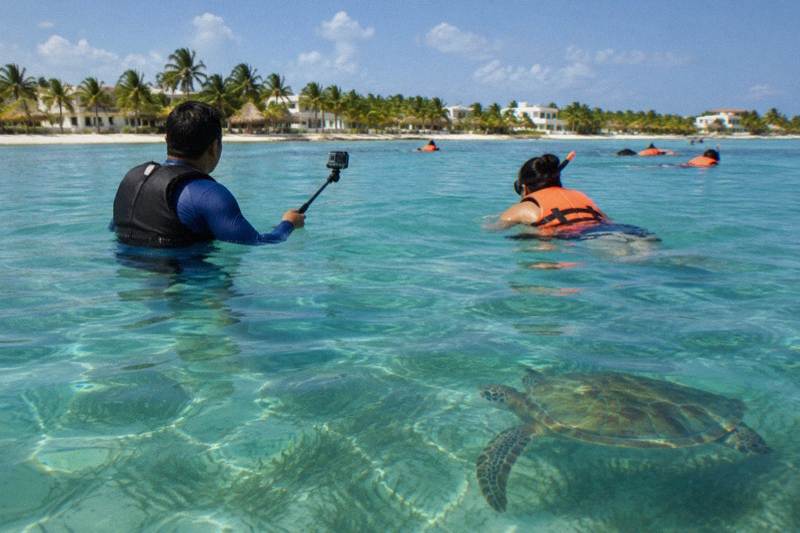
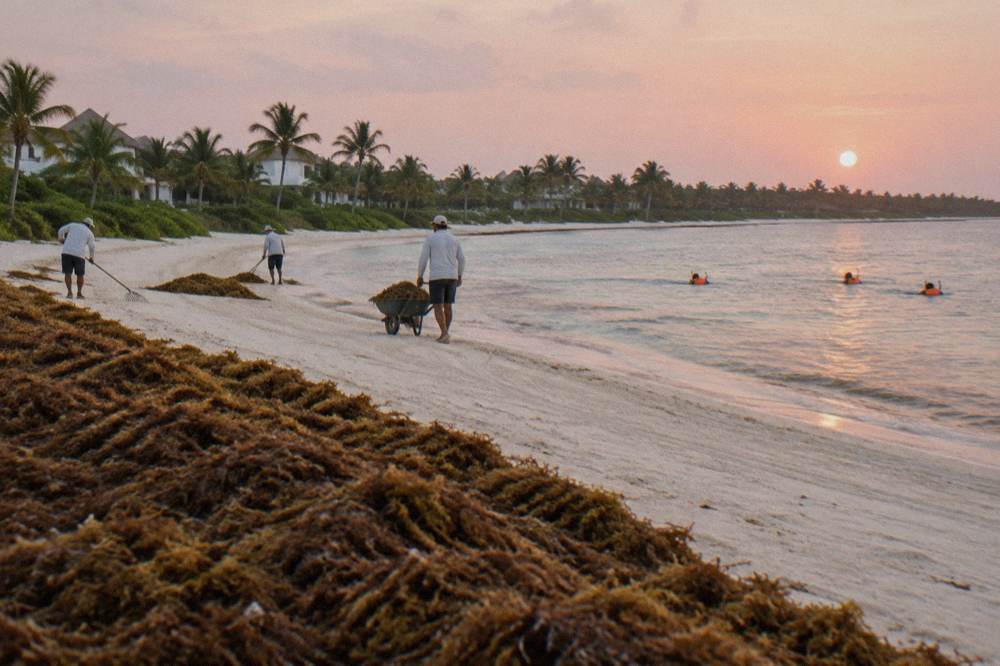
The reported effect is on visibility, not on the turtles. Local sources report that sargassum mats reaching far offshore cut visibility over the seagrass beds where turtles feed in Akumal Bay. Turtles themselves are described by operators as resident feeders with no seasonal migration, present in the bay year round. Seaweed makes them harder to see, not absent.
That distinction matters for expectations. A heavy sargassum week does not empty the bay of green turtles; it clouds the water column and sometimes stacks weed at the shoreline, which makes the swim less pleasant and the viewing distance shorter. Operators describe resident green turtles grazing the seagrass all year, and loggerhead and hawksbill turtles are also reported in the bay, but no operator promises a sighting or a visibility figure on any given day, and the tours listed here do not either.
The practical read: sargassum degrades the experience on a bad day and rarely cancels it. On a light day, the rating Akumal carried on 21 October 2026, most snorkelers notice little beyond a brown line at the water's edge. On a heavy day, with weed both on the sand and in mats offshore, a guided circuit still runs but the view contracts. Short tours absorb that risk better than long ones, which is one reason the compact 1 hour and 10 minutes small-group format with photos included holds up well in changeable weeks: less of the day is exposed to the ocean's mood.
The tour format also changes how conditions hit you. A full-day combination that bundles Tulum ruins, a cenote and the Akumal turtle swim, from $109 per person with pickup and lunch listed, can absorb a murky bay because the cenote is freshwater and unaffected by seaweed. A pure bay snorkel has no such fallback, so booking it on a flexible date, or with the operator's cancellation terms checked on the live listing, is the smarter sequence.
Can You Still Snorkel Akumal When Seaweed Reports Are Bad?
Usually yes, with adjusted expectations. Beaches are cleaned and conditions shift within days, so a bad satellite image does not close the water. The federal turtle circuits run 9:00 to 17:00 with certified guides, and tours operate through most sargassum states. Only an operator's own cancellation, or a reported Semarnat rest period, pauses the activity, and neither is announced by a seaweed map.
One wrinkle worth knowing: a single report from late August 2026 says Semarnat environmental permits include two annual rest periods for the turtle circuits, one of them in September, when turtle swim tours were reported suspended. That is reported, it is a permit matter rather than a seaweed matter, and the dates for any future rest period are not published in the sources available, so confirm with the operator when booking rather than assuming any closure.
Between sargassum pulses, the bay's clean days are genuinely clean. The 91 out of 100 score on 21 October 2026 sits in the same month as the brown tide image of 12 October, which tells you how fast the picture can turn. A visitor with two or three flexible days in the area almost always finds a good water day; a visitor locked into one fixed morning takes what the ocean gives.
For that locked-in visitor, the private lines offer a small edge. A private turtle snorkel such as the Marine Life Akumal private beach option, 5.0 from 374 reviews, from $61, keeps the group to your own party and lets the guide adapt timing and route to the day's water, within the federal circuit rules. It cannot make murky water clear, but it removes the queue and the fixed schedule.
How Should You Check Conditions Before Booking?
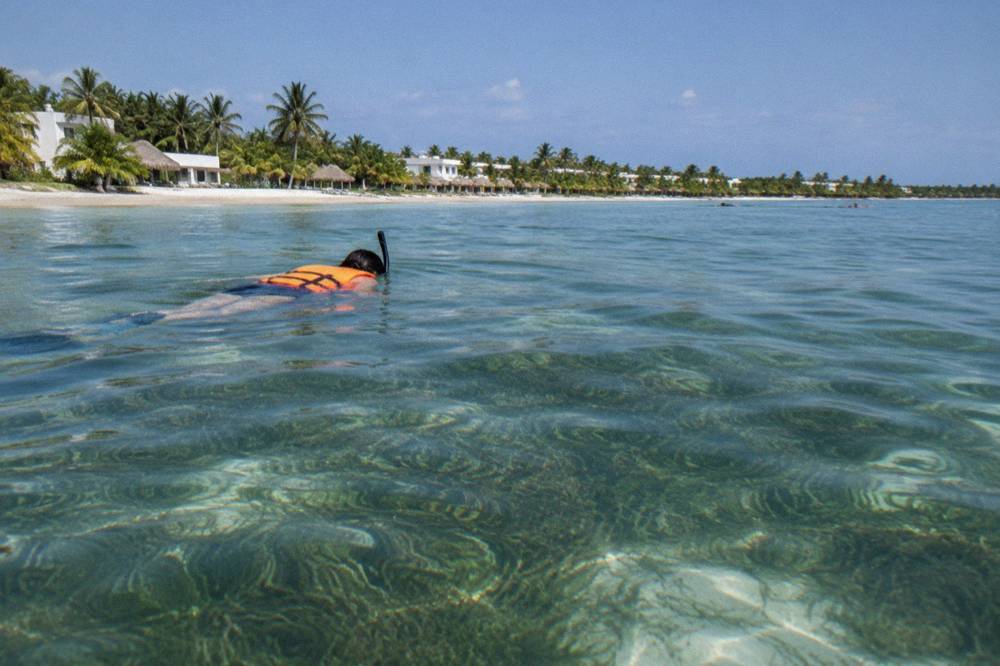
Check the monitors in the two or three days before your water day, not weeks ahead. Look at the observatory's dated Akumal report for the raw satellite picture, the forecast monitor's level rating, and the map's bay score, then book a tour whose cancellation terms the live listing states. Sargassum forecasts have no reliable multi-week skill, so an early check tells you about climate, not about your day.
The sequence that works: pick your dates, book a tour with a cancellation window you have confirmed on the booking page, then check the monitors in the final days before you swim. If the observatory shows a brown tide image and the map score drops, message the operator; many will move you a day or offer alternatives, though each listing sets its own policy and no specific outcome is promised here. The Centro Ecologico Akumal's beach safety page is also worth a read for the flag system, because a closed-flag day for currents can coincide with perfectly clean water and still keep you out.
Booking lead times reward this habit less than you might fear. Platform averages for Akumal turtle tours range from about 12 to 45 days in advance, with one operator noting 2 to 3 weeks for the December to April peak, so the high season does sell out, but shoulder weeks, mid-April to mid-June and mid-October to mid-November, are reported quieter and easier to shift. October 2026 itself was described by one guide source as very quiet in the first half with a short late-month spike around Day of the Dead.
The three tools mentioned above are free, take five minutes combined, and are more reliable than any forum thread, because forum posts carry a date whether or not the reader notices one. If a monitor and a traveler review from the same week disagree, trust the monitor; a visitor's single morning is a sample of one.
Which Tours Suit A Reader Worried About Conditions?
Short, cheap and flexible beats long and fixed. The small-group turtle snorkel with photos, 4.9 from 216 reviews, from $33 per person for 1 hour 10 minutes, keeps the exposure small. The VIP GoPro line from Akumal Mayan Trips, from $34 per person, is equally short at 1.5 hours. Both bundle gear as their listings state, and both are easy to rebook if a seaweed day lands badly.
The comparison is really about how much of your day you stake on one body of water:
| Tour line | Format | Price as listed | Duration | Why it suits a conditions-worried reader |
|---|---|---|---|---|
| Small-group turtle snorkel with photos, We Love Akumal | Small group | from $33 per person | 1 h 10 min | Lowest cost at risk, photos included in the activity |
| VIP turtle snorkel with GoPro photos, Akumal Mayan Trips | Guided group | from $34 per person | 1.5 h | Wristband park entry listed as included |
| Private turtle snorkel, Marine Life Akumal | Private | from $61 | 1 h | Your own group, guide adapts to the day, 5.0 from 374 reviews |
| Tulum, cenote and turtle swim combination, Ekinox Tours | Full-day combo | from $109 per person | 8 to 10 h | Cenotes unaffected by seaweed; bay is one part of the day |
Read that table as a risk ladder. At the bottom, a short bay tour risks about $33 per person on the ocean's cooperation. At the top, a full-day combination hedges the bay with a freshwater cenote and a ruins visit, at the cost of a longer day and, on some lines, extra government fees quoted separately on the listing, such as US$40 per person payable separately on the Tulum combinations. The middle rung, a private line, buys control rather than weatherproofing.
Photos deserve a mention because they change the economics of a mediocre-visibility day. On the small-group We Love Akumal line the GoPro photo album is a listed inclusion, and on the VIP line GoPro photos are in the title, so a hazy bay costs you less when the guide is shooting pictures anyway. Souvenir photos are a listed exclusion on the Amigo Tours park-entry lines at from $45 per person, a difference worth checking on each listing.
Planning around conditions also connects to the rest of your itinerary. If seaweed pushes you toward freshwater, Gran Cenote, whose entry is reported at 500 MXN cash, is a self-drive option, and the cenote day trips visit Mariposa or Canamayte. Those figures are confirm-on-site numbers, not bookings, and they are covered in full in the Akumal and cenote day trip guide, while the monthly turtle question, which is a separate issue from seaweed, is handled in what is the best month to see turtles in Akumal.
What Should You Pack For A Possible Seaweed Day?
Pack for variable water, not for a disaster. A rash guard leads the list, since the federal protection programme for Bahia de Akumal allows only biodegradable sunscreen in the bay and a sun-shirt sidesteps the question entirely. Add a dry bag, cash for parking and fees, and a flexible mindset about timing, and you have covered the realistic sargassum scenarios.
The sunscreen rule deserves its plain wording: only biodegradable sunscreen is allowed in the Bahia de Akumal subpolygon under the protection programme, and a label saying "reef-safe" does not automatically qualify a product, so check the label and, better, wear a shirt. Inside the buoyed turtle circuits the programme also requires snorkel, mask, short fins and a life jacket that prevents total immersion, with a certified guide and groups of up to 6 plus the guide, hours 9:00 to 17:00. Outside the circuits, the Centro Ecologico Akumal's own guidance treats a vest as advisable rather than compulsory for an independent snorkeler, a distinction kept intact here rather than flattened into a single rule.
The full packing logic, including what the tour lines already include, sits in the guide to what to bring for Akumal snorkeling. The short version for a seaweed-aware week: rash guard, biodegradable sunscreen for exposed skin, a towel, cash in pesos for parking reported at about MXN 100 a day, and a booking you can move. Beyond gear, respect the bay's conduct rules, stay horizontal over the seagrass, keep at least 3 m from any turtle, no more than 2 minutes watching one animal, and never touch or chase; those rules apply regardless of what the seaweed is doing.
The Verdict On Seaweed And Your Turtle Swim
Akumal has a seaweed condition, not a seaweed problem in any permanent sense. The monitors show a bay that went from a brown tide image on 12 October 2026 to a clean 91 of 100 score on 21 October 2026. Plan with flexible dates, check the monitors close to your travel day, favor short or hedged tours, and the ocean does the rest.
The deeper point is about how to read travel information. The tools that actually answer "is there a seaweed problem in Akumal" are the dated satellite report, the level rating and the bay score, checked near your date, alongside a booking you can shift. That approach costs nothing extra, and the tour lines on the guide index each appear with their price, rating and review count so the risk can be weighed with real numbers. Readers comparing Akumal with quieter-water alternatives can weigh the same logic in the Yal-Ku lagoon or Akumal Bay comparison.
Common Questions About Akumal Seaweed
Is There A Seaweed Problem In Akumal?
Sometimes, on some days, and the picture changes fast. On 12 October 2026 a clear satellite image showed sargassum or brown tide at all ten Akumal beaches seen, and on 17 October 2026 the same monitor could not observe the beaches under cloud, yet on 21 October 2026 other monitors rated Akumal light and Akumal Bay clean at 91 of 100. Check the monitors near your date rather than trusting any fixed sargassum calendar.
Does Sargassum Stop Turtle Snorkeling Tours From Running?
Generally no. Tours operate through most sargassum states, though heavy offshore mats are reported to cut visibility over the seagrass beds. Separate from seaweed, one report from August 2026 says Semarnat permits include two annual rest periods for the turtle circuits, one in September; that is a permit matter, reported, and you should confirm current status with the operator when booking.
Which Months Are Worst For Seaweed In Akumal?
No month-by-month answer exists for Akumal, and none is published here. Sargassum is a daily status driven by wind and currents, not a fixed season. Check the dated reports on the monitors in the days before your trip instead of planning around claimed good or bad months.
How Do I Check Akumal Seaweed Conditions Before My Tour?
Use the three public trackers in the last few days before your water day: the satellite observatory's dated Akumal report, the forecast monitor's level rating, and the seaweed map's bay score. Book a tour whose cancellation terms the live listing states so you can shift the day if the reports turn.
Do The Turtles Leave When Sargassum Arrives?
No source says they do. Operators describe resident green turtles feeding on the bay's seagrass year round, with loggerhead and hawksbill turtles also reported. Seaweed affects how well you can see them, not whether they are there, and no sighting is ever guaranteed.
Is It Better To Book A Short Tour When Seaweed Might Be Present?
Usually yes. A short, low-cost activity such as the small-group turtle snorkel with photos, from $33 per person for 1 hour 10 minutes, puts less of your day and budget at risk than a full-day bay-only trip, and a combination tour that includes cenotes gives a freshwater fallback unaffected by seaweed.