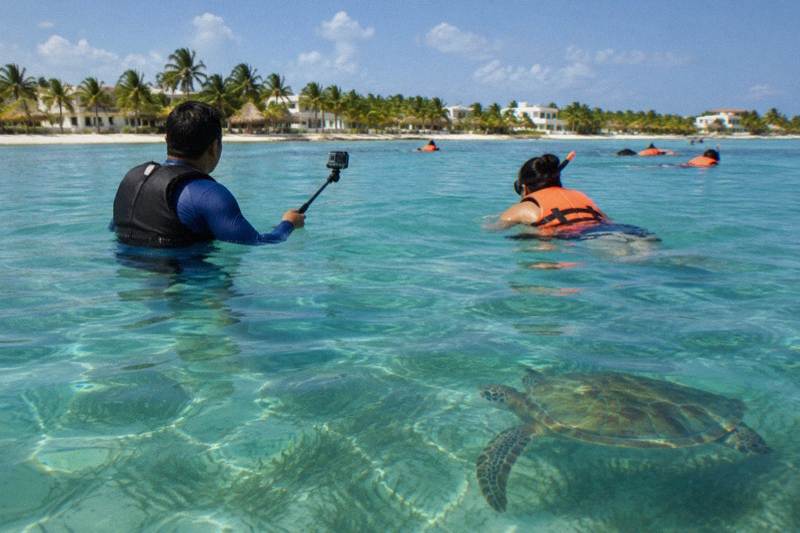
What Is The Best Month To See Turtles In Akumal?
There is no single best month for turtles in Akumal: green turtles feed in the bay year-round. Here is how water clarity, crowds, nesting and the September pause actually shape the calendar.
Resident Turtles Mean No Single Best Month
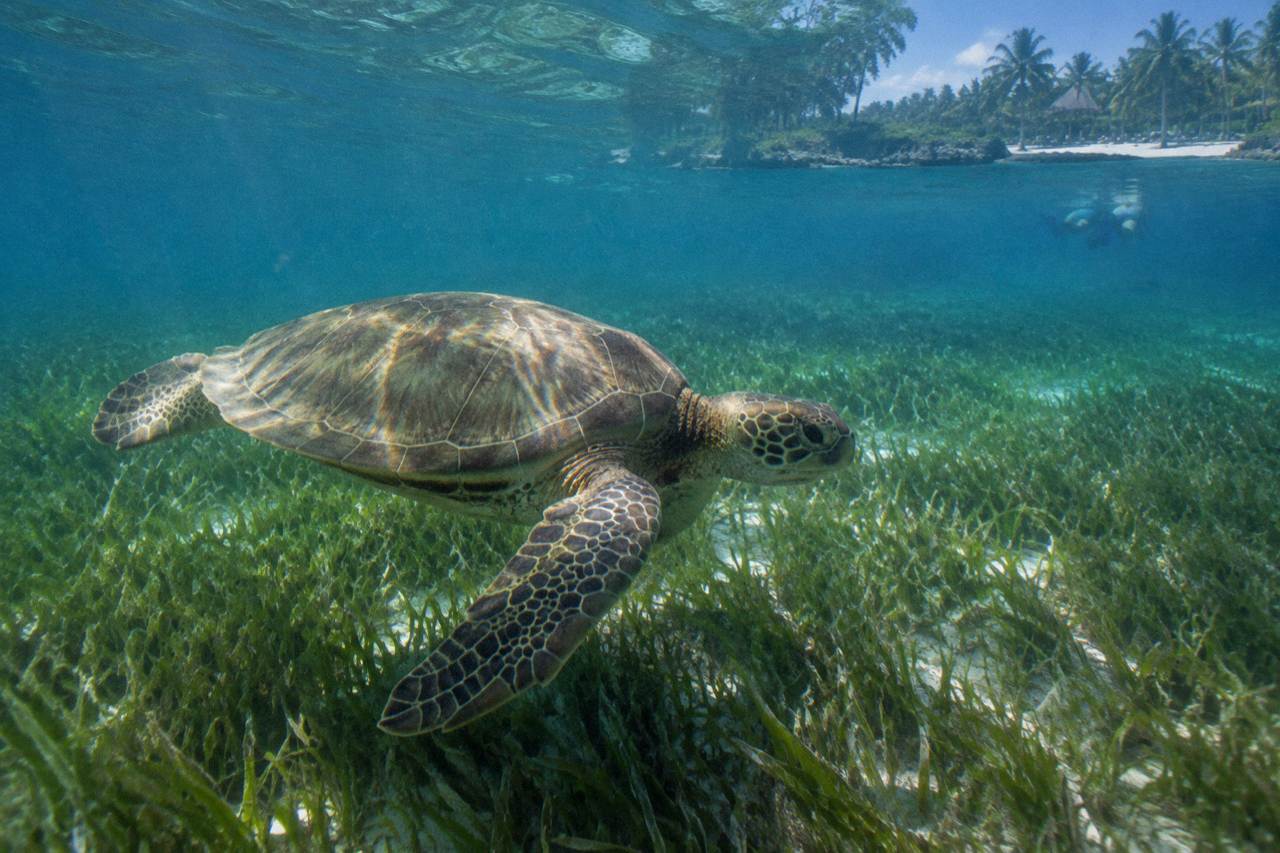
There is no single best month, because Akumal Bay's green turtles are resident feeders rather than seasonal visitors. Operators describe them grazing the seagrass beds in every month of the year, as the norm rather than the exception, though never as a guarantee. What actually changes through the calendar is the water condition, the crowd level and a reported annual September rest period for the turtle circuits.
That answer disappoints people who want a single month named, so this article does the next best thing: it separates what is steady (the turtles) from what swings (clarity, crowds, storms, sargassum and nesting), and helps you match a month to what you want from the day. A traveler who hates crowds will pick differently from a traveler who wants the warmest water, and both can have a good turtle day.
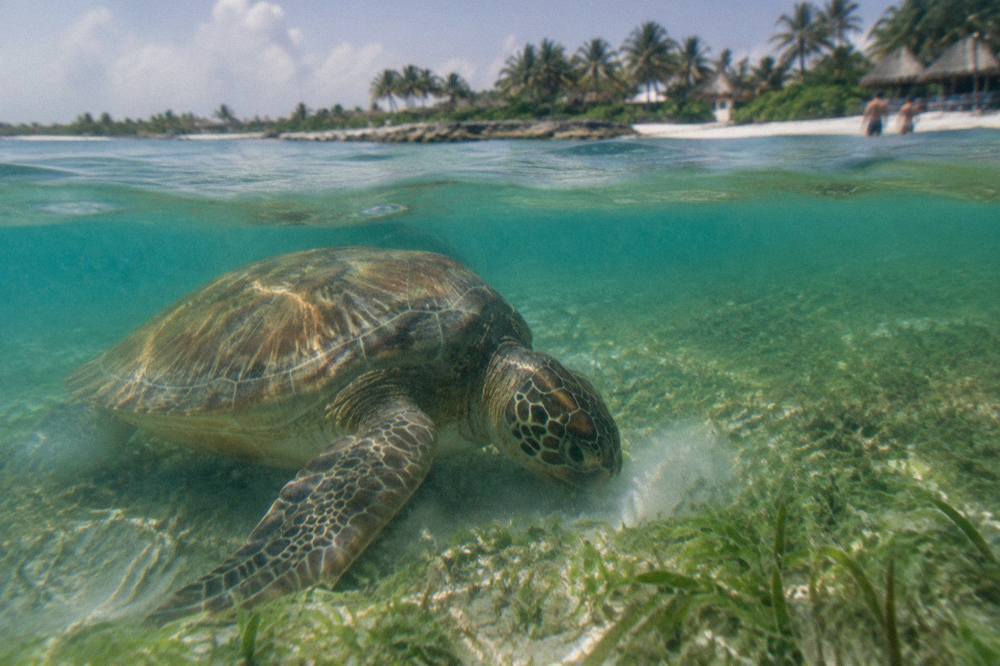
The core fact comes from the people who work the bay. Local operators report that green turtles feed year-round on the seagrass in Akumal Bay, with loggerhead and hawksbill turtles also reported, and that sightings any month are the norm rather than exceptional. No operator can promise you a turtle on a given morning; conditions and wild animals vary. But the question "which month do the turtles arrive" starts from a wrong premise: they live there.
That makes your real decision a tour decision. A reader picking dates is effectively picking a tour day, and the guided circuits are how most visitors swim with the turtles: the federal protection programme requires a certified guide, snorkel gear, short fins and a proper vest inside the buoyed circuits, with groups capped at six plus the guide and hours from 9:00 to 17:00. Outside the circuits, the Centro Ecologico Akumal's own guidance says an independent snorkeler needs neither guide nor vest, though a vest is advisable. The full scope is laid out in the Akumal turtle snorkeling rules guide.
Which Months Have The Clearest Water For Snorkeling?
Operators most often point to November through March for clearer water and fewer sargassum problems, though that window comes from operator reporting and a single cluster of sources rather than an official forecast. Sargassum itself is a daily condition, tracked by monitors, not a monthly guarantee, and October's sea temperature sits near 29 C according to a sea-temperature dataset. Treat months as a tilt in the odds, not a promise of visibility.
Here is the nuance most first-page answers miss. Sargassum arrives and clears on timescales of days, not months. The monitoring services publish daily satellite reads, and on a given week in October 2026 one monitor rated Akumal "Light" while another rated the bay "Clean" and a third could not see the coast at all through cloud. The same monitors disagreed about a mid-October window. Any article that tells you "avoid May, it's the sargassum month" is inventing precision that does not exist.
What you can plan around is the direction of the tilt. Operator pages describe November to March as the stretch when water is most often clear and sargassum least often an issue, and calm mornings before the day-trippers arrive as the best hours on any given day. Early slots, from the 9:00 opening of the circuits, are repeatedly recommended by operators for calmer water and fewer people, independent of the month you choose.
There is also a mechanism worth understanding, because it explains why sargassum matters for turtles specifically rather than just for swimming comfort. When sargassum mats push far inshore, they reduce the light over the seagrass beds where green turtles graze, which is the feeding ground the whole turtle swim depends on. That is why a heavy sargassum week can matter more than a "good" month label: the turtles are still resident, but the experience of watching them over bright seagrass changes when the water darkens. It cuts both ways quickly, which is exactly why the daily monitors exist and why no month is immune.
If clearer-water months matter to you, book the earliest slot available in your month rather than chasing a perfect week. The 1.5-hour VIP turtle swim with GoPro photos from Akumal Mayan Trips, from $34 per person with the park entry fee included, runs morning departures, and morning is when the bay is at its calmest in any season. Check availability on the live listing once your dates are fixed, since slots in the high season go first.
What About Nesting Season And The Beaches?
Nesting runs from 1 May to 30 November on the Xcacel-Xcacelito subpolygon, and the 2026 season closed in September with 922 nests, 747 green and 175 loggerhead, a medium-high count below the historic 1,350. Those are nests on the beaches, not animals in the water. A snorkeler swimming over seagrass is watching resident feeding turtles, and the nest count says nothing about what any swimmer will see.
The nesting data is genuinely interesting, and it is also the most commonly misused number in Akumal content. It measures reproduction on land at night. The seasonal peak of nesting, roughly May through September, is sometimes sold as "the best time to see turtles in the water," which is a confusion of two different populations doing two different things. The turtles you snorkel with are the ones grazing the bay by day.
| 2026 season figure | Count | Source basis |
|---|---|---|
| Total nests, season close (September) | 922 | CEA figures via local press |
| Green turtle nests (Chelonia mydas) | 747 | Season breakdown |
| Loggerhead nests (Caretta caretta) | 175 | Season breakdown |
| Green nests in Bahia Akumal itself | 345 | Beach-by-beach breakdown |
| Loggerhead nests in Bahia Akumal | 55 | Beach-by-beach breakdown |
| Historic comparison | Below the 1,350 record | Classified medium-high |
The beach-by-beach split shows where that activity actually concentrates. Of the 747 green nests, 345 were in Bahia Akumal itself, with 261 on Playa Tortuga, 129 at Akumal Sur and 12 at Bahia Media Luna; loggerhead nests led on Playa Tortuga with 78, then 55 in Bahia Akumal. In May, early in the season, only 53 nests had been recorded, 46 of them loggerhead and 7 green, which reflects how loggerheads typically start earlier in the season. All of this is shoreline biology. None of it is a sighting forecast for a snorkeler.
One more nesting-adjacent fact shapes the water calendar: the refuge is kept free of swimming, recreation and boats at night because turtles court and mate in the area from April to November. Night swimming is not a turtle activity here, in any month. The federal decree that established the refuge protects green, loggerhead and hawksbill turtles along with staghorn and elkhorn coral and mangroves across roughly 1,653 hectares of marine area, about 37 km south of Playa del Carmen, as published in the official gazette (the DOF refuge decree).
Does The September Rest Period Change The Answer?
One source, a late-August local news report, describes two annual Semarnat rest periods for the turtle circuits, including September, tied to environmental permits. No future dates are confirmed, tours are not described as suspended now, and the practical step is simple: if your dates touch a rest-period window, confirm with the operator when booking. Do not build a month choice around a single reported pause.
This is the fact most likely to trip up a September or early-October traveler. It is reported, it is singular in the sources, and it concerns the circuits, not the beach: Akumal Beach itself is a public federal beach with free access to walk and swim, while the convenient Tsuuk Akumal park entry, US$7 for foreign visitors and MXN 130 for Mexican nationals, covers facilities like restrooms, showers, changing rooms and lockers. The park does not run turtle tours or rent vests; the tours listed here are the guided route into the circuits.
The rest period is also why "best month" questions deserve a booking-stage answer rather than a calendar-stage one. Cancellation terms vary by listing, so check the booking page rather than assuming; most tours listed here can be reserved with free cancellation and confirmed closer to the date, which is exactly the flexibility a September traveler wants while confirming the circuit status with the operator. For the broader safety picture around season and conditions, the Akumal safety guide covers flags, lifeguards and advisories.
How Do Crowds, Storms And Heat Change Through The Year?
High season runs late December to early April and low season late June to September, per a single reported source, with mid-April to mid-June and mid-October to mid-November as shoulders. Hurricane season officially spans 1 June to 30 November; as of early October 2026 eight named Atlantic storms had formed and none had threatened Quintana Roo. October sits in the quiet shoulder, with very calm early weeks and a short late-month spike.
Crowds are the variable travelers can actually control. The bay is busiest when the day-trip buses from Cancun and Playa del Carmen land, from mid-morning onward, and calmest in the first hours after the circuits open at 9:00. The same early-morning logic applies in every month: the difference between a 9:00 slot and an 11:30 slot is often bigger than the difference between March and July. Booking lead times reflect this too, with platform averages for these tours ranging from about 12 to 45 days ahead, and operators noting two to three weeks for the December-to-April peak.
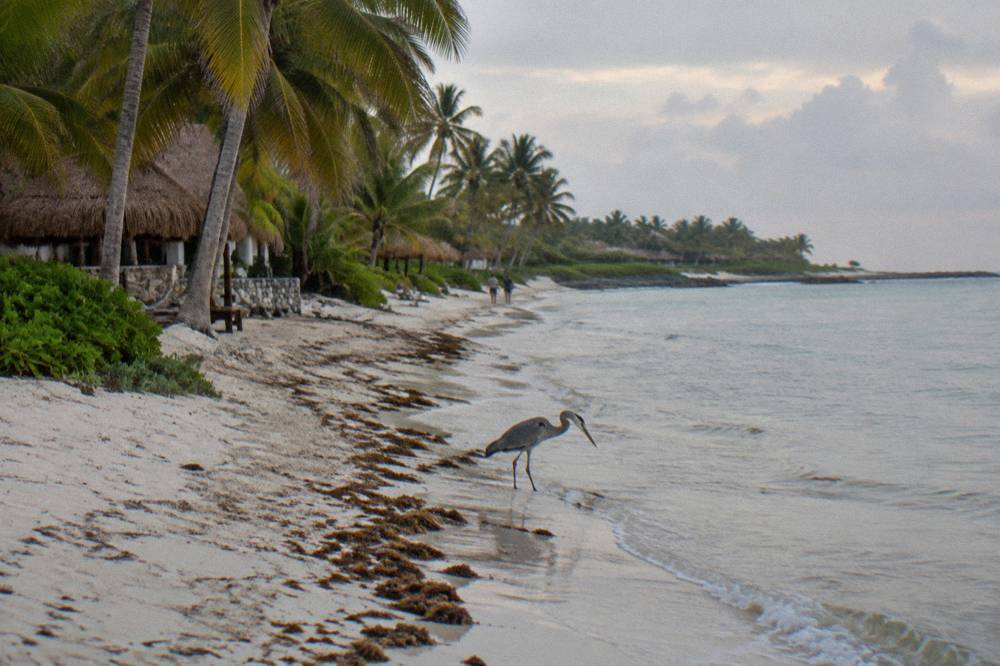
Weather cuts both ways. Summer and early fall bring the warmest water, near 29 C in October per a sea-temperature dataset, but also the official hurricane season, which is a reason to book flexible, not a reason to stay away: in 2026 the season had produced eight named storms by early October, none a hurricane threatening Quintana Roo, and no named storm had hit the state. Winter brings the pleasant, drier, busier high season and those operator-reported clearer months.
For travelers basing themselves in Playa del Carmen, the Akumal snorkeling from Playa del Carmen guide covers the roughly 37 km trip, about 35 minutes by taxi, and the colectivo option at 40 to 50 MXN, all reported figures that hold in every month.
Picking Your Month, And Your Tour, In One Decision
Match the month to your priority, then book the earliest slot that month offers. For fewest people and often-clear water, aim November to March on a weekday morning; for warm water and low prices with storm flexibility, the June-to-September low season works if you confirm the rest-period status; for a compromise, mid-October to mid-November is reported as quiet with a late-October bump. The turtles are the constant in all three plans.
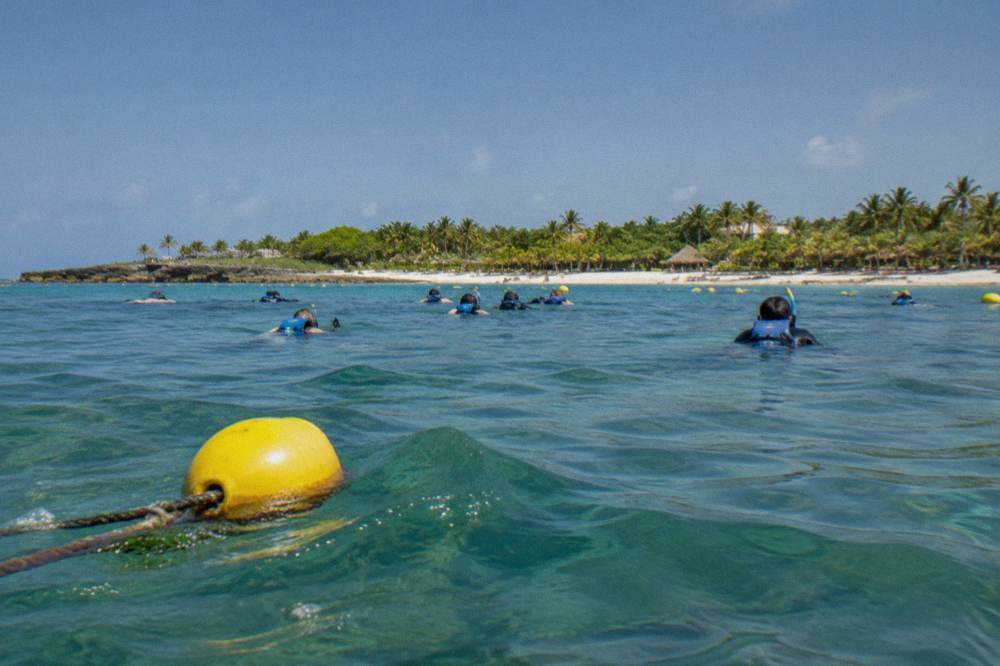
Because the calendar decision collapses into a booking decision, the tour you pick matters as much as the month. The small-group line from We Love Akumal, Akumal Snorkeling and Photos with Turtles, runs 1 hour 10 minutes from $33 per person, 4.9 from 216 reviews, with gear and a GoPro photo album included, and it lists extras like a private-beach bracelet and digital lockers paid on site. It suits a budget traveler who wants photos and a tight group.
A private option changes the month calculus differently: instead of optimizing conditions, you buy control of timing and pace. The Swim with Turtles in Akumal + GoPro Photo Session line from Akumal Mayan VIP Tours, from $50 with the listing not stating whether that is per person or per group, runs about an hour with a personal certified guide and a photo session, 5.0 from 303 reviews. In a busy March week, that flexibility is worth more than in a quiet October one.
Whichever month and format you land on, the same conduct rules apply in the water all year: keep at least 3 m from a turtle, watch any one turtle no more than 2 minutes, stay horizontal, never touch or chase, and wear a sun-shirt or biodegradable sunscreen, the only type allowed in the bay under the federal programme (CEA's snorkeling guidelines). More context on the year-round resident population, and why the nest count is not a sighting forecast, is in the guide to whether sea turtles are friendly and the homepage tour comparison. The season-closing nest report itself is worth a read for anyone planning a May-to-November trip (Riviera Maya News on the 2026 count).
Common Questions About Turtle Months In Akumal
What Is The Best Month To See Turtles In Akumal?
There is no single best month. Operators describe resident green turtles feeding on seagrass in Akumal Bay year-round, with sightings any month the norm rather than the exception, though never guaranteed. Choose your month for water clarity, crowds and price, not for turtle presence, and book the earliest tour slot available.
Are Turtles In Akumal All Year Or Only In Nesting Season?
Both things are true but they are different populations at different times. Resident green turtles feed in the bay by day all year, which is what snorkelers see. Nesting, from 1 May to 30 November on the Xcacel-Xcacelito subpolygon, happens on the beaches at night: 922 nests were recorded in the 2026 season. Nest counts do not predict what a swimmer will see.
Which Months Have The Least Sargassum In Akumal?
Operators most often report clearer water and fewer sargassum issues from November to March, but that is an operator-reported tendency from a limited set of sources. Sargassum is a daily status tracked by monitors, and the monitors themselves sometimes disagree. Check a current sargassum monitor in the days before your trip rather than trusting a month label.
Do Turtle Tours Stop In September?
One local news report from late August 2026 describes two annual Semarnat rest periods for the turtle circuits, including September. It is a single reported source, no future dates are confirmed, and tours are not described as suspended now. If your dates fall near a rest-period window, confirm the status directly with the operator when booking.
Is The Water Warm Enough To Snorkel In Winter?
Yes. Playa del Carmen sea temperatures stay near 26 C in January to March and reach about 29 C in August to October, so winter months remain comfortably swimmable. If you are sensitive to cool water, the June-to-October stretch is the warmest, balanced against the official hurricane season that runs 1 June to 30 November.