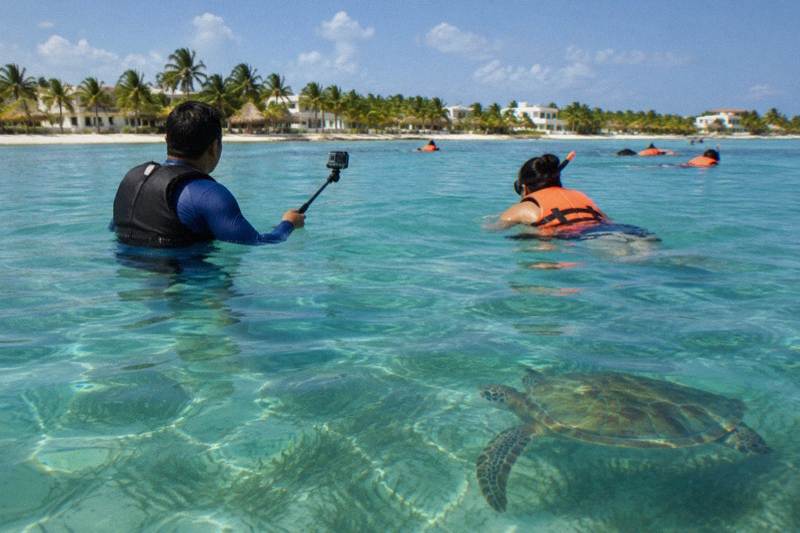
What Time Of Day Is Best To See Turtles In Akumal?
The turtle circuits in Akumal Bay run 9:00 to 17:00, and the early slot wins on water, crowds and turtle behavior. Here is how to time a visit around the rules, the tour schedules and the day-tripper wave.
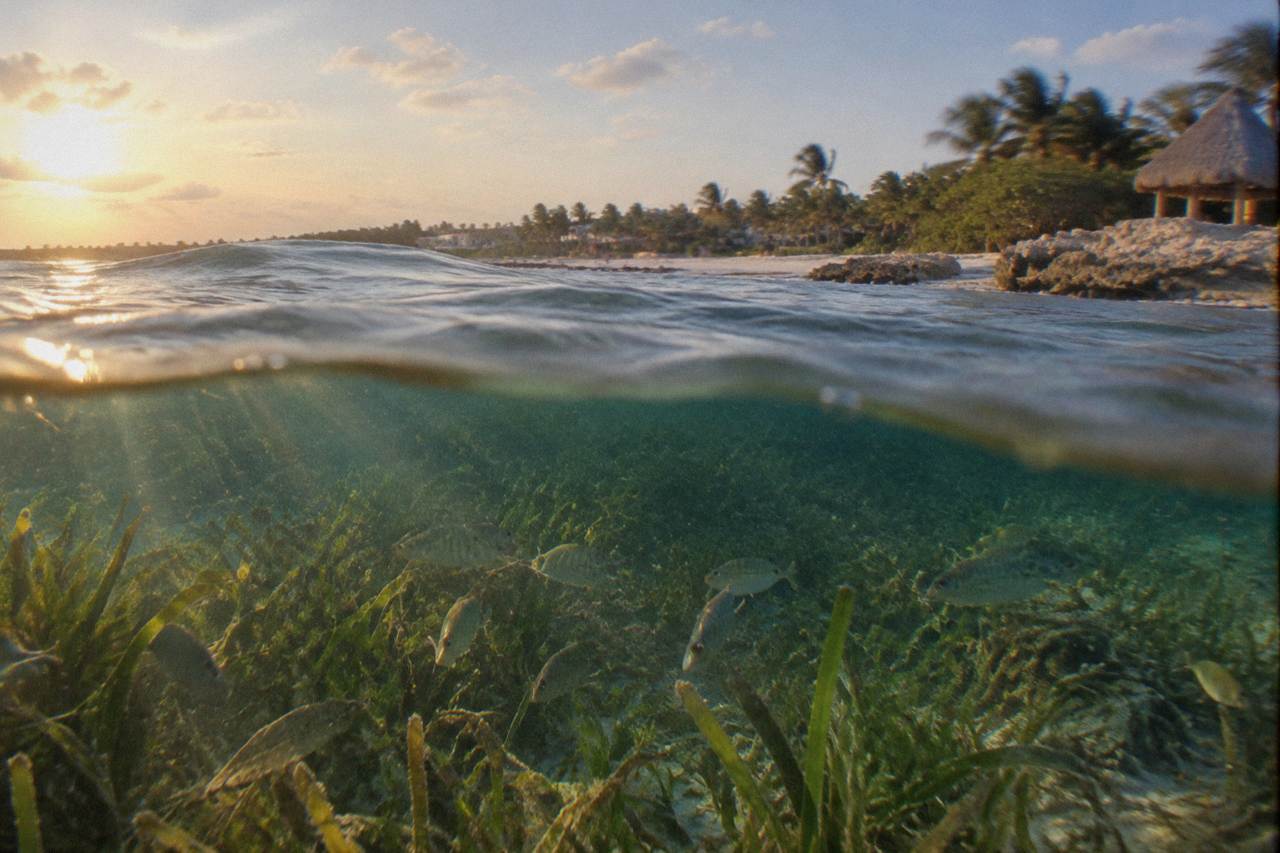
The federal protection programme that governs the buoyed turtle circuits in Akumal Bay fixes the activity window at 9:00 to 17:00, so a turtle swim here is never a dawn or a dusk event. What varies inside that window is everything else: water calm, crowd density, guide pace and how much of the bay the day-tripper wave has filled. Operators and local guides consistently point to the first slots, in the 9:00 to 10:00 window, as the best combination of calmer water and fewer people, and that recommendation is reported across multiple independent sources rather than one operator's pitch. Choosing a time of day in Akumal is really choosing a departure, and the tours compared here make that trade explicit. Once you've picked your slot, the Akumal safety guide covers the flags, sargassum and what a tour takes off your plate.
The Short Answer Is The First Morning Slot
The best time of day is the first circuit slot of the morning, as close to the 9:00 opening as you can manage. Operators and guides recommend arriving in the 9:00 to 10:00 window for calmer water and fewer day-trippers, and that advice is reported consistently across two independent sources. Turtles themselves feed on the bay's seagrass through the day, so the timing logic is about conditions and crowds, not a feeding clock.
The 9:00 start is not a convention or an operator habit, it is the federal Programa de Proteccion for the Bahia de Akumal refuge, which sets 9:00 to 17:00 as the hours for tourist-recreational activity in Circuit 1 and Circuit 2. Before that window the bay belongs to swimmers outside the circuits, walkers and the turtles themselves. The Centro Ecologico Akumal's snorkeling guidelines apply to everyone in the water at any hour, including the 3 m minimum distance from a turtle and the 2-minute limit on watching any single animal.
That 2-minute rule deserves a sentence of its own, because it interacts with crowds. When the circuits are busy, several groups may converge on the same grazing turtle, and the guide's job becomes rotation management: watch, move on, find the next one. Early, with fewer groups in the water, the pace is slower and the two minutes feel like two minutes rather than a queue slot. Nothing about the turtles is promised, but the conditions that make a relaxed observation possible are usually better in the first hour.
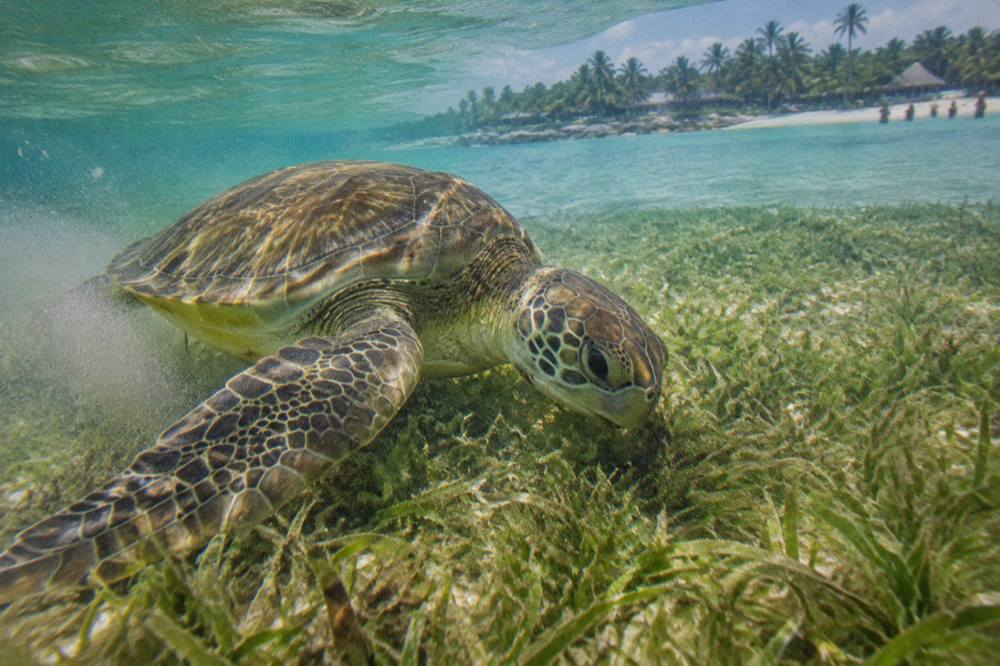
For travelers who want the early window handled for them, options range from a compact local swim to a half-day format with beach time afterward.
Why The Early Slot Wins On Water And Crowds
Morning wins for two separate reasons that stack: wind and waves build through the day over open seagrass, and the bay fills with organized groups arriving from Cancun and Playa del Carmen between mid-morning and early afternoon. Guides describe the 9:00-to-10:00 period as the calmest water and the thinnest crowds, reported across operator pages and local advice sources. By noon both advantages are usually gone.
The wind effect is simple physics. Akumal Bay opens to the Caribbean, and the typical daily pattern along this coast is for breeze and chop to build toward midday and afternoon. The rules already ask you to stay horizontal under CEA's guidelines and never stand on the reef or seagrass under the federal programme, so rougher water mainly costs you viewing quality rather than safety, but that is exactly what you came for. Locals who write about the bay consistently name the first hours as the clearest.
The crowd effect is a scheduling artifact. Day-trip tours from Cancun and Playa del Carmen arrive in a wave, and the bay's daily capacity amplifies it: the protection programme caps Circuit 1 at 256 people per day in 36 groups and Circuit 2 at 300 people per day in 42 groups, with sessions of 55 and 65 minutes. Those caps are generous across a full day but tight across a three-hour midday peak. Arriving early means your group draws from a less used part of the day's allocation.
| Time window | Water and crowd character | Who it suits |
|---|---|---|
| 9:00 to 10:00 | Calmest reported water, fewest groups, first circuit rotation | Photographers, first-time snorkelers, anyone sensitive to crowds |
| 10:00 to 12:00 | Still workable, groups arriving steadily, chop beginning | Late risers staying in Akumal itself |
| 12:00 to 15:00 | Peak day-tripper overlap, warmest air, most boats and groups | Travelers on combo tours whose schedule is fixed |
| 15:00 to 17:00 | Crowds thin, but afternoon chop and wind are usually at their worst | Flexible visitors willing to trade calm water for space |
One more early-morning advantage is easy to miss: guides are fresher. A certified guide working a 9:00 slot is on their first or second rotation of the day, and the federal rule of one guide per group of up to six means their attention is not yet divided across a tired afternoon schedule; the small-group We Love Akumal line, 4.9 from 216 reviews, runs 1 hour 10 minutes, so an early slot leaves the afternoon free. You can compare it against the other formats in the Akumal turtle tours comparison.
How Circuit Hours And Rest Periods Shape Your Timing
The circuits run 9:00 to 17:00 daily under the federal programme, with a 6-plus-guide group cap and daily visitor caps per circuit. One report notes two annual Semarnat rest periods for the turtle circuits, including September; confirm current dates with your operator when booking, because a rest period can remove entire weeks from the calendar regardless of time of day.
The hours matter more than they first appear because they interact with the tides of tourism. A 9:00 opening means the earliest possible in-water time is roughly 9:15 after briefing and gear, and a 17:00 close means the last full rotation starts mid-afternoon. The daily caps are allocated across the day by the operators holding SEMARNAT authorizations, so in practice your booking slot is your time of day. You cannot game the system by showing up early and waiting; the buoyed circuits are only entered with an authorized guide as part of a scheduled recorrido.
The rest-period question is the wildcard. Riviera Maya News reported on 26 August 2026 that Semarnat's environmental permits include two annual rest periods for the turtle swim circuits, one of them September. The report is single-source on the schedule details, so treat the dates as something to confirm rather than a calendar fact. If your trip falls near a reported rest window, ask the operator directly when booking; the listings all run through the operator's live booking page, where current availability shows immediately.
It also helps to understand why the night closure exists, because it explains the daytime rules. The refuge decree keeps the bay free of swimming, recreation and boats at night, since turtles court and mate in these waters from April to November. The daytime circuits are the compromise that lets people swim with turtles while protecting that window. Nothing about a night swim is on offer from any legitimate operator in Akumal Bay, and the Akumal turtle snorkeling rules guide covers the full rule set, from short fins to biodegradable sunscreen.
What About Sunrise Or Sunset In Akumal?
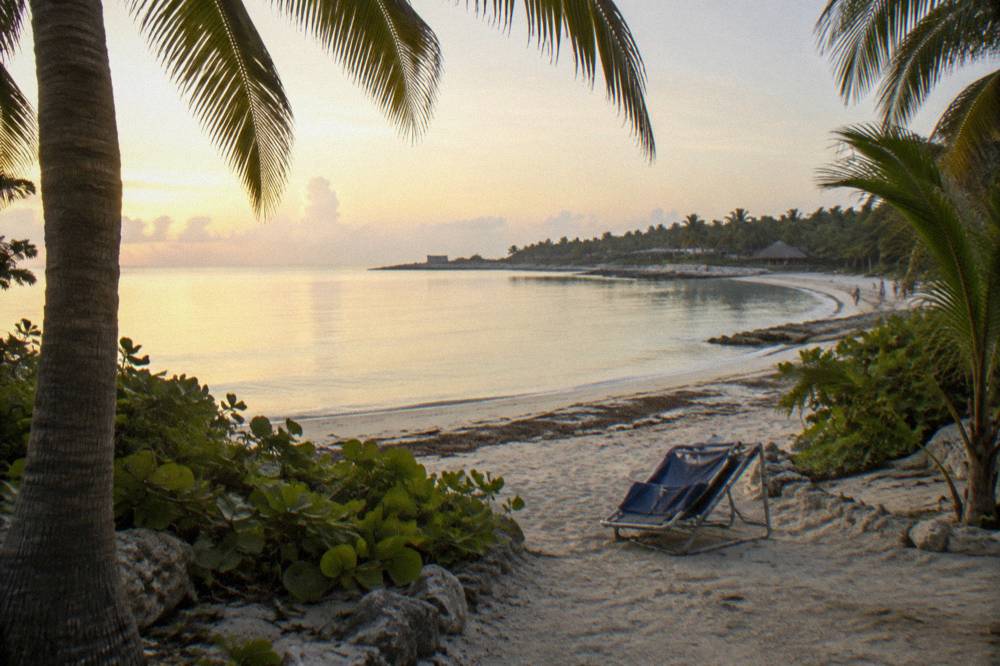
No legal turtle-swim slot exists outside 9:00 to 17:00, so sunrise and sunset turtle swims are simply not on the menu in the protected circuits. What you can do at dawn is walk the public beach, swim near-shore outside the circuits, and watch the bay wake up; at sunset, the refuge protocol clears the water for the turtles. Neither hour offers a guided turtle circuit.
The sunrise question comes up because many tropical destinations sell dawn wildlife tours, and travelers assume Akumal works the same way. It does not. The federal programme is explicit that tourist-recreational activity in Circuits 1 and 2 runs 9:00 to 17:00, and the Centro Ecologico Akumal's own guidance confirms that an independent snorkeler outside the circuits needs neither a guide nor a vest, though a vest is advisable. So a 7:00 visit is a beach visit: pleasant, quiet and free of the day-tripper wave, with near-shore swimming allowed, but the turtles over the deeper seagrass are being left undisturbed until the circuits open.
Sunset is the mirror image. By late afternoon the last rotations are ending, and the bay transitions to the night protocol. If a magical-sounding sunset turtle tour is pitched to you anywhere, it is not operating inside the protected circuits, and that should prompt questions about where and how it runs.
There is a practical middle path many visitors take: book a first-slot circuit swim, then keep the afternoon for something self-guided. The free and budget things to do in Akumal guide lays out the public-beach and Half Moon Bay options that cost nothing, and Akumal Beach itself is a public federal beach with free access outside the park entry route. Timing your paid swim early and your free afternoon late gets you both halves of the day.
Getting There Early From Cancun Or Playa Del Carmen
Reported pickup windows for day tours run about 06:00 to 07:00 from Cancun and about 07:00 to 08:30 from Playa del Carmen, which is what an early slot costs in alarm-clock terms. The drive is reported at roughly 91 to 105 km and 1 hour 15 minutes to 1 hour 30 minutes from Cancun airport, and about 37 km and 35 minutes from Playa del Carmen.
Those pickup windows come from tour listings and are reported rather than guaranteed; your actual pickup depends on the operator and your hotel's position on the route. But the arithmetic is fixed: a 9:00-to-10:00 slot from Cancun means a pre-6:00 wake-up, while the same slot from Playa del Carmen or from accommodation in Akumal itself costs you almost nothing in sleep. This is the real reason the time-of-day question is also a where-to-stay question, and the where to stay near Akumal guide treats it that way.
| Starting point | Reported distance and time | Reported tour pickup window | Effort level for the first slot |
|---|---|---|---|
| Akumal itself | Walk or short drive | Meet at the beach | Minimal, sleep in |
| Playa del Carmen | About 37 km south | About 07:00 to 08:30 | Moderate |
| Cancun | About 91 to 105 km, 1 hour 15 minutes to 1 hour 30 minutes | About 06:00 to 07:00 | Early alarm |
Transport options color the decision too. Colectivos run a reported 40 to 50 MXN from Playa del Carmen or Tulum and drop at the highway bridge, parking near the beach runs a reported MXN 100 a day with Plaza Ukana at a reported MXN 40 an hour, and a private van transfer is listed at US$105 one way for up to 8 passengers. Staying in Akumal converts the whole problem into a ten-minute walk, which is why many repeat visitors structure their trip that way. The Akumal snorkeling from Playa del Carmen guide works through the transport choices in detail.
If the early alarm from Cancun is unappealing, the alternative is a listing that builds the timing into the day for you. The half-day format from NS Vacations Tours, 4.5 from 99 reviews and from $83 per person, departs the Playa del Carmen area, includes an aquatic guide for the turtle encounter, snacks and bottled water, and finishes with two hours of free beach time, with a US$15 per person government fee payable separately as the listing states. It does the pickup logistics so you do not have to, though you are still on the operator's clock rather than your own.
What The Afternoon Gives Up, And When It Can Still Work
The afternoon trades calm water and thin crowds for warm air, softer schedules and emptier midweek bays, and the trade is sometimes worth it. Afternoon wind and chop are the usual pattern, but late afternoon thins the day-tripper wave considerably, and low-season weekdays can leave the circuits quiet even at 14:00. If mornings are impossible, the 15:00-to-17:00 tail end is often the smarter afternoon choice.
The straightforward framing is that no time of day is bad for turtles in the sense of absence. Operators describe the green turtles as resident feeders on the bay's seagrass year-round, with no seasonal migration, and sightings described as the norm rather than the exception, always reported and never guaranteed. The 2026 nesting season closed with 922 nests, 747 green and 175 loggerhead, concentrated on the beaches rather than in the water you swim in, but the resident feeding population is the reason the circuits exist at all. The time of day changes your viewing conditions, not whether turtles are in the bay. If the calendar matters more to you than the clock, the guide to the best month for turtle sightings in Akumal explains how water clarity and crowd levels shift across the year.
Weather is the afternoon's other variable. Hurricane season runs 1 June to 30 November per NOAA, and as of early October 2026 eight named Atlantic storms had formed with none a hurricane threatening Quintana Roo; a sea-temperature dataset puts October water near 29 C. Sargassum is a daily status, not a monthly norm, and the monitors disagreed in late October 2026, one rating Akumal light and another rating the bay clean while a satellite report could not see the beaches at all through cloud. Check the daily monitors, not a calendar, and read the seaweed in Akumal blog post for how to do that.
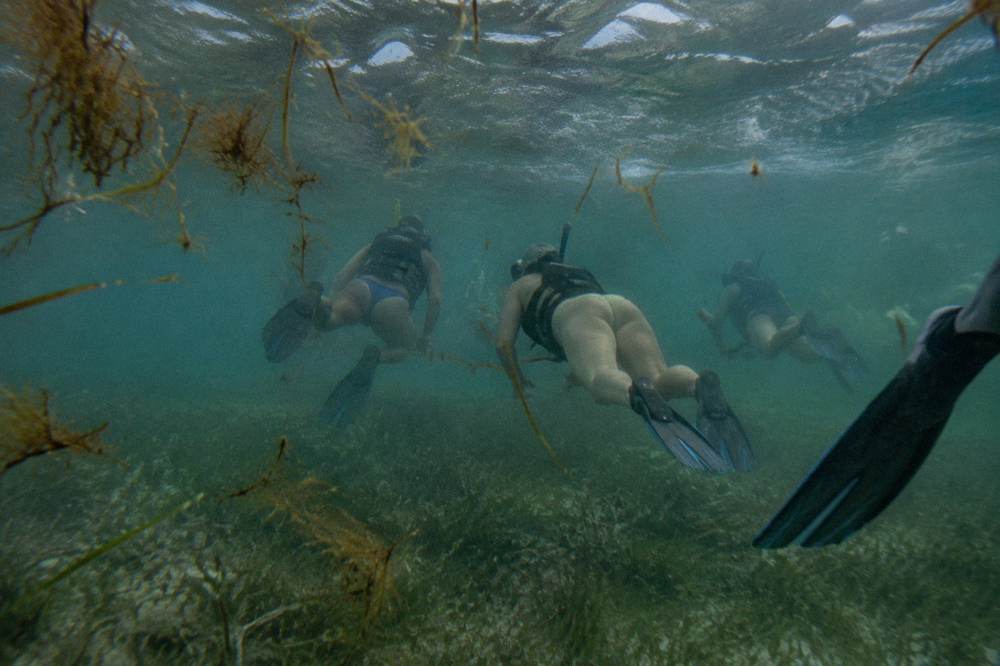
One afternoon format earns its slot regardless of conditions: a listing with a GoPro shoot built in. The Akumal Beach VIP swim with turtles from Akumal Mayan Trips, 4.6 from 410 reviews and from $34 per person for 1.5 hours, includes a guided snorkel, gear, wristband admission to the natural park and GoPro photos, so the memory survives even if the water is not glassy. Rougher surface water costs a swim more when photos are the point, which is one more nudge toward the morning, but the format absorbs an imperfect afternoon better than a bare snorkel does. Check availability on the listing page, and see the Akumal Beach VIP tour page for what the wristband covers.
Practical Timing Checklist For A Turtle Morning
A first-slot day in Akumal reduces to four decisions: book the earliest available circuit slot, sleep in Akumal or Playa del Carmen rather than Cancun if the alarm matters, arrive at the beach before your slot to handle wristbands and gear, and keep the afternoon for free beach time or a cenote. Every one of those decisions has a page here that goes deeper.
Book by slot, not by day. When you compare listings, the departure time is a feature as real as the price. The small-group listing from We Love Akumal runs 1 hour 10 minutes from $33 per person and includes a GoPro photo album, and short local formats like it give you the most slot choice because they run frequently. The park entry itself is a separate thing from any tour: Tsuuk Akumal Natural Park lists US$7 for foreign visitors and MXN 130 for Mexican nationals, covering facilities and a wristband, while the beach outside remains a public federal beach with free access. The how much does Akumal snorkeling cost guide separates every layer of that pricing.
Dress for the rules. Inside the circuits the federal programme makes a life jacket, mask, snorkel and short fins mandatory, and only biodegradable sunscreen is allowed in the Bahia de Akumal subpolygon, so a rash guard is the simplest solution; a full kit list sits in the what to bring for Akumal snorkeling guide. Pack the park's services page details into your plan too, since lockers and showers are covered by the entry wristband and the park itself rents no vests and runs no turtle tours.
Finally, hold your plans loosely where nature is involved. The turtles are resident but wild, the sargassum is a daily variable, and the rest periods reported in some years can shift the calendar. The operators publish current availability, and cancellation terms vary by listing, so check the booking page for the specific slot you want before locking in the rest of your day. The homepage comparison table folds the timing question into the broader choice between formats, prices and departure points.
Common Questions About Turtle Timing In Akumal
What Time Of Day Is Best To See Turtles In Akumal?
The first circuit slot of the morning, as close to the 9:00 opening as possible. Operators and guides recommend arriving in the 9:00 to 10:00 window for calmer water and fewer day-trippers, reported across two independent sources. Turtles feed in the bay through the day, so early timing buys conditions and space rather than turtle presence.
Can You Swim With Turtles At Sunrise In Akumal?
No guided turtle circuit exists outside the 9:00 to 17:00 hours set by the federal protection programme. At dawn you can walk and swim near-shore on the public beach, but the buoyed circuits over the seagrass open only with authorized guides at 9:00.
Do The Turtle Circuits Close At Night?
Yes. The refuge is kept free of swimming, recreation and boats at night because turtles court and mate in the bay from April to November, and the last guided rotations end before the 17:00 close.
Is The Afternoon Still Good For Snorkeling In Akumal Bay?
It can be. Afternoon wind and chop are the usual pattern and crowds peak between midday and about 15:00, but the 15:00 to 17:00 tail end thins the day-tripper wave considerably, and low-season weekdays can stay quiet even at midday.
Why Do Tours From Cancun Leave So Early?
Reported pickup windows of about 06:00 to 07:00 from Cancun exist to reach a reported 91 to 105 km drive, 1 hour 15 minutes to 1 hour 30 minutes, and still deliver guests into the first circuit slots after 9:00. Staying in Akumal or Playa del Carmen removes most of the early alarm.