Akumal Bay: Beach, Lagoon And Where The Turtles Feed
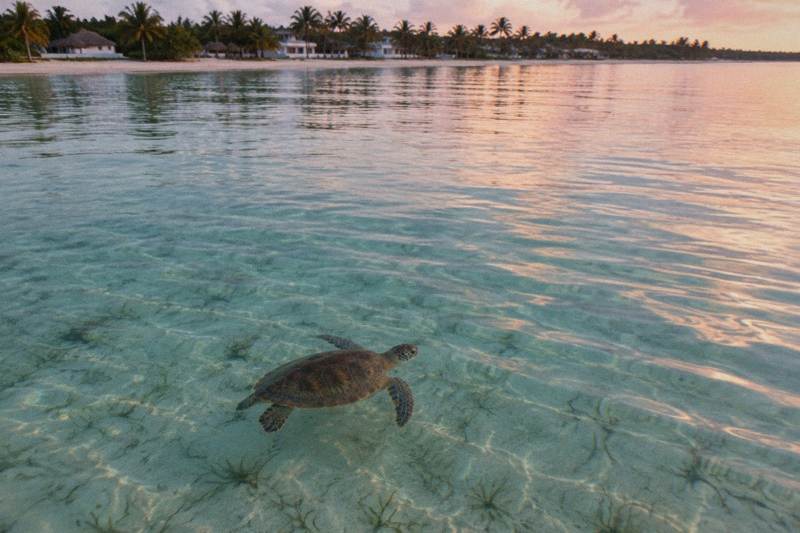
Akumal Bay is a small, shallow bay on the Riviera Maya coast where green turtles feed on seagrass a short swim from shore, inside a federally protected marine refuge with two marked snorkel circuits.
Short answer
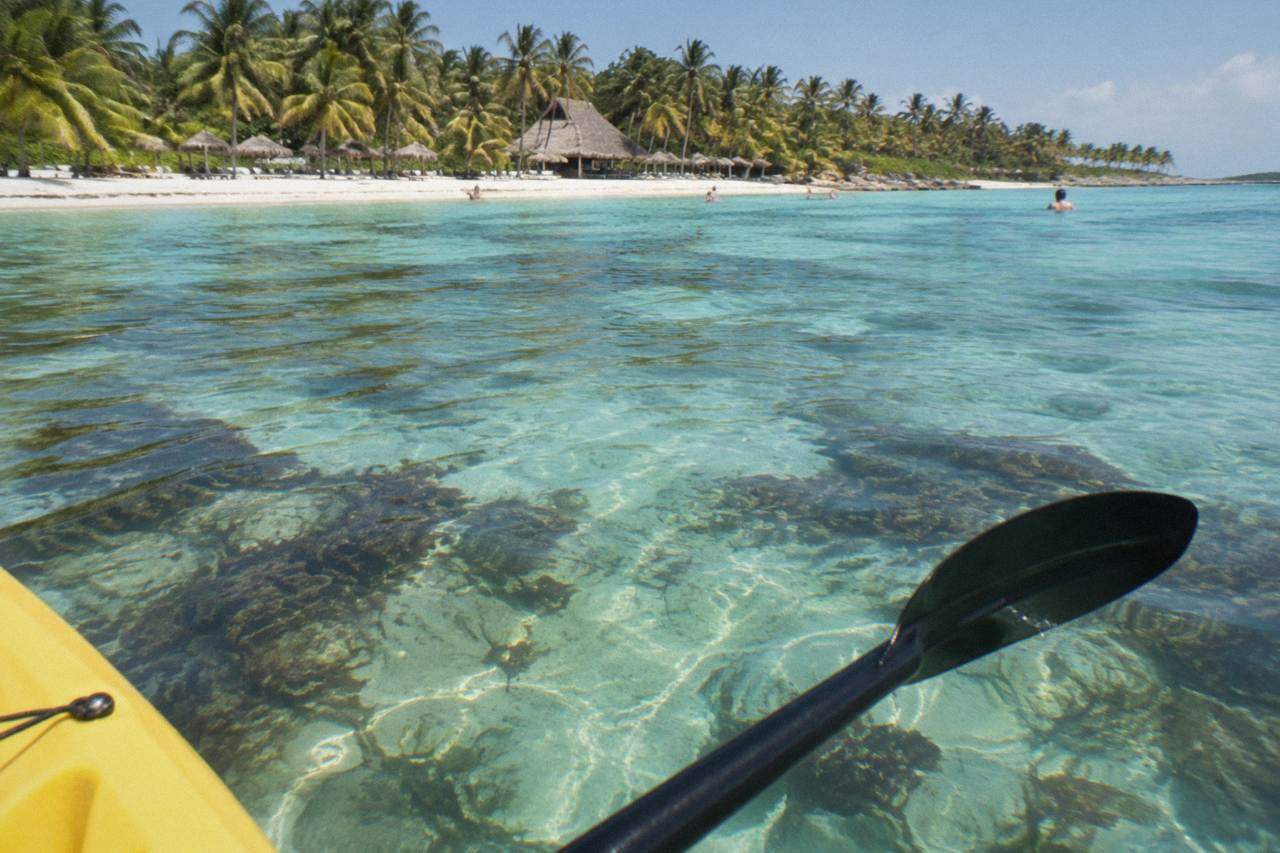
Akumal Bay sits about 37 km south of Playa del Carmen and protects 1,653 ha of sea, seagrass, coral and mangrove. The beach itself is public; the turtle swim runs inside two buoyed circuits with a certified guide, and 2026 nesting closed at 922 nests, 747 of them green turtles.
Akumal Bay is the reason this stretch of coast has a name at all. "Akumal" means place of the turtle in Maya, and the bay still earns it: green turtles graze the seagrass beds here, a federally designated marine refuge covers 1,653 hectares of water, reef and mangrove, and the whole turtle experience is organized around two buoyed swimming circuits a few minutes from the sand. The coverage below walks the bay end to end, the beach, the lagoon next door, the rules in the water, and the tours that run inside the circuits, including the best-reviewed options listed here.
Where Is Akumal Bay And What Is Actually Protected There?
Akumal Bay is a shallow bay on the Caribbean coast of Quintana Roo, about 37 km south of Playa del Carmen by the official decree, inside the municipalities of Solidaridad and Tulum. In 2016 the federal government named the surrounding waters the Bahia de Akumal marine refuge, 1,653 hectares protecting green, loggerhead and hawksbill turtles plus coral and mangroves. The turtle swim happens in two small buoyed circuits inside that refuge.
The refuge designation matters more than most visitors realize. It is not a park gate or a ticket booth; it is a legal boundary in the water, published in the federal gazette, that attaches rules to the bay. The protection programme that followed in 2017 sets the operating details for tourism: where swimming with turtles is allowed, in what group sizes, with what gear, during what hours. If you have read that a guide and a vest are compulsory in Akumal, that programme is the source, and the requirement applies inside the marked circuits rather than to every meter of the bay.
The turtles themselves are the draw. Operators describe resident green turtles feeding on the bay's seagrass year round, reported rather than guaranteed, with loggerhead and hawksbill turtles also present. The 2026 nesting season on the local beaches closed in September at 922 nests, 747 green and 175 loggerhead, a medium-high season below the historic 1,350. Bahia Akumal alone logged 345 green and 55 loggerhead nests, which tells you how much of this coast's turtle activity is concentrated right here. Many visitors assume all this activity must be backed by some kind of facility, but as why Akumal has no turtle sanctuary explains, protection here works differently.
The geography is simple once you stand on it. The main beach sits on the bay, Half Moon Bay lies just north, and Yal-Ku Lagoon, a brackish inlet of fish and calm water, lies a short ride further north. The town, a handful of shops and restaurants, sits behind the beach on the inland side of the highway arch. Once you're in that water, knowing how Akumal's sea turtles behave around snorkelers makes the difference between a calm encounter and one that stresses the animals.
Is The Beach At Akumal Bay Free To Enter?
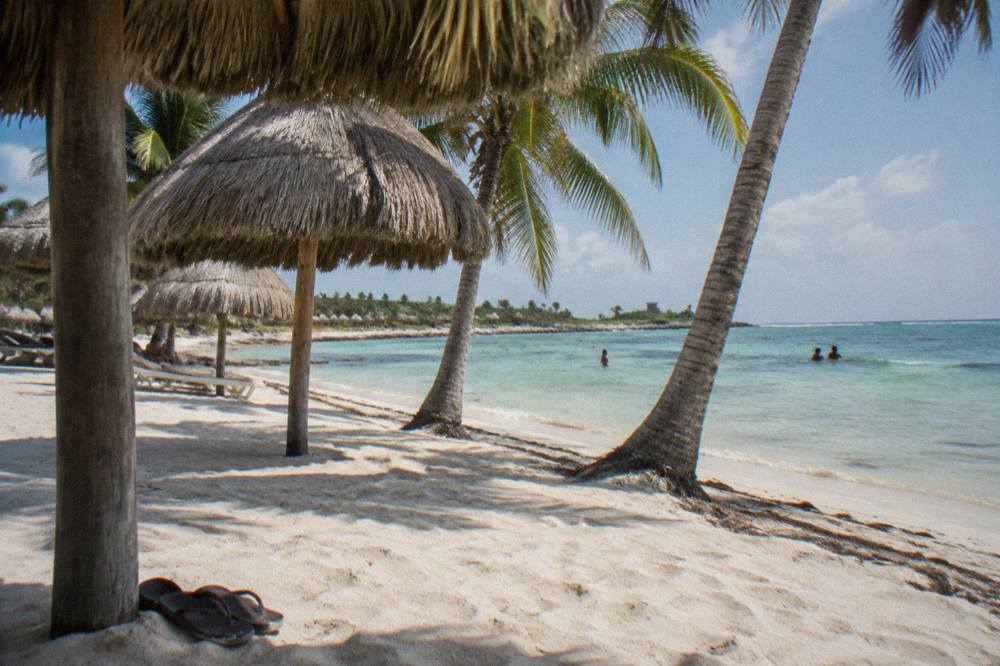
Yes, with a scope worth getting right: Akumal Beach is a public federal beach, free to walk and to swim from, while the convenient main access runs through Tsuuk Akumal Natural Park, which charges US$7 for foreign visitors and MXN 130 for Mexican nationals, wristband included. The park entry buys facilities, not the turtles. Southern public access points exist but are less convenient for most visitors. Once access is sorted, the guide to things to do in Akumal covers how to build a full day around the bay, the lagoons, and the cenotes just inland.
The park ticket is easy to mistake for a beach fee. It is not one. The park's own services page states what the wristband covers: restrooms, showers, changing rooms, lockers, lifeguards and umbrellas and chairs subject to availability, plus the entry corridor to the sand. It also states what the park does not do: it does not rent vests, does not run turtle tours and does not provide access to the designated turtle zone. For that you need a tour operator or an authorized guide.
Free and reduced entries exist and are worth knowing. Quintana Roo residents enter without services at no charge, children under 5, INAPAM seniors and visitors with disabilities enter free with services, and the listed tours almost all fold the park or beach access fee into the tour price. That is a real difference between booking a tour and walking up: the tour listings for the bay, from the VIP GoPro line at from $34 per person to the park-entry tours at from $45 per person, state that entry is included, while the independent swimmer pays or walks separately.
If you are weighing the walk-up option against a guided circuit, the Akumal Bay turtle tours compared guide breaks down the listings line by line, and the cost guide totals a realistic day. The short version: the beach is free, the facilities are cheap, and the guided turtle circuit is the part that costs real money, because a certified guide and the refuge rules come with it.
Where Do The Turtles Feed Inside Akumal Bay?
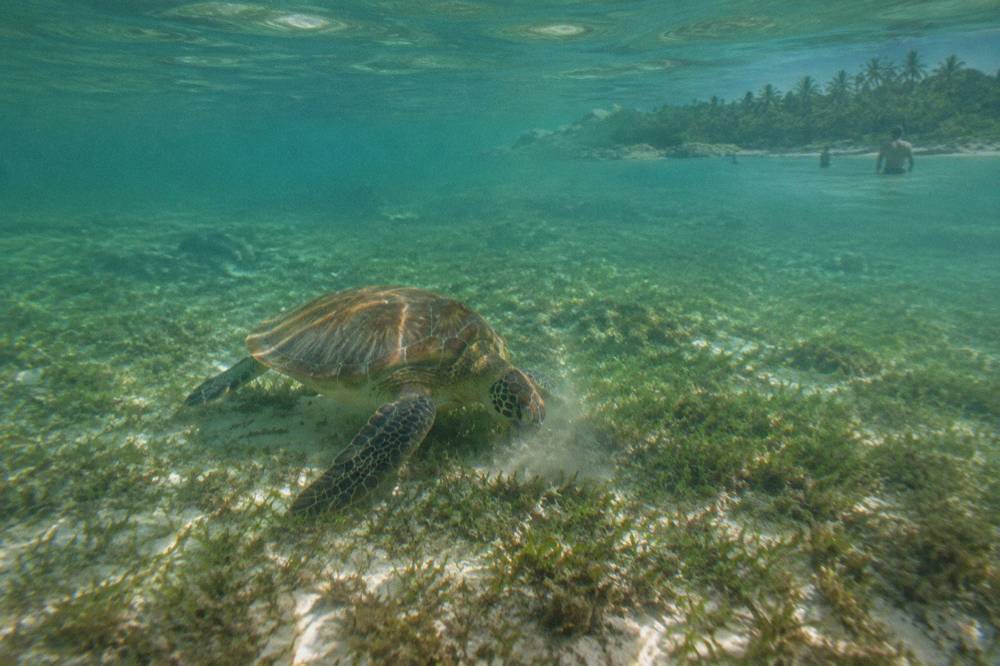
The turtles feed on the seagrass meadows in the shallow middle of the bay, inside and around the two buoyed circuits that the federal programme marks for turtle swimming. Operators report resident green turtles grazing here through the year, which is why the tours cluster on this one small zone rather than ranging along the coast. Sightings are described as the norm by operators, never promised.
The seagrass is the engine of the whole experience. Green turtles are grazers, and a shallow, sunlit bed of seagrass close to a nesting beach is close to ideal habitat. The circuits were drawn around that feeding ground: Circuit 1 measures 1,121 m and Circuit 2 measures 1,549 m, and swimming with turtles for tourism is allowed only inside those marked areas, as guided ecological tours under a federal authorization. Tour groups do not roam the bay freely looking for turtles; they enter a circuit with a guide and stay in it.
That structure explains the caps. Circuit 1 allows 256 people per day in 36 groups, Circuit 2 allows 300 people per day in 42 groups, with a maximum of 55 minutes per group in Circuit 1 and 65 minutes in Circuit 2, and hours of 9:00 to 17:00. Groups run at up to six people plus the guide, spaced ten meters apart. Those numbers are not marketing limits; they come from the protection programme's capacity study.
For a reader deciding how to book, the listings in the guide index split neatly by how much of that machinery they take on for you. The small-group photo line from We Love Akumal, from $33 per person and 1 hour 10 minutes, includes gear, vest, protected-area access and a GoPro photo album, though the listing adds card-only locker rental at MXN 100 plus a required private-beach bracelet paid separately. The VIP line from Akumal Mayan Trips, from $34 per person, includes the wristband admission, the protected circuit, gear and life jackets. And the most-reviewed listing on the whole site, Swim with sea turtles from Akumal Ecological Guides, from $45 per person, carries 454 reviews at 4.6, gear, insurance, fees and beach access all stated as included.
One caveat belongs here. Turtles, water clarity and crowds all vary, and no operator can promise a sighting. What can be said is that the resident feeding population is why Akumal, alone on this coast, built an entire tour economy inside two small roped circuits: the animals are usually there, feeding, and the industry has organized itself around watching them without wrecking the habitat that keeps them. For anyone wondering how close a snorkeler can actually get, the guide to what friendly really means for Akumal's sea turtles explains the spacing rules that keep both snorkelers and animals relaxed.
Do You Need A Guide To Snorkel Akumal Bay?
Inside the buoyed circuits, yes: the federal protection programme makes a certified, authorized guide, a mask and snorkel, short fins and a life jacket that prevents total immersion compulsory for tourist activity, with groups capped at six plus the guide. Outside the circuits, the Centro Ecologico Akumal's own guidelines say an independent snorkeler needs neither a guide nor a vest, though it advises a vest.
The two rules coexist because they govern different water. The programme published in the federal gazette in 2017 governs the tourist activity in the circuits; the Centro Ecologico Akumal, the local research and conservation body, publishes a separate code of conduct for the bay at large, updated in 2021, and its FAQ addresses the independent swimmer directly. A visitor who wants the full picture should read both: the protection programme for the circuits, and the CEA snorkeling guidelines for everything else.
The CEA code deserves quoting in spirit even where the exact words are its own. Stay inside the bay. Stay horizontal in the water and never stand on the reef. Never touch or chase a turtle, never dive down, keep at least 3 m from any turtle and watch a single turtle no more than 2 minutes before moving on. Wear a sun shirt or biodegradable sunscreen. The federal prohibitions stack on top: no touching, feeding, chasing, harassing or removing wildlife, no standing on coral, no anchoring in the bay, and only biodegradable sunscreen inside the Bahia de Akumal zone.
The sunscreen rule catches more visitors than any other, and it is not advisory. A rash guard is the simplest compliance: no label reading required. If you use lotion, it must be biodegradable, and a "reef-safe" claim on the bottle is not the legal test, so check the ingredients rather than the marketing. The same logic applies at Yal-Ku Lagoon, where chemical-free sunscreen is required, reported, and vests are mandatory on the Xcaret-operated side.
Practically, this is why the guided listings dominate the bay. A tour folds the guide, the vest and the circuit access into one booking, and the operator carries the compliance. Readers who want the full rule set in one place will find it in the Akumal turtle snorkeling rules guide; readers who want to know what to pack for the water can start with the what to bring guide.
| Rule | Where it applies | Source scope |
|---|---|---|
| Certified guide, vest, mask, snorkel, short fins | Inside Circuits 1 and 2 only | Federal protection programme, 2017 |
| Max 6 people plus guide, 10 m spacing | Inside the circuits | Federal protection programme, 2017 |
| Circuit hours 9:00 to 17:00 | Inside the circuits | Federal protection programme, 2017 |
| No guide or vest required, vest advisable | Outside the circuits | CEA guidelines and FAQ, 2021 |
| 3 m from turtles, 2 minutes per turtle, no touching | Whole bay | CEA guidelines, 2021 |
| Biodegradable sunscreen only | Bahia de Akumal zone | Federal protection programme, 2017 |
When Is The Best Time Of Day To Visit Akumal Bay?
Early morning, in the 9:00 to 10:00 window, is widely reported as the best window: calmer water, fewer day trippers and the first circuit slots at 9:00. The circuits run 9:00 to 17:00, and lifeguards watch the bay 8:00 to 17:00. Late December to early April is high season; late June to September is low season, one source reports.
The morning argument is mostly about the water itself: the bay is reported calmest between 07:00 and 10:00, which generally means better viewing over the seagrass, and the first circuit slots go out at 9:00. By late morning the bay absorbs the tour buses from Playa del Carmen and Cancun, and the calm that made the morning famous is gone. Parking fills too, at about MXN 100 a day in the main lots, reported, and MXN 40 an hour at Plaza Ukana inside the arch.
Season matters less than visitors expect, because the resident green turtles are reported to feed year round. What changes is everything around them. High season, late December to early April, means crowds and advance booking; one operator notes two to three weeks ahead for peak dates. Low season, late June to September, overlaps hurricane season, which runs 1 June to 30 November, and as of early October 2026 eight named Atlantic storms had formed with none a hurricane threatening Quintana Roo. October sits in a quiet shoulder, with a short spike late in the month around Day of the Dead.
| Period | What to expect | Booking implication |
|---|---|---|
| Late December to early April | High season, crowds, one source reports | Book two to three weeks ahead for peak dates |
| Late June to September | Low season, overlaps hurricane season to 30 November | Easier slots, watch storm forecasts |
| Mid-April to mid-June, mid-October to mid-November | Shoulder season, reported | Good balance of crowds and availability |
| Any day, in the 9:00 to 10:00 window | Calmest reported water, fewest day trippers | Take the first circuit slots at 9:00 |
One seasonal wrinkle is worth flagging. A report from late August 2026 describes two annual Semarnat rest periods for the turtle circuits, including September, during which turtle swim tours pause. Treat it as reported, confirm dates with the operator when booking, and do not assume any given week is affected. Sargassum is similar: a daily status from monitors, never a monthly norm, and while the two monitors disagreed on Akumal in the third week of October 2026, the 12 October 2026 image showed Half Moon Bay among the three worst-affected beaches, alongside Playa Aventuras and Xcacel.
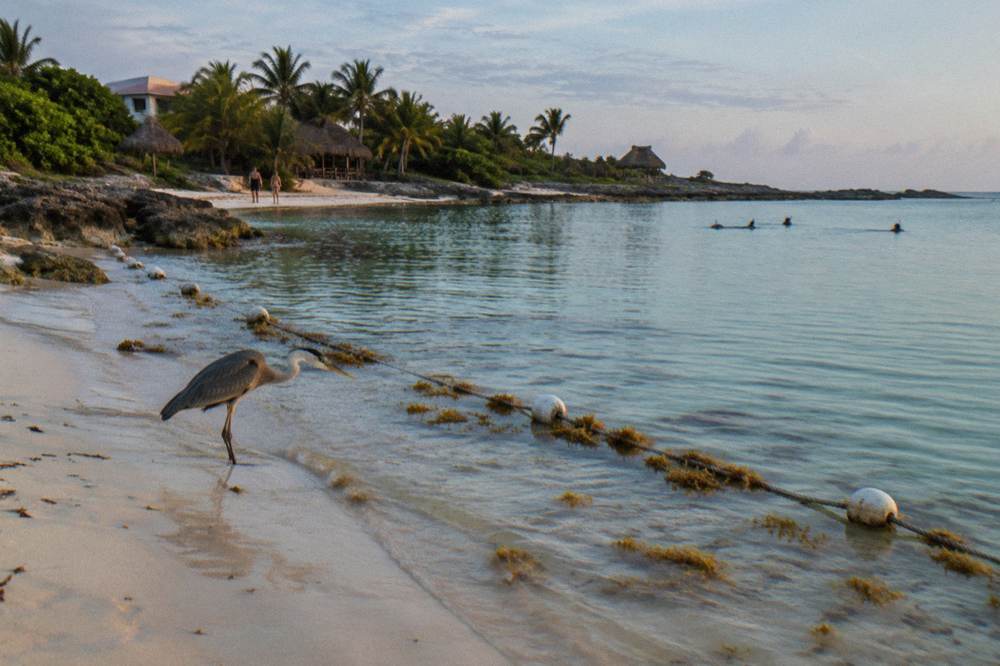
For planning a full day, the best month guide and the time of day guide go deeper than this bay overview can, and the seaweed question covers the sargassum monitors and how to read them before a trip.
What Tours Actually Run On Akumal Bay?
Ten listings here run turtle snorkels on the bay itself, from $32 to $83 per person depending on format, plus six private lines and six cenote-combo days that include the bay. Group tours cluster at 1 to 1.5 hours on the water; the private lines run from $43 to $260 as each listing states its basis; the combo days run 5 to 10 hours with transport from Cancun or Playa del Carmen.
The bay-only listings are the pure product, and they differ mostly in what is folded in. The cheapest line on the site, the Riviera Maya VIP turtle tour from Akumal Mayan Trips, is from $32 per person for 1.5 hours with wristband entry, circuit access, guide, gear and vest included. The four Amigo Tours park-entry listings, each from $45 per person and 1.5 hours, include the Tsuuk park entrance, facilities, gear, vest and certified guide, with food and souvenir photos excluded. The half-day line from NS Vacations, from $83 per person and 4 hours with transport from Playa del Carmen, adds two hours of free beach time and a US$15 per person government fee payable separately, as the listing states it. To see how one of these bay-only turtle mornings stacks up against a full park day, the Xel-Ha versus Akumal comparison weighs the price, crowd and format tradeoffs, plus how to fit both into a single Riviera Maya trip.
| Listing | Price as listed | Duration | Rating and reviews | Entry fee |
|---|---|---|---|---|
| Riviera Maya VIP turtle tour | from $32 per person | 1.5 hours | 4.7 from 15 reviews | included |
| Akumal Beach VIP With GoPro Photos | from $34 per person | 1.5 hours | 4.6 from 410 reviews | included |
| Small-group photos line, We Love Akumal | from $33 per person | 1 hour 10 minutes | 4.9 from 216 reviews | not stated |
| Tsuuk Park entry tour, Amigo Tours | from $45 per person | 1.5 hours | 4.8 from 41 reviews | included |
| Swim with sea turtles, Akumal Ecological Guides | from $45 per person | 1 hour 15 minutes | 4.6 from 454 reviews | included |
| Half-day from Playa del Carmen, NS Vacations | from $83 per person | 4 hours | 4.5 from 99 reviews | US$15 per person payable separately |
The private lines change the equation rather than the location. Private Snorkeling with Sea Turtles from Marine Life Akumal, from $61 as the listing states its basis, carries a 5.0 from 374 reviews, the strongest review pool among the privates, and includes the beach park access fee, lockers, showers, vest and the official turtle circuit run under the SEMARNAT protection programme. The GoPro private from Akumal Mayan VIP Tours, from $50 with the basis unstated, is 5.0 from 303 reviews, one hour long, and adds a personal certified guide, traveler's insurance and a GoPro photo session, with transport and tips excluded as the listing states. At the top end, the cenote-and-turtles private from Tours with Mike, from $260 with pickup listed, is a private cenote-plus-bay outing, and the Yal-Ku combination private from The Turtle Travel Riviera Maya, from $155 for 4 hours, links the bay with the lagoon.
The combo days suit visitors based in Cancun or Playa del Carmen who want the bay plus a cenote plus Tulum in one booked motion. They run from $80 per person for a 5-hour small-group turtle and cave cenote trip, with a US$20 per person government marine tax and a US$15 per person operation fee payable separately as the listing states them, up to $109 per person for the 8 to 10 hour Tulum, cenote and turtle days with hotel pickup and a meal listed, and a US$40 per person extra fee line. The three-cenote local day from Soul Experiences Mexico, from $249 per person with a stated maximum of 13 travelers, includes lunch and round-trip transport from Playa del Carmen. The Akumal and cenote tour guide compares those days in full.
A reader who is unsure which format fits can run the homepage trip picker or read the snorkeling guide; the bay-only versus combo decision usually comes down to whether you have a car and how much of one day you want to spend in transit.
What Else Can You Swim At Beside Akumal Bay?
Two neighbors fill out the morning: Half Moon Bay, a quieter reported swimming stretch a short walk northwest, and Yal-Ku Lagoon, a brackish inlet about 10 minutes north where colorful reef fish school in calm water. Yal-Ku charges about US$20 or 300 MXN on the Xcaret-operated side, reported, requires chemical-free sunscreen and makes vests mandatory there; Half Moon Bay has no fee listed.
Half Moon Bay is the low-key alternative when the main beach is busy. It is described in local reporting as a quieter coastal stretch suitable for swimming and snorkeling, and it holds its own turtle story in the nesting data: Bahia Media Luna logged 12 green and 14 loggerhead nests in 2026, small numbers compared with the main bay but proof the habitat continues around the point. The Half Moon Bay guide covers access and conditions in detail.
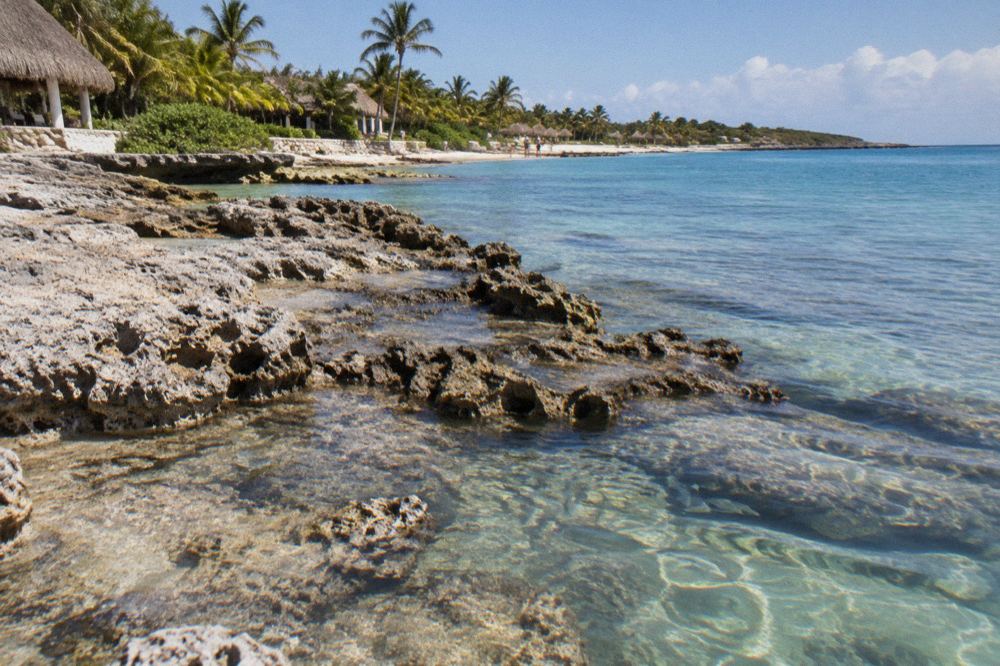
Yal-Ku Lagoon is a different ecosystem again: an inlet where freshwater meets the sea, which is why the fish life looks nothing like the bay's seagrass community. It runs 9:00 to 17:00 daily, and the operator's own admission page sets the local rules, mandatory vests on the Xcaret side, chemical-free sunscreen, no coolers, food, drinks, inflatables or pets. The listing that pairs the lagoon with the turtle sanctuary swim, from $46 per person and 4.8 from 41 reviews, includes gear, government fees and a photo shoot, sea conditions permitting. For the full comparison, see Yal-Ku Lagoon or Akumal Bay. If the turtle sanctuary mention in that tour listing raises questions, the article on whether Akumal actually has a turtle sanctuary explains what really protects the bay's turtles.
Beyond swimming, the town behind the bay holds a slow half day of shops, taquerias and beach restaurants, and the things to do guide plus the free and budget guide list what costs nothing, including a pay-what-you-want cenote bicycle walk that starts in Chemuyil, about 10 km south.
How Do You Get To Akumal Bay?
From Cancun airport the drive is a reported 91 to 105 km, 1 hour 15 minutes to 1 hour 30 minutes; from Playa del Carmen, Akumal sits about 37 km south in the official refuge decree. A private van runs US$105 one way for up to 8 passengers, colectivos cost a reported 40 to 50 MXN, and parking near the beach runs about MXN 100 a day or MXN 40 an hour at Plaza Ukana.
Most visitors arrive one of three ways. Hotel-based travelers in the Riviera Maya often book a combo tour with pickup listed, such as the Tulum, cenote and turtle days from $109 per person, and let the operator handle Highway 307. Independent drivers park in the lots near the arch, where the MXN 100 day rate makes an early arrival cheaper as well as calmer. Budget travelers ride the colectivo, which drops at the highway and the pedestrian bridge.

Time-of-day planning ties back to the circuits. Because the circuits open at 9:00 and the early slots are the ones locals recommend, an arrival before 9:00 puts you at the front of the first groups rather than mid-morning. Visitors coming from Cancun should read the Akumal from Cancun guide, those from Playa del Carmen the Playa del Carmen guide, and those pairing Tulum ruins with the bay the Tulum tour guide. Safety questions, including the beach flag system and lifeguard hours of 8:00 to 17:00, are covered in the Is Akumal Safe guide.
Two practical notes finish the logistics. The bay has designated boat navigation channels, and snorkelers are told to stay inside the bay and cross channels with care, in bright vests, which is one more quiet argument for the guided format. And tipping, reported at US$5 to $10 per person for good service in local guides, is a cash matter, so carry small bills for the guide even on a prepaid tour.
Common Questions About Akumal Bay
Is Akumal Bay Free To Visit?
The beach is a public federal beach with free access to walk and swim. The convenient main entry runs through Tsuuk Akumal Natural Park at US$7 for foreign visitors and MXN 130 for Mexican nationals, which buys restrooms, showers, lockers and lifeguards, not the turtle swim itself.
Can You See Turtles In Akumal Bay Without A Tour?
You can swim and snorkel from the public beach without a tour. Turtle swimming for tourism is allowed only inside the two buoyed circuits with a certified guide, so getting close to the feeding seagrass zone means joining a guided circuit; operators describe resident green turtles as usually present but never guaranteed.
How Big Is The Protected Area At Akumal Bay?
The Bahia de Akumal marine refuge covers 1,653 hectares, about 37 km south of Playa del Carmen, protecting green, loggerhead and hawksbill turtles, staghorn and elkhorn coral and mangroves. The two turtle circuits inside it measure 1,121 m and 1,549 m.
How Many People Can Swim With The Turtles Each Day?
The federal protection programme caps Circuit 1 at 256 people per day in 36 groups of up to 6 plus the guide, and Circuit 2 at 300 people per day in 42 groups, with 55 and 65 minute group limits and hours of 9:00 to 17:00.
Is Akumal Bay Good For Snorkeling With Kids?
The bay is shallow, calm in the morning and lifeguarded from 8:00 to 17:00, and tours supply vests and gear. Children under 5 enter the park free, and the half-day listings add beach time alongside the turtle swim.
When Can You Not Swim In Akumal Bay?
The refuge is kept free of swimming and boats at night because turtles court and mate in the bay from April to November, and one report describes two annual Semarnat rest periods for the circuits including September. Confirm timing with your operator when booking.